Raleigh sits in a moderate-cold climate band, not the deep-freeze zone you'd find further north, but cold enough that steel contracts and grease stiffens on winter mornings. Most of the housing stock across this service area went up between 1967 and 2013, with the median build year landing around 2005. That matters because a torsion spring installed in the mid-2000s is now old enough to be near the end of its cycle life, and cold snaps are exactly when a spring on its last few thousand cycles decides to let go. We work across seven named pockets of that same era of construction, so the pattern repeats house to house: same spring gauge, same age window, same failure point.
A spring under tension behaves differently at 30 degrees than it does at 70. The metal loses a little flex, the winding coils sit tighter, and a spring that was already fatigued from age has less give left in it. That's not a defect in the door - it's just what steel does. Homes built in the earlier part of that 1967-2013 range are the ones we see calling first, since their original hardware has had the most winters to work through.
What Changes With the Season
When temperatures drop, three things shift at once: the spring's steel gets less pliable, lubricant on the rollers and hinges thickens, and the opener's motor has to work harder to lift a heavier, stiffer door. None of these alone usually causes a break. Together, on a spring that's already old, they push it over the edge - which is why a garage door snapping shut or refusing to open shows up more in the colder months here than in July.
Households in this service area skew toward owner-occupied houses - roughly 12,944 of the 30,838 households here own rather than rent - and owners tend to notice a stiff or noisy door well before a renter would think to report it. That's useful, because a door that's groaning or slow to rise in cold weather is usually giving you a week or two of warning before the spring actually breaks, not none.
What to Look At First
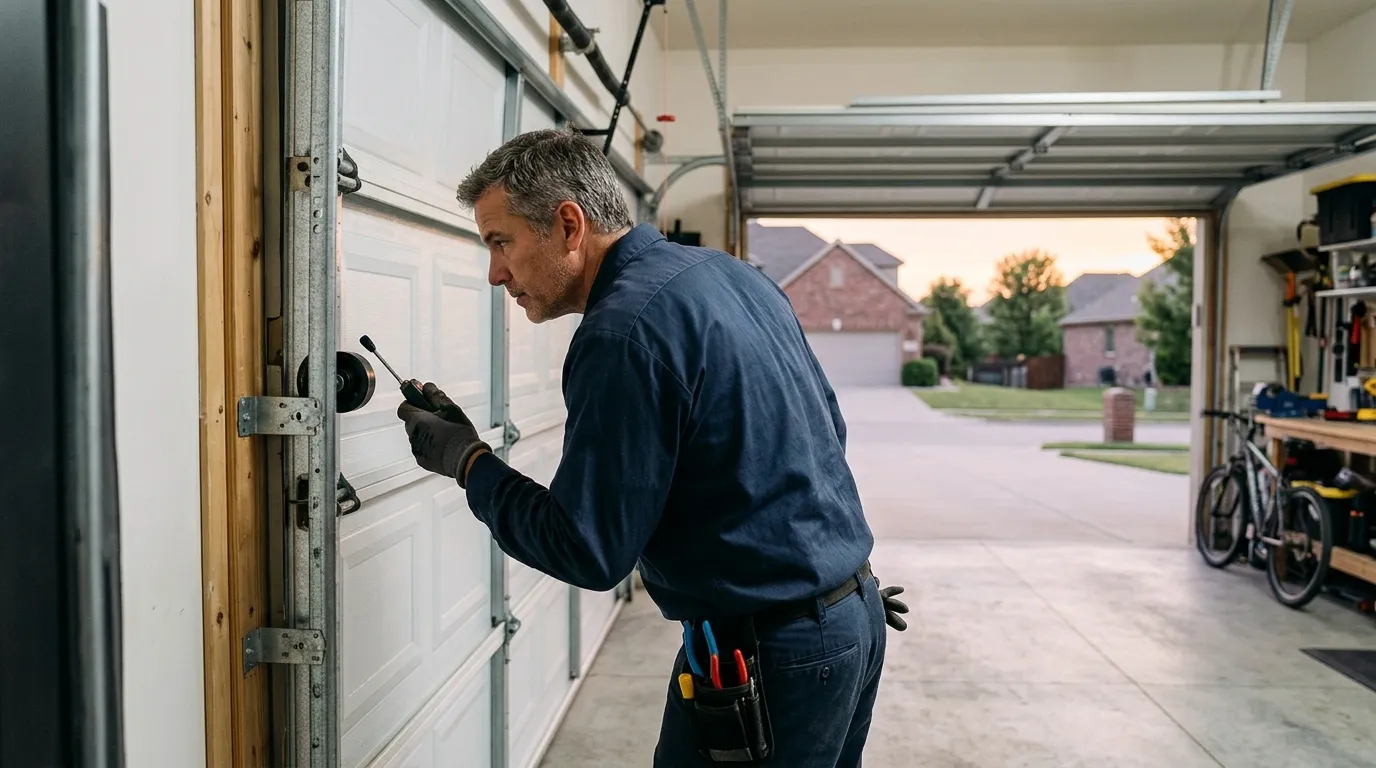
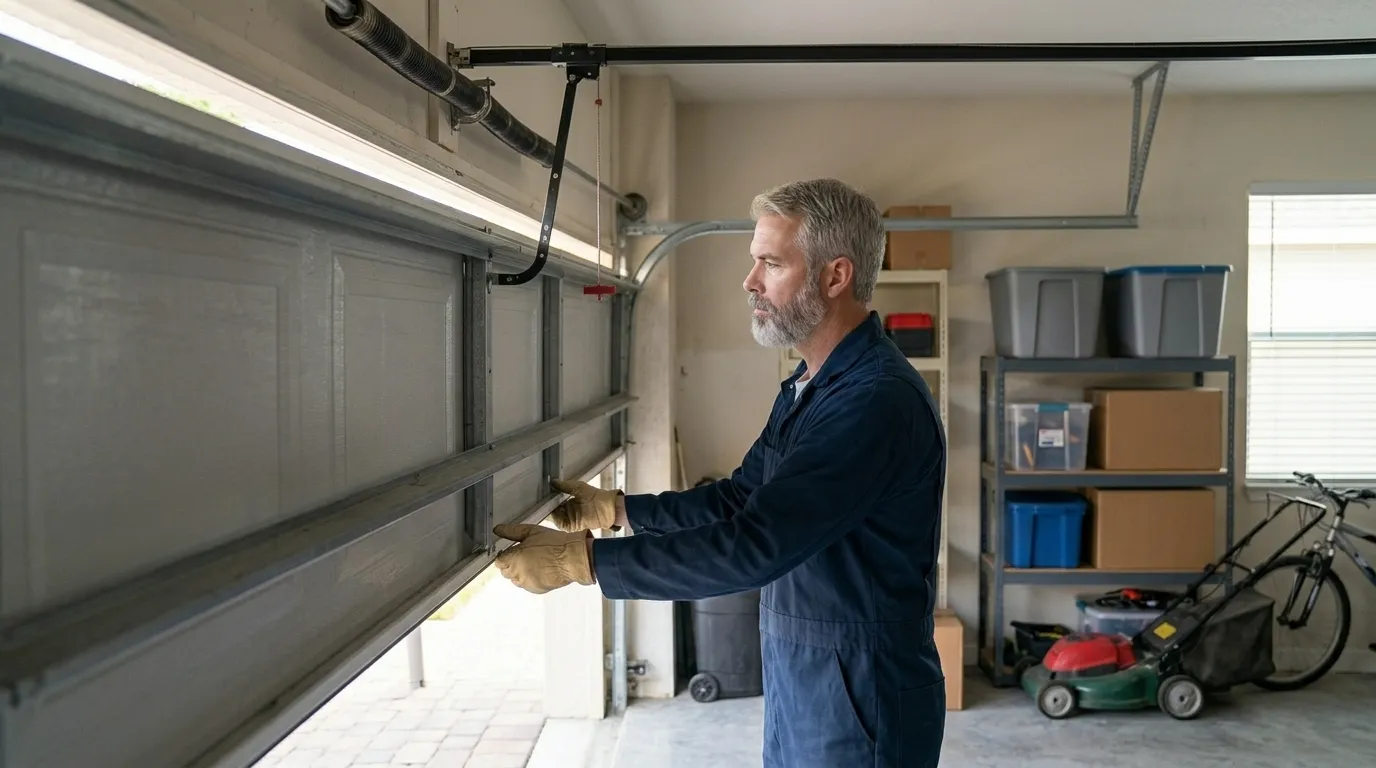
Start with the spring itself, not the opener. A torsion spring that's cracked, has a visible gap in the coil, or looks stretched compared to its mate on a double-spring setup is the first thing to check when a door won't budge on a cold morning. If the opener strains, clicks, and reverses instead of lifting, that's often the motor sensing resistance from a spring that's already gone, not a motor problem on its own.
Next, check the cables at the bottom brackets - a spring failure under tension can fray or snap a cable at the same time, and that's not a job to force past. If the door came down hard and sits crooked in the track, don't run the opener again. One honest limitation: we don't recommend re-tensioning or patching an old spring from this era of construction rather than replacing it, since a spring near the end of its cycle life on a 2000s-era door isn't worth the labor to save it.
What Is Going On
Given the income level in this area - median household income runs $91,638 - most owners here replace rather than nurse along an aging spring once it's shown a crack or an obvious wear point, and that's usually the right call once you're past the original hardware's expected life. We cover the areas within a short drive of North Hills, North Raleigh, and the pockets toward Knightdale and Rolesville, and the spring age pattern holds pretty consistently across that stretch given the shared construction era.
If your door is acting up only on the coldest mornings and loosening up by afternoon, that's consistent with an aging spring rather than a track or opener issue. If it's stuck regardless of temperature, look elsewhere first. Either way, a cold-weather spring break isn't a sign something was done wrong when the house was built - it's just steel fatigue meeting a Raleigh winter.
How it works
From “it’s stuck” to “it’s fixed”
01
Tell us what’s wrong
Describe the symptom - won’t open, loud bang, opener runs but the door won’t move.
02
On-site diagnosis
A technician tests the door under power and by hand and finds what actually failed.
03
Clear, up-front plan
You get the fix that’s needed and what drives the cost - before any work starts.
04
Repaired & tested
The repair is done, the door is set true and tested, and the work area left clean.
Serving Raleigh, NC - tell us what your door’s doing and we’ll take it from there.
01Why does my garage door spring seem to break more often in winter?
Cold steel loses some flexibility, and grease on hardware thickens, adding resistance right when an aging spring has the least give left. Most homes in this area were built between 1967 and 2013, so a lot of original springs are now old enough that a cold morning is the final push, not the root cause.
02Should I try to re-tension my old spring instead of replacing it?
We don't recommend it. Once a spring from this era of construction shows a crack or visible wear, patching it doesn't restore the cycle life it's lost. Replacement is the more honest fix once a spring is that far along, even though it costs more upfront than a quick adjustment.
03Is a slow-opening door in winter a spring problem or an opener problem?
Check the spring first. A stiff, cracked, or unevenly wound torsion spring makes the opener strain and sometimes reverse mid-cycle, which can look like a motor issue but usually isn't. If the door struggles only in cold weather and loosens up later in the day, that points to the spring.
Ready to get your garage door sorted?
Tell us what it’s doing and where you are in Raleigh - we’ll take it from there.