24/7 Emergency Service Open 7 days · 7am–8pm Serving Raleigh, NC & nearby
(919) 324-9540
Raleigh, NC

Garage Doors Built for Raleigh's 1967-2013 Housing Range

Raleigh Garage Door Co repairs doors on Raleigh homes built 1967-2013, accounting for cold-moderate winters and pre- and post-code insulation gaps here.

Garage Doors Built for Raleigh's 1967-2013 Housing Range

How Local Conditions Play In

Housing in this service area runs from 1967 up through 2013, with the median build year landing around 2005. That's a wide spread, and it matters for the door on your garage more than most people think. A door installed on a house from the late 1960s or 1970s was hung under a very different set of assumptions than one going up in a 2005-era subdivision, when energy codes and door construction had both moved on. The older end of that range often carries a single-layer steel or wood panel door with no insulation backing at all, hung on hardware that was standard for its decade but isn't what a torsion spring supplier stocks new anymore.

The majority of the stock here, per the housing data, is 2000s construction, so most doors we're called to work on already came with some insulation value and a steel frame that photo-eye sensors and modern openers were designed around. That split - a real number of pre-1990s doors sitting next to a much larger share of 2000s builds - is why we don't treat every service call the same way. The climate band here is cold-moderate, not the deep-freeze conditions of the upper Midwest, but cold enough that steel torsion springs and door panels both respond to it, and that response plays out differently depending on which decade your door came from.

What Changes With the Season

In a cold-moderate climate, the swings that matter aren't extreme lows so much as the repeated cycling between cold mornings and warmer afternoons. Steel contracts in the cold, which is why a torsion spring that was properly tensioned in August can feel noticeably heavier to lift in January. On the pre-code doors from the older end of the 1967-2013 range, that's compounded by panels with no foam backing, so the door itself flexes more against the track in cold weather, which speeds up wear on rollers and hinges.

On newer builds from the 2000s stock, insulated panels hold their shape better through the temperature swing, but the opener electronics and photo-eye sensors are the more common seasonal complaint - condensation on the sensor lenses during the transition weeks between cold nights and warmer days can trip false reversals. We see both patterns across the service area depending on which decade a given neighborhood was built in.

We don't get the kind of below-zero stretches that crack springs outright the way a true cold-climate region does, so a lot of what we do this time of year is smaller adjustment work - tension, lubrication, sensor alignment - rather than emergency spring replacement. That's a real limitation worth naming: if you're expecting the kind of dramatic winter failure you'd hear about from a much colder region, that's not really what cold-moderate conditions here produce.

What to Look At First

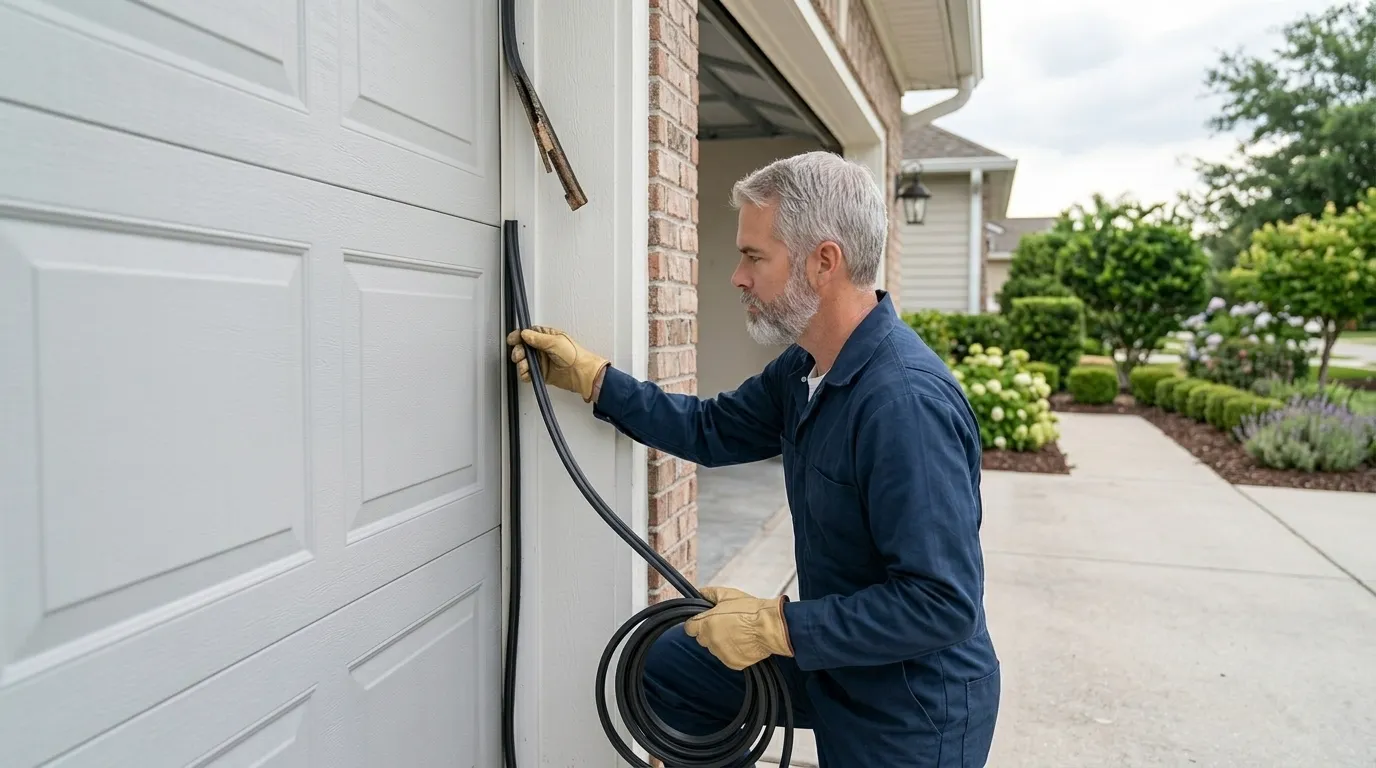
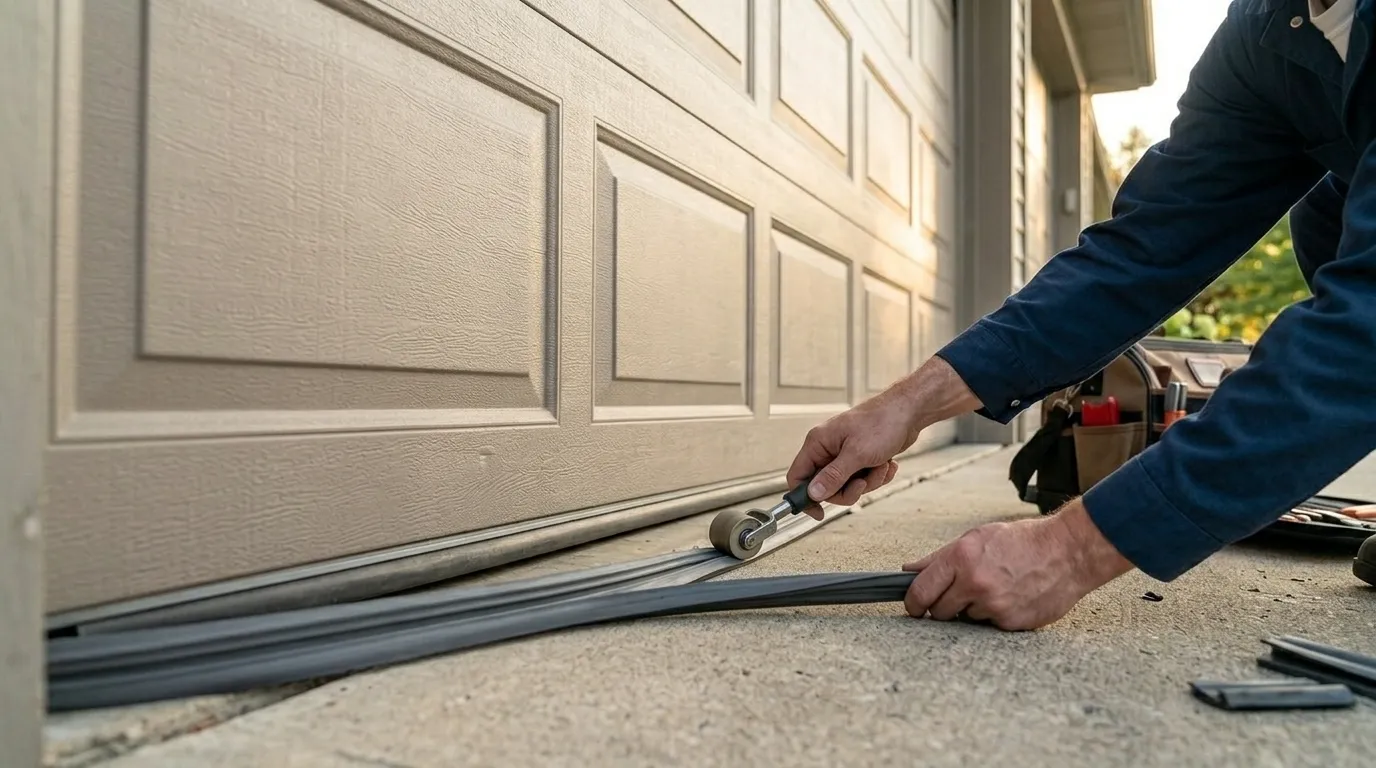
Start with the build era of your house, since it tells you what to check. If your home falls toward the 1967 end of the range, look at the door panel itself first - run a hand along the inside face. No foam backing means you're looking at an older, uninsulated door, and those are the ones most likely to have hardware that's hard to source new when a roller or hinge finally gives out. Weatherstripping on these older doors also tends to be original and brittle by now.

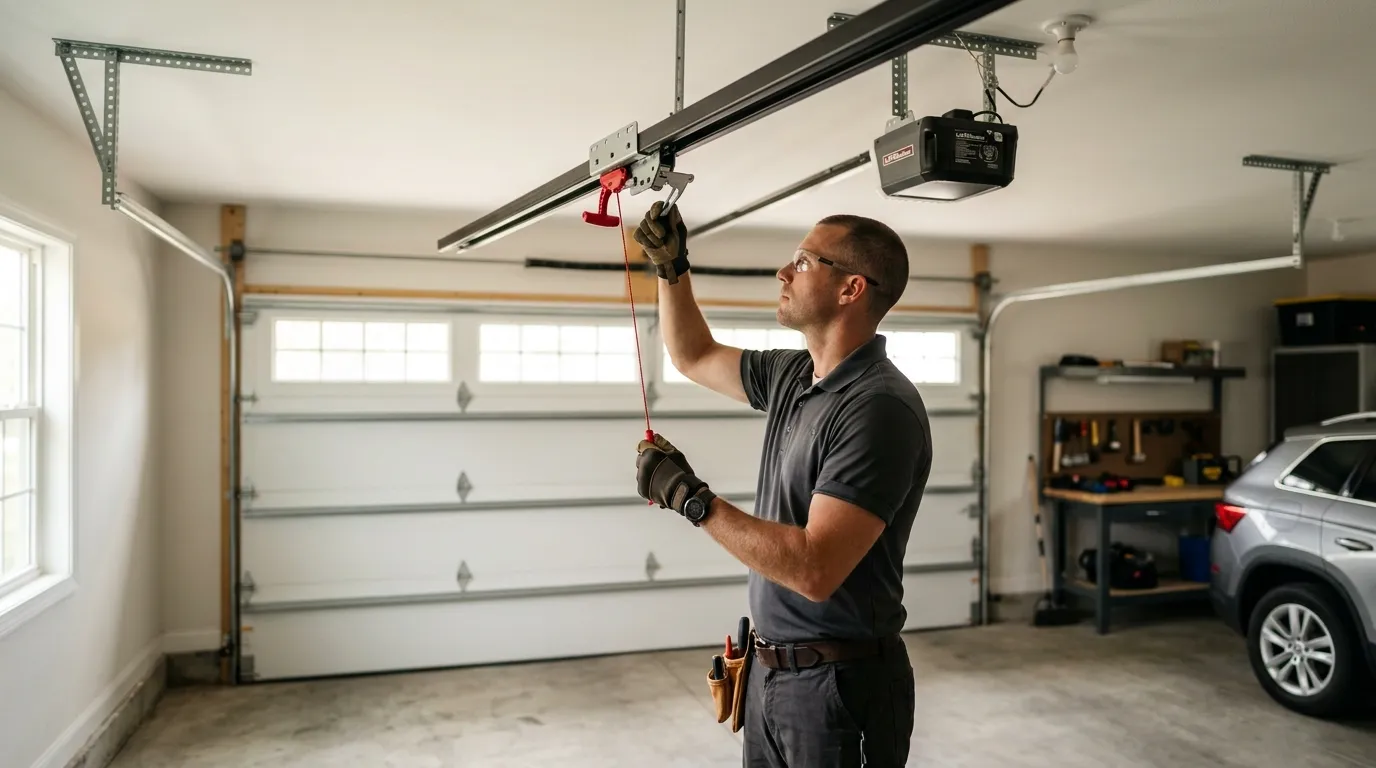
If your home is closer to the 2005 median or newer, the panel is less likely to be the weak point. Check the opener instead - the motor unit, the photo-eye sensors near the floor track, and the wall control. These are the parts that fail first on newer stock, not because the door build is bad but because electronics have a shorter service life than steel.

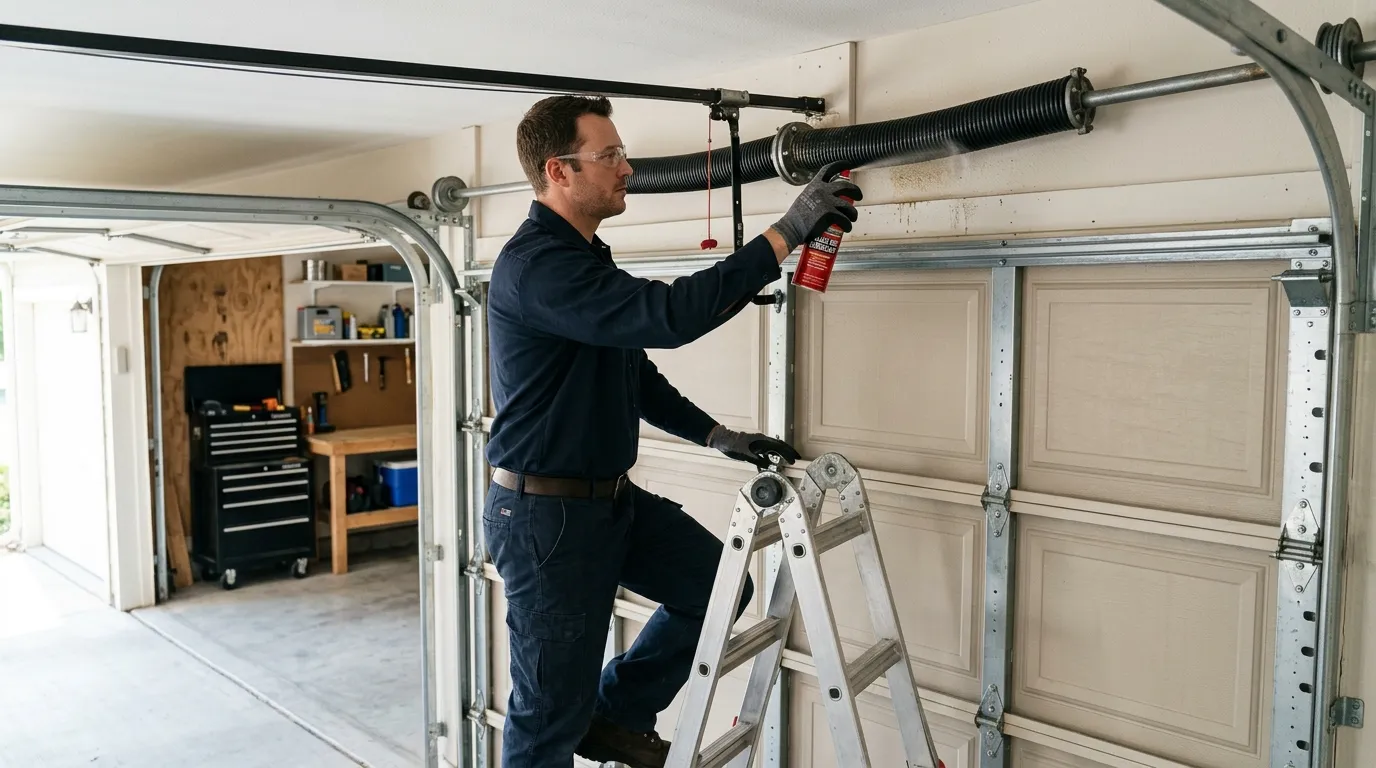
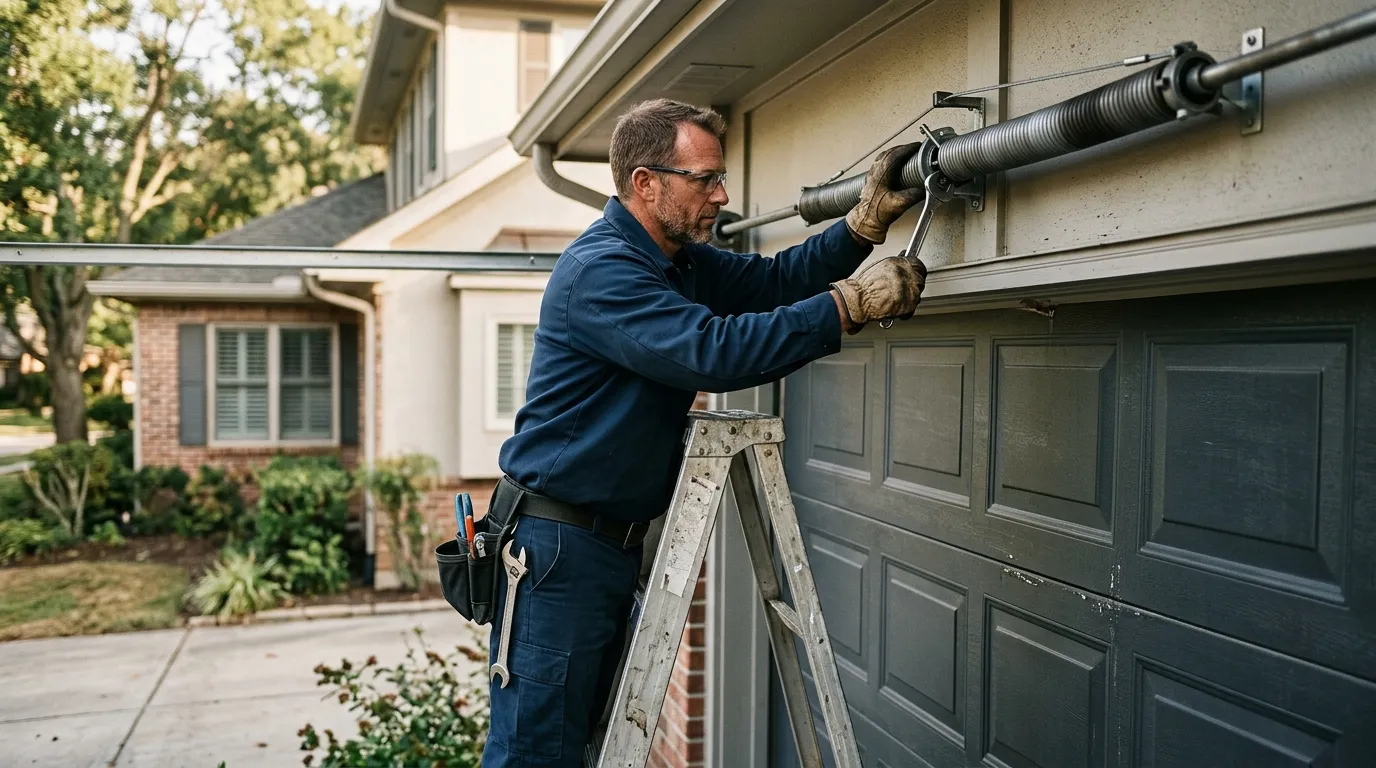
Either way, listen to the spring before you look at anything else. A grinding or popping sound during the lift cycle, on a door of any age, usually means the torsion spring is close to the end of its cycle count. That's true regardless of what decade the house was built, and it's the one check we'd tell every homeowner in this area to do first, before worrying about panels or sensors.
What Is Going On

This service area covers North Hills directly north, North Raleigh and Northeast Raleigh a few miles out, Downtown and East Raleigh and King Charles a few miles to the south and southeast, Southwest Raleigh and Northwest Raleigh close in on the other sides, and Stonebridge about 7 miles northwest. Farther out we reach Knightdale at 9 miles, Morrisville at 11, Rolesville at 12, and Youngsville and Wendell both around 16 miles, with Gorman and Zebulon another few miles beyond that.

Across that footprint there are roughly 30,838 households and about 12,944 owner-occupied houses, with median household income around $91,638. That income level and the age of the housing stock together explain a pattern we see often: homeowners who'd rather replace a failing door with an insulated, code-current model than keep patching an original 1970s or 1980s panel, especially once repair costs on obsolete hardware start adding up. It's not a universal choice - plenty of owners keep original doors running well past 30 years with the right maintenance - but the income and housing data together make replacement a realistic option for a good share of the households we work with, not just an upsell.

How it works

From “it’s stuck” to “it’s fixed”

Tell us what’s wrong - Raleigh garage door service

Tell us what’s wrong

Describe the symptom - won’t open, loud bang, opener runs but the door won’t move.

On-site diagnosis - Raleigh garage door service

On-site diagnosis

A technician tests the door under power and by hand and finds what actually failed.

Clear, up-front plan - Raleigh garage door service

Clear, up-front plan

You get the fix that’s needed and what drives the cost - before any work starts.

Repaired & tested - Raleigh garage door service

Repaired & tested

The repair is done, the door is set true and tested, and the work area left clean.

Serving Raleigh, NC - tell us what your door’s doing and we’ll take it from there.

How we work

What to expect

Diagnosis firstEvery visit starts by finding what actually failed - not a pre-written parts list.
The right part for the doorSprings and openers matched to the door’s weight and age, so the fix holds up.
Straight answersWhen a repair makes more sense than a replacement - or the reverse - you hear it plainly.
Clean, careful workTension released safely, hardware set true, the door tested under power before we leave.
Questions

Frequently asked

Straight answers about garage door repair in Raleigh. Still unsure? Ask us directly.

01My house was built in the 1970s. Is my garage door original?

It's possible. A lot of the housing stock in this area runs from 1967 onward, and some of those original doors, especially uninsulated steel or wood panel doors, are still in service. Check the inside face for foam backing - no foam usually means it's an older door. If the panel is original, hardware parts can be harder to match, which is worth knowing before a spring or hinge fails.

02Does the cold here actually affect my garage door?

The climate here is cold-moderate, not extreme, so you won't see the dramatic spring failures that happen in colder regions. But steel torsion springs do stiffen with temperature swings, and a door that lifts easily in summer can feel noticeably heavier on a cold morning. That's normal cycling, not necessarily a sign of failure, though it's worth a tension check if it feels off.

03Should I repair or replace an older door?

It depends on the door's age and what's wrong with it. If your home is toward the earlier end of the 1967-2013 build range and the panel itself is uninsulated original stock, repair costs on obsolete hardware can add up fast, and replacement with a current insulated door is often the more sensible option. Newer 2000s-era doors are usually worth repairing rather than replacing.

Ready to get your garage door sorted?

Tell us what it’s doing and where you are in Raleigh - we’ll take it from there.

Request a QuoteCall