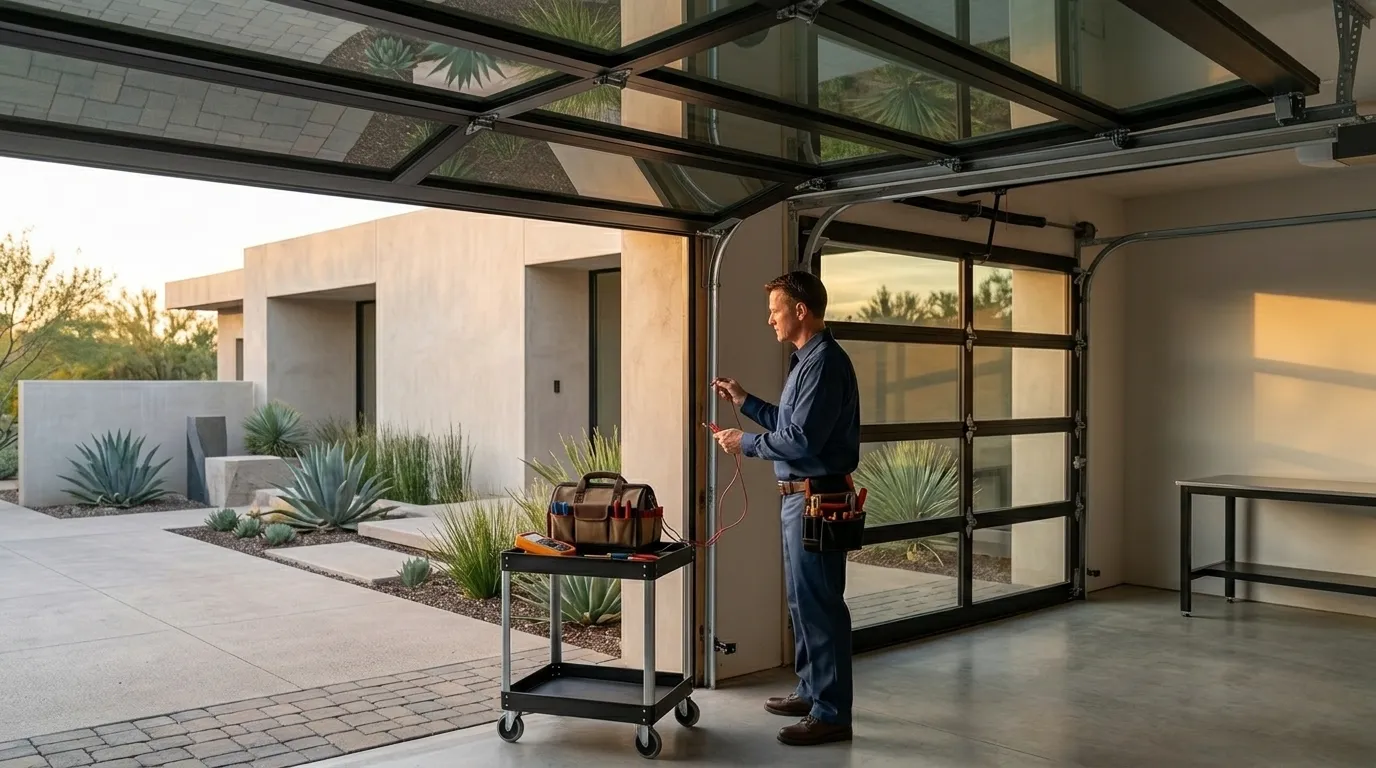
A look at what a Raleigh Garage Door Co service call actually checks, from spring tension to opener sensors, and why the area's 1967-2013 housing stock matters.
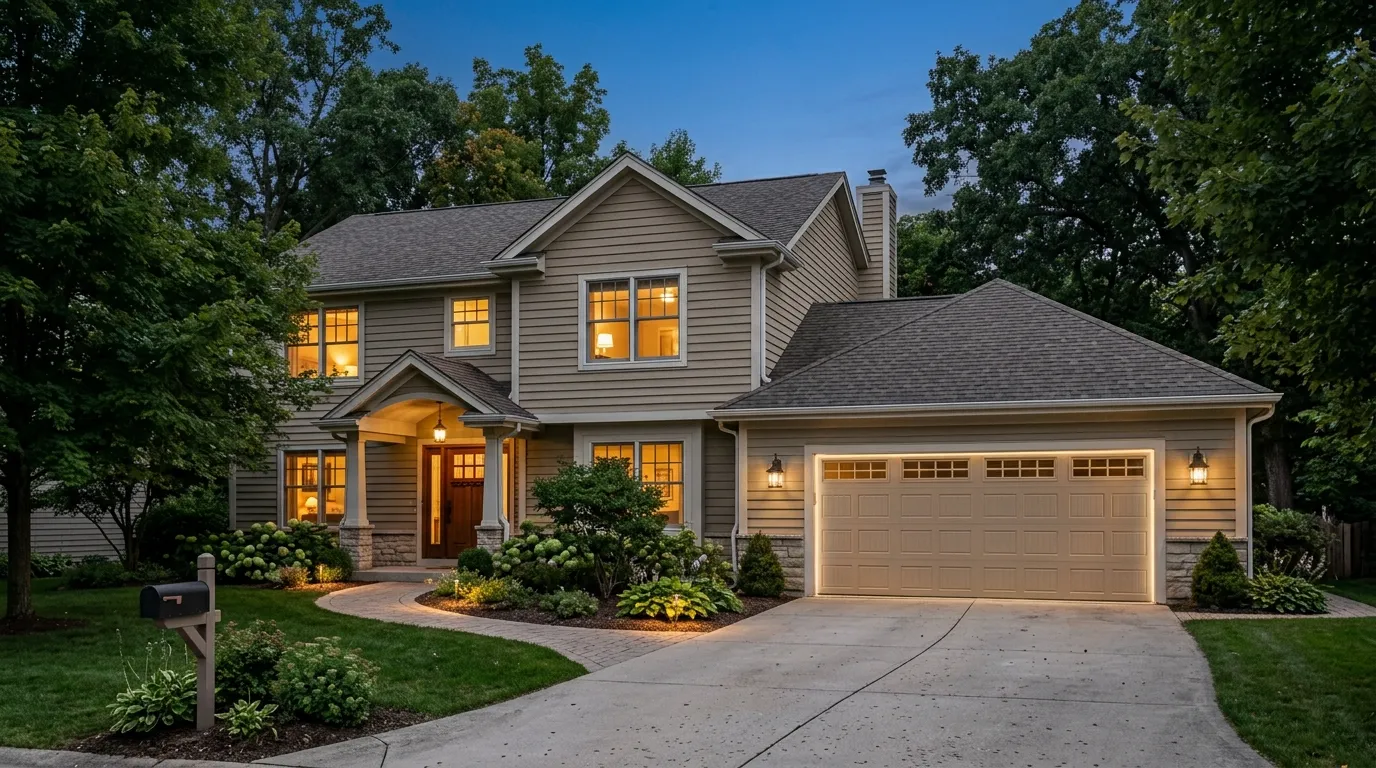
Most of the houses we go into across this service area were built between 1967 and 2013, with the bulk of the stock dating to the 2000s across the seven named areas we run trucks through - North Hills, North Raleigh, Downtown, East Raleigh, King Charles, Northeast Raleigh, Southwest Raleigh, Northwest Raleigh, and Stonebridge. That matters because a door installed in 2005 is aging out of its factory rollers and cables right about now, and a lot of the openers from that era are chain-drive units with sensors that were never great to start with. When we get a call, the first thing we're doing mentally is placing the house on that timeline - a 1970s door has different hardware problems than a 2010 door, even on the same street. We're not diagnosing a generic "garage door issue." We're diagnosing a specific decade of build quality, because the parts, the mounting hardware, and the failure points are different from one era to the next.
What Changes With the Season
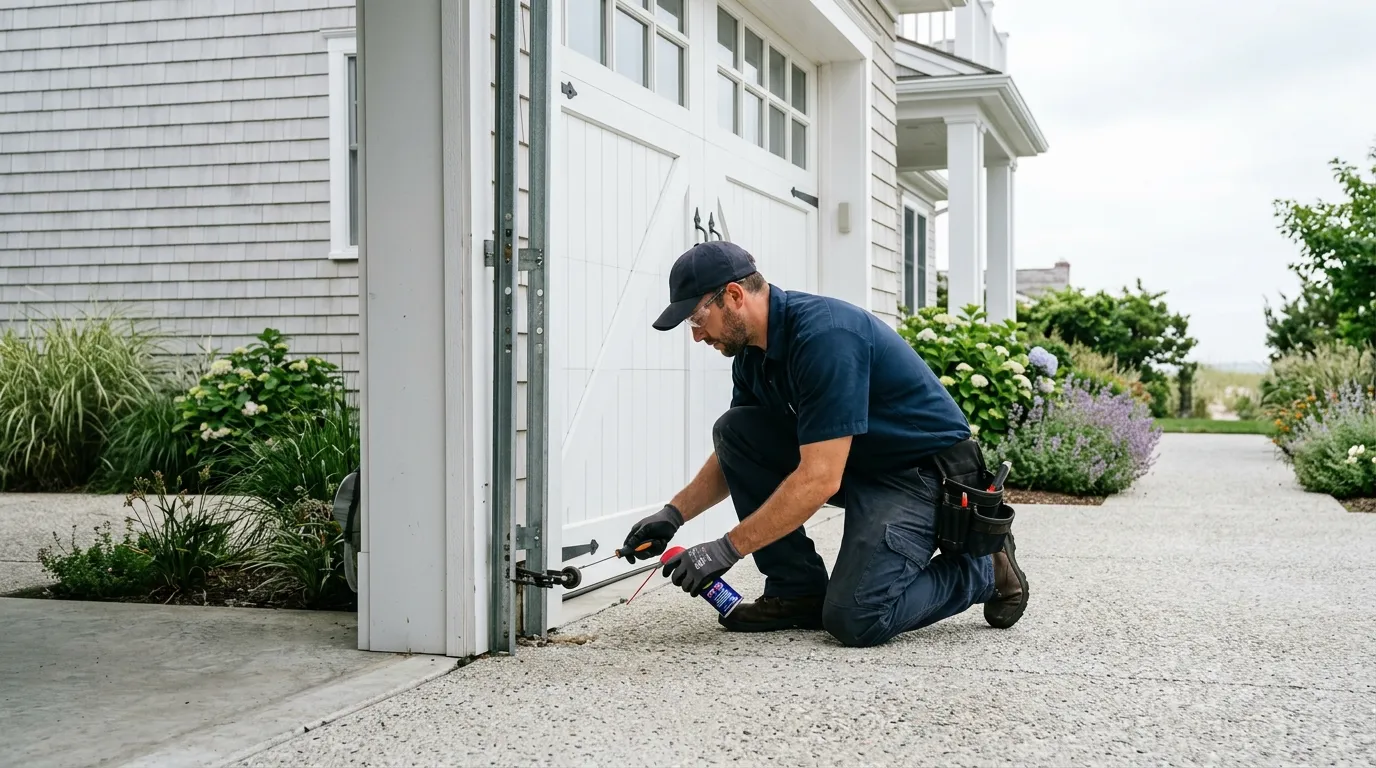
This area sits in a cold-moderate climate band, which means we don't get the extreme swings that wreck springs and openers in harsher zones, but we do get enough temperature change across the year to matter. Steel contracts in cold snaps and that's when a spring that was already fatigued finally lets go - torsion springs don't fail gradually, they fail on one particular cold morning after months of wear you couldn't see. Humidity swings through the warmer months also affect wood-composite panels and can make tracks bind if they weren't lubricated going into summer. A service call in January is going to focus on spring tension and cold-stiffened lubricant. A call in July is more likely about track alignment and panel expansion. We check both regardless of the season, because a moderate climate still cycles a door through real temperature range twice a year, it just doesn't scream about it the way a harsher climate would.
What to Look At First
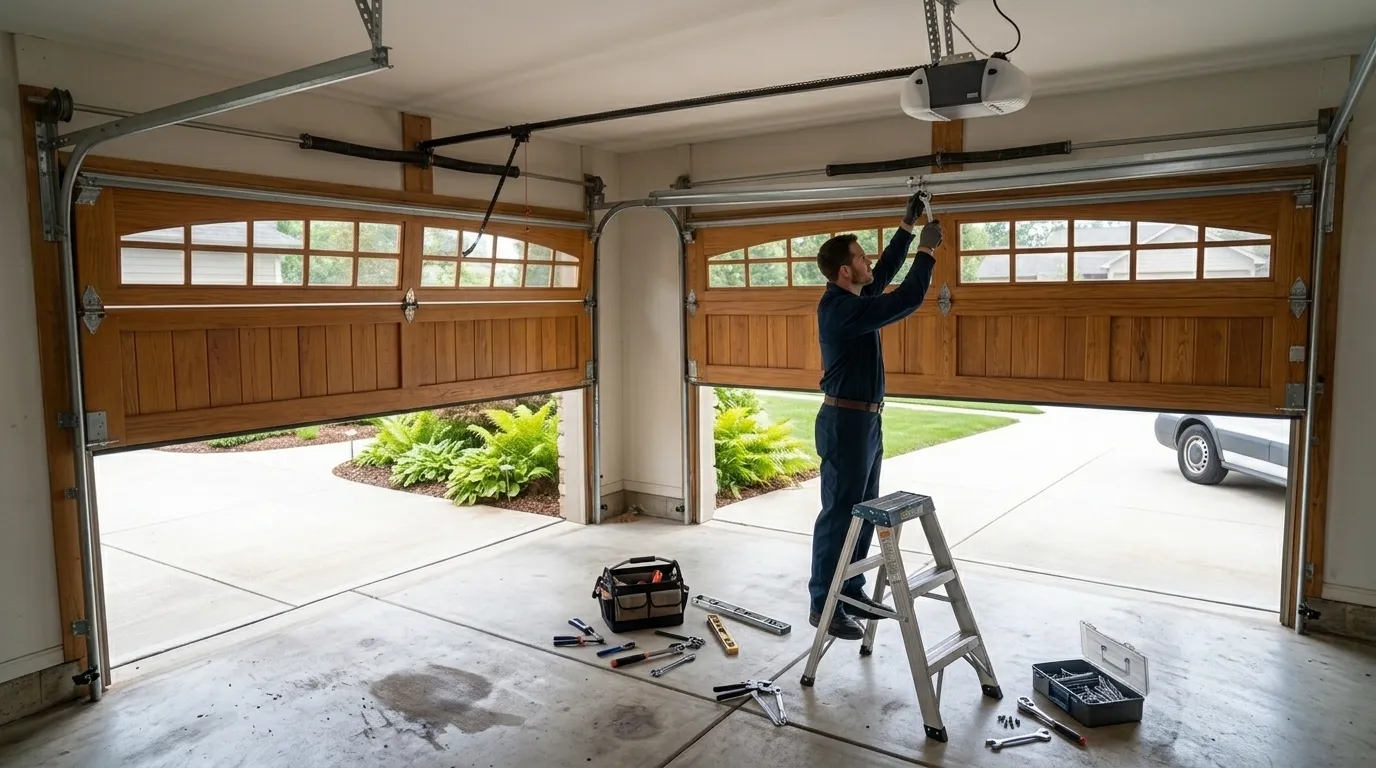
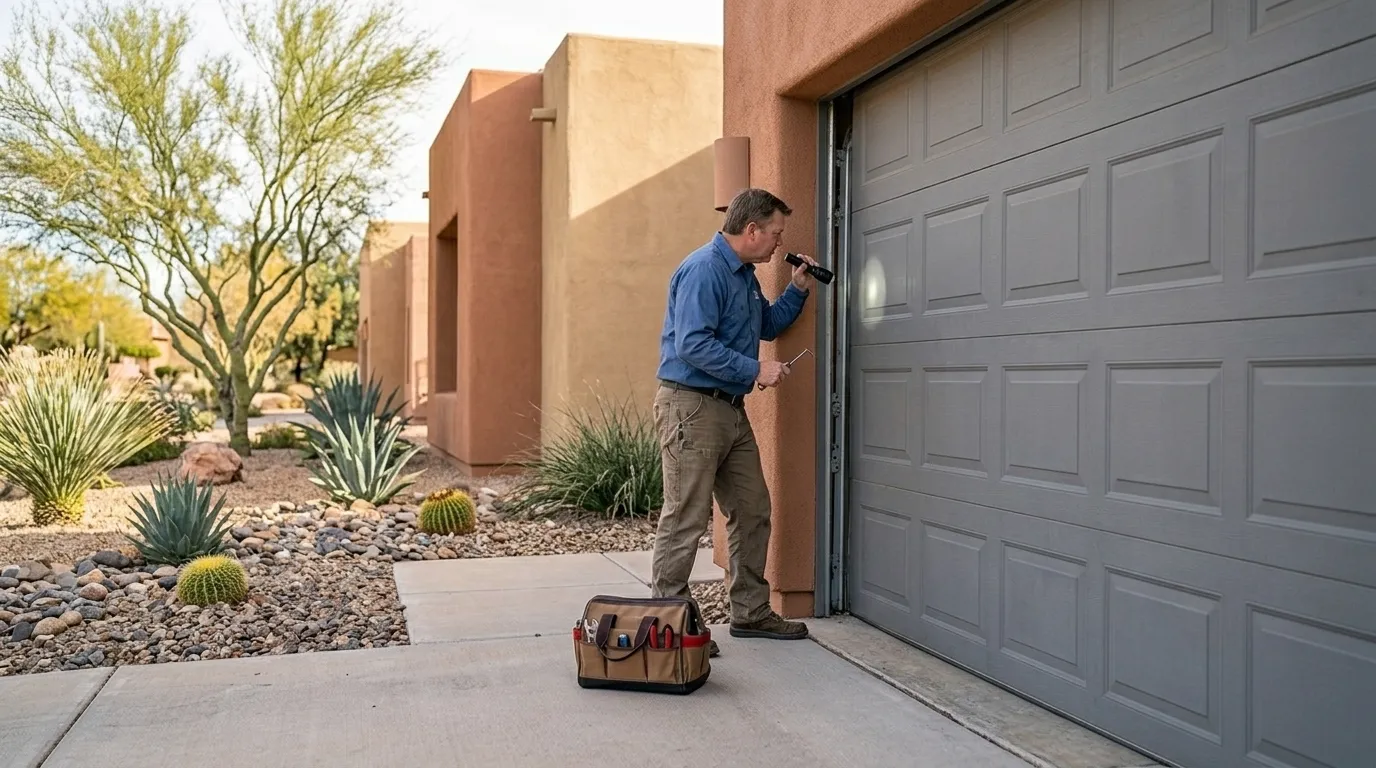
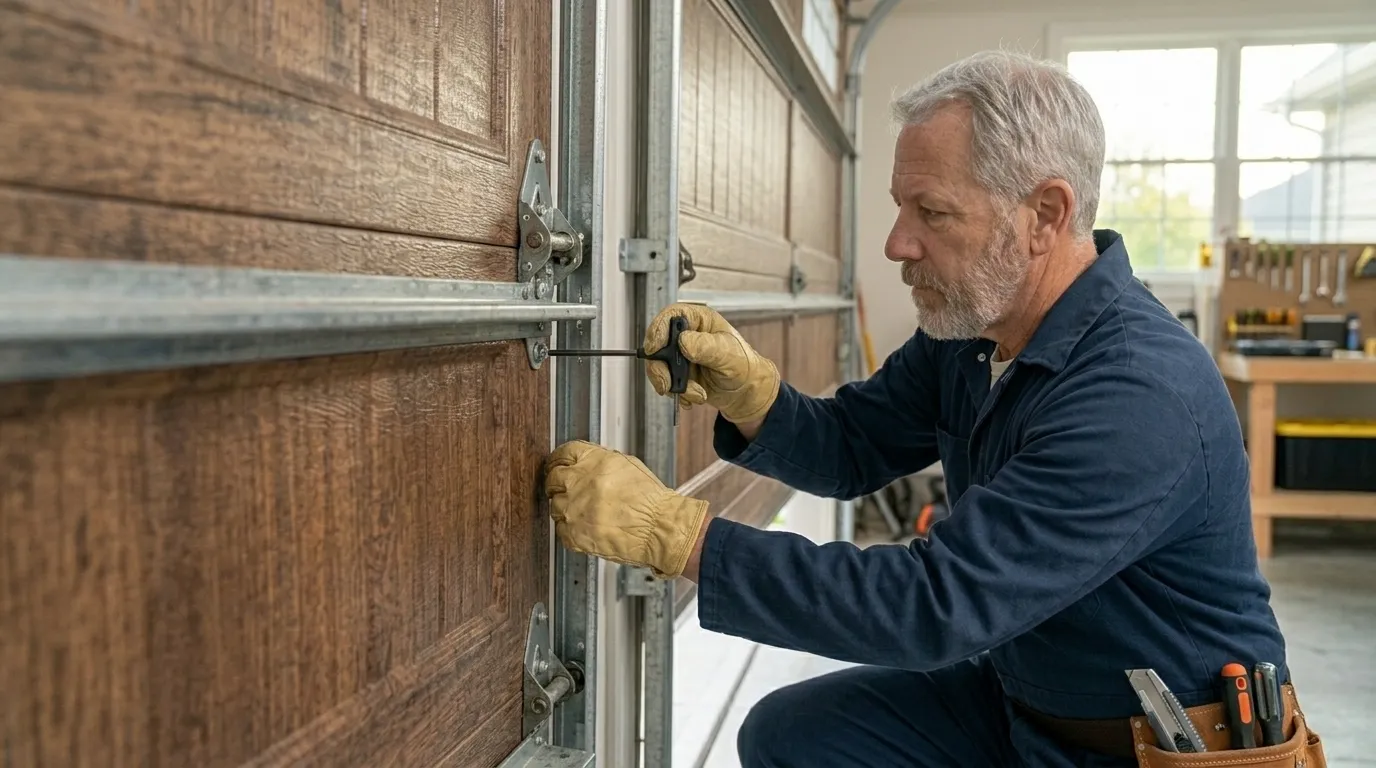
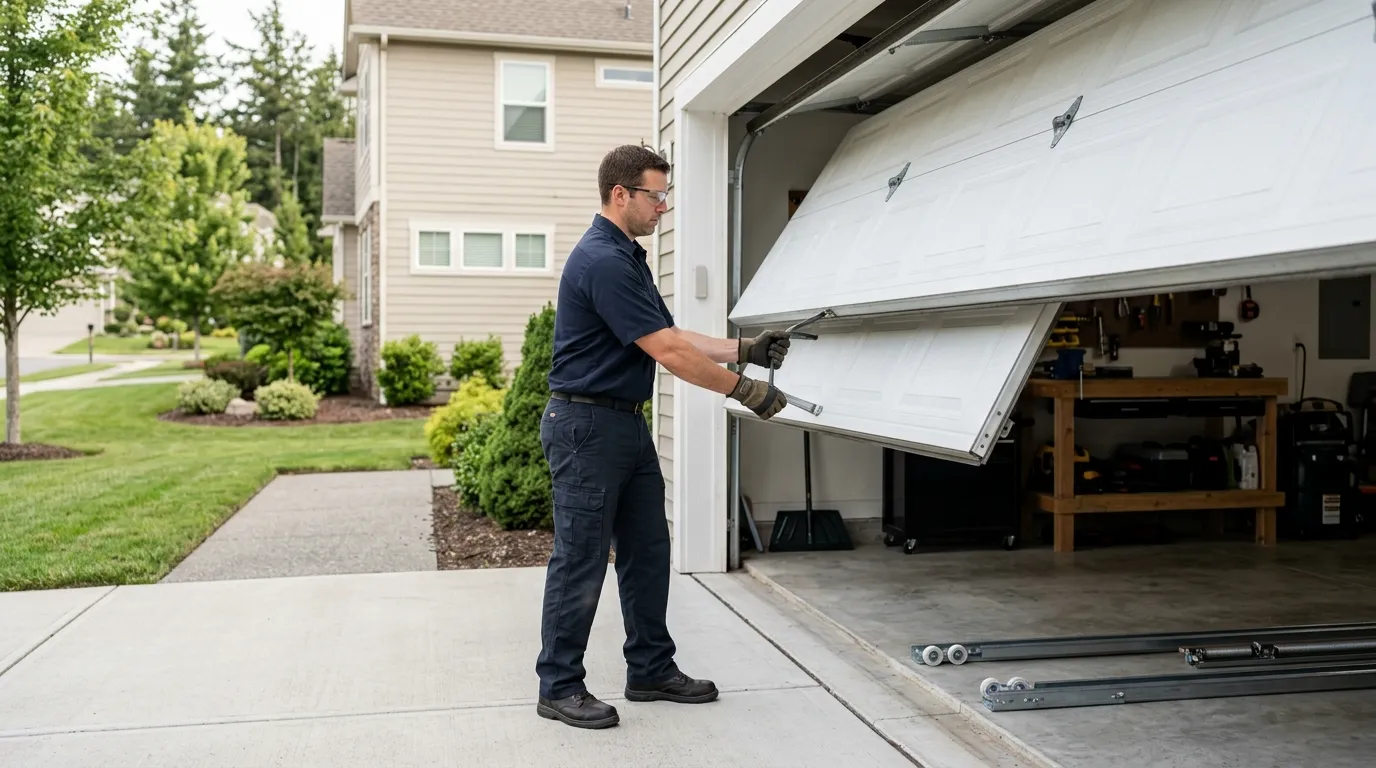
On a first visit we start with the spring system, because on a house from this build era - especially anything from the 2000s wave that makes up most of the stock here - the torsion spring is usually original or one replacement in. We check cycle wear, not just whether it's broken yet. From there: cables and drums, since fraying cable is the thing most owners never look at until it's already failed. Then the opener - chain-drive units from the 2000s are common in this area and their safety sensors drift out of alignment more than owners realize. Last, we check the track and rollers for the kind of wear that shows up specifically in doors that have been cycling for fifteen to twenty years, which describes a large share of the houses in these seven areas. We don't start with a cosmetic look at the panels. Cosmetics are last, because a door that looks fine can still have a spring one cycle from letting go.
What Is Going On
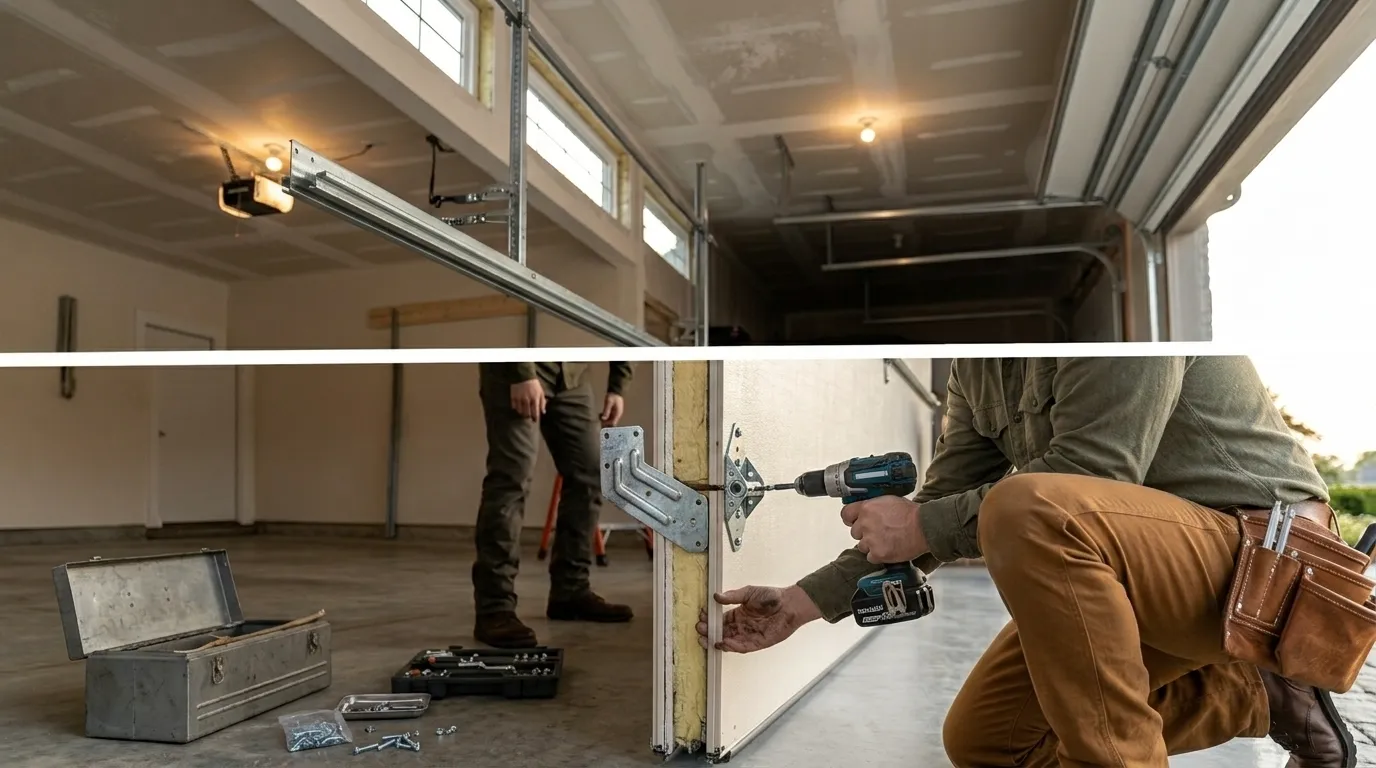
Here's the honest limitation: on some of the older end of the stock - houses closer to the 1967 side of that range - we run into torsion hardware or panel sizes that just aren't made anymore, and a same-day repair turns into an order with a real wait on parts. We'll tell you that up front rather than promise a fix we can't deliver that day. For most of the service area, though, with a median household income of $91,638 and 12,944 owner-occupied houses among the roughly 30,838 households we cover, what we're usually doing is straightforward maintenance and part swaps rather than full replacements - springs, cables, sensor alignment, track adjustment. Replacement gets recommended when the door itself, not just a part, is the problem: rot, rust-through, or a frame that's been reworked so many times it won't hold new hardware right. That's a smaller share of calls, but it happens, mostly on the oldest end of the stock.
How it works
From “it’s stuck” to “it’s fixed”
01
Tell us what’s wrong
Describe the symptom - won’t open, loud bang, opener runs but the door won’t move.
02
On-site diagnosis
A technician tests the door under power and by hand and finds what actually failed.
03
Clear, up-front plan
You get the fix that’s needed and what drives the cost - before any work starts.
04
Repaired & tested
The repair is done, the door is set true and tested, and the work area left clean.
Serving Raleigh, NC - tell us what your door’s doing and we’ll take it from there.
01How often should I get my garage door serviced given the age of homes around here?
Most houses in this service area were built between 1967 and 2013, with a heavy cluster in the 2000s. A door that age should get looked at every year or two, mainly the spring and cable system, since original hardware from that build window is now reaching the end of its expected cycle count.
02Does the Raleigh climate affect when garage doors break?
We're in a cold-moderate band, so we don't see extreme swings, but springs still tend to fail on cold mornings after fatigue builds up unseen through the year. Summer heat and humidity are more likely to cause track binding or panel expansion issues than sudden failures.
03Will you always be able to fix my door the same day?
Not always. On older homes toward the 1967 end of the local build range, we sometimes hit torsion hardware or panel sizes that are no longer made, which means ordering parts instead of a same-day fix. We'll tell you that at the start of the call, not after.
04Do you serve areas outside North Hills and North Raleigh?
Yes, our trucks run across North Hills, North Raleigh, Downtown, East Raleigh, King Charles, Northeast Raleigh, Southwest Raleigh, Northwest Raleigh, and Stonebridge, as well as nearby towns including Knightdale, Morrisville, Rolesville, Youngsville, Wendell, Gorman, and Zebulon.
Ready to get your garage door sorted?
Tell us what it’s doing and where you are in Raleigh - we’ll take it from there.