
What Changes With the Season
Raleigh sits in a moderate cold climate band, not a deep-freeze zone. That matters for how doors fail here. We don't see the hard, sudden spring snaps you get further north where steel contracts and cracks overnight. Instead, springs here wear out mostly from cycle count and age, and the failure tends to show up gradually: the door gets heavier to lift by hand, the opener strains a little more each week, then one day the spring lets go.
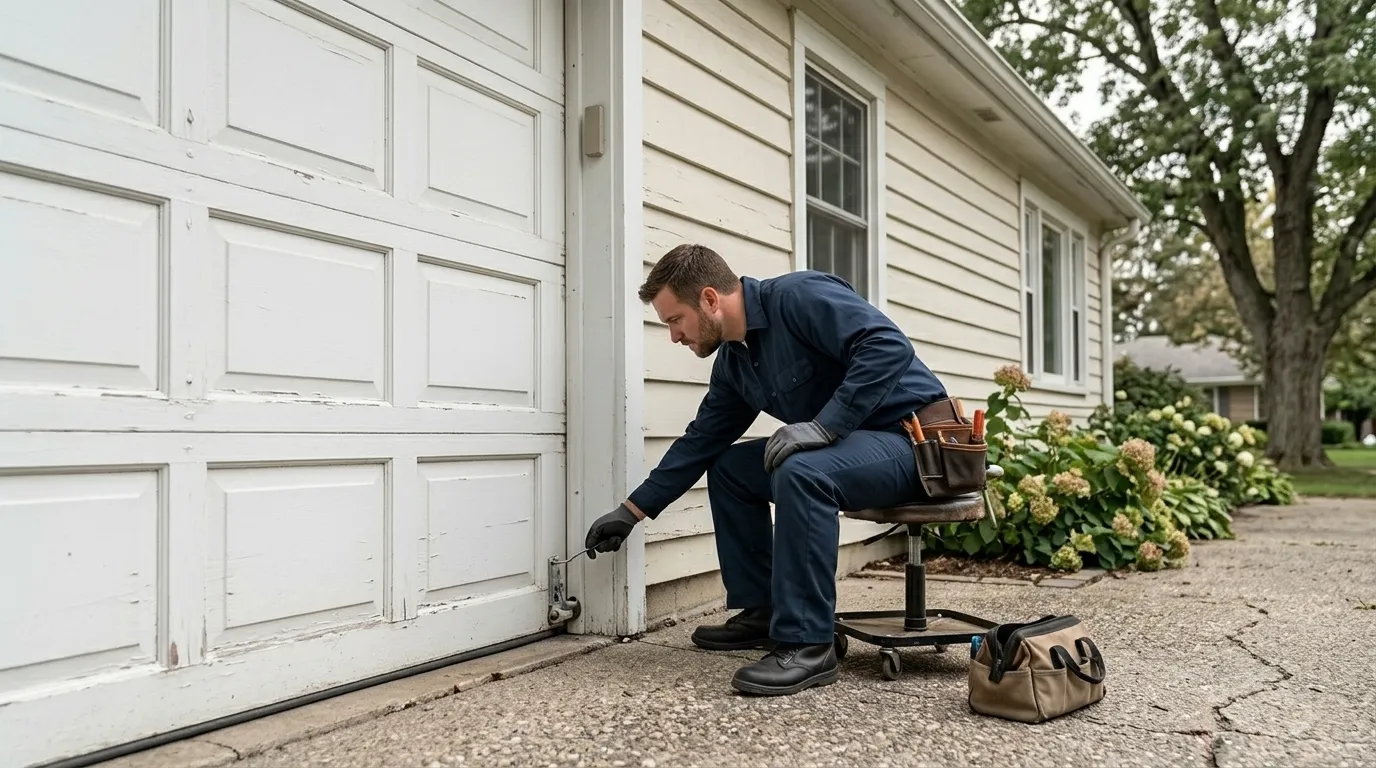
Cold snaps still matter, just differently. Weatherstripping on an older door hardens and shrinks in a cold stretch, and that's when homeowners notice the gap under the door for the first time even though it's been there for months. Lubricant thins out and drips off hinges and rollers in warm weather, then gets stiff again when temperatures drop, which is why a door that ran quiet all summer can start squeaking in winter. None of this means the door is dying. It usually means it's due for a service pass, not a replacement, unless the spring itself is the thing that's gone.
What to Look At First
Start with the spring. If it's original to a door built well before the 2000s, or if it's already been replaced once and is showing rust or gaps in the coil, that's the part most likely to leave you stranded. Springs are rated by cycle count, not by calendar year, so a heavily-used door in a family home can wear one out faster than a lightly-used door twice its age.
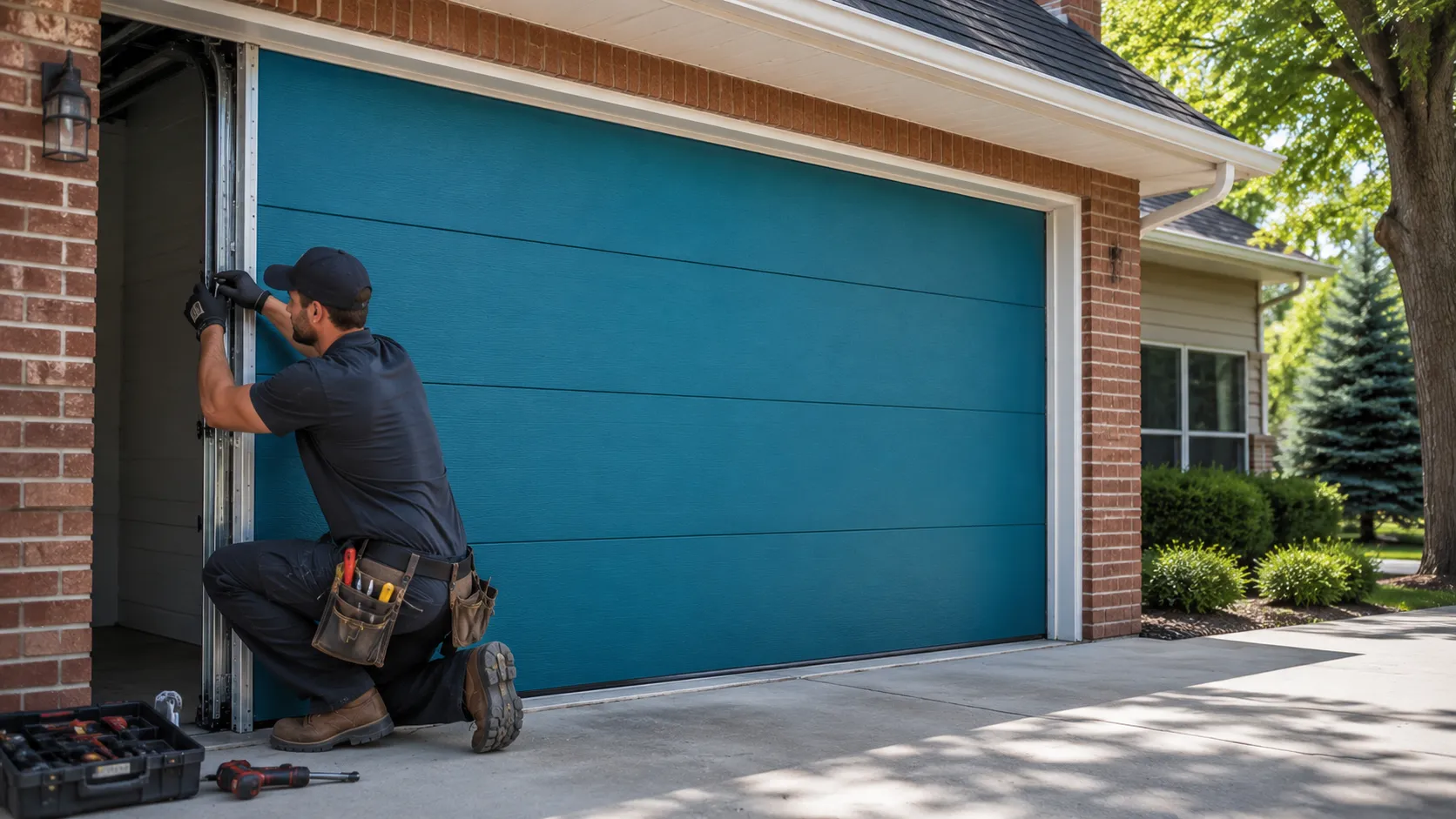
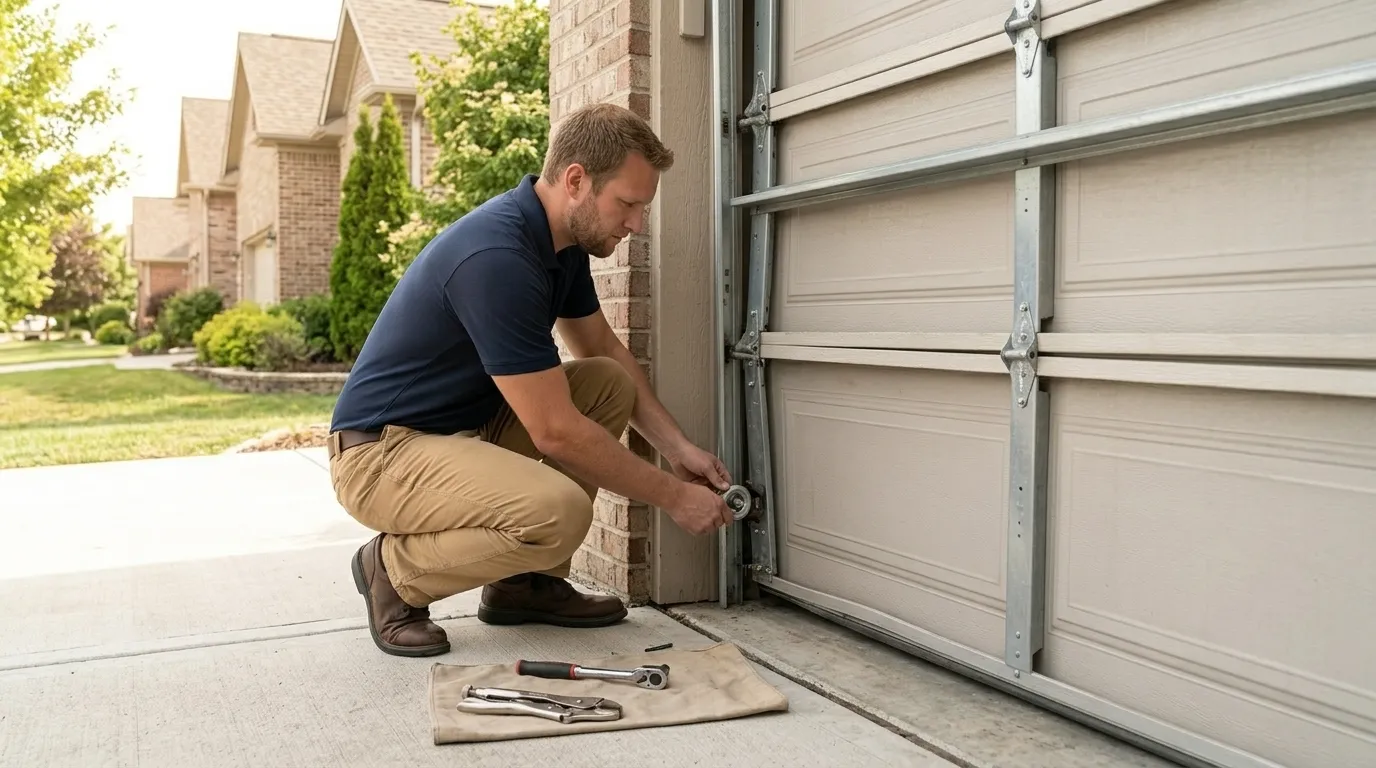
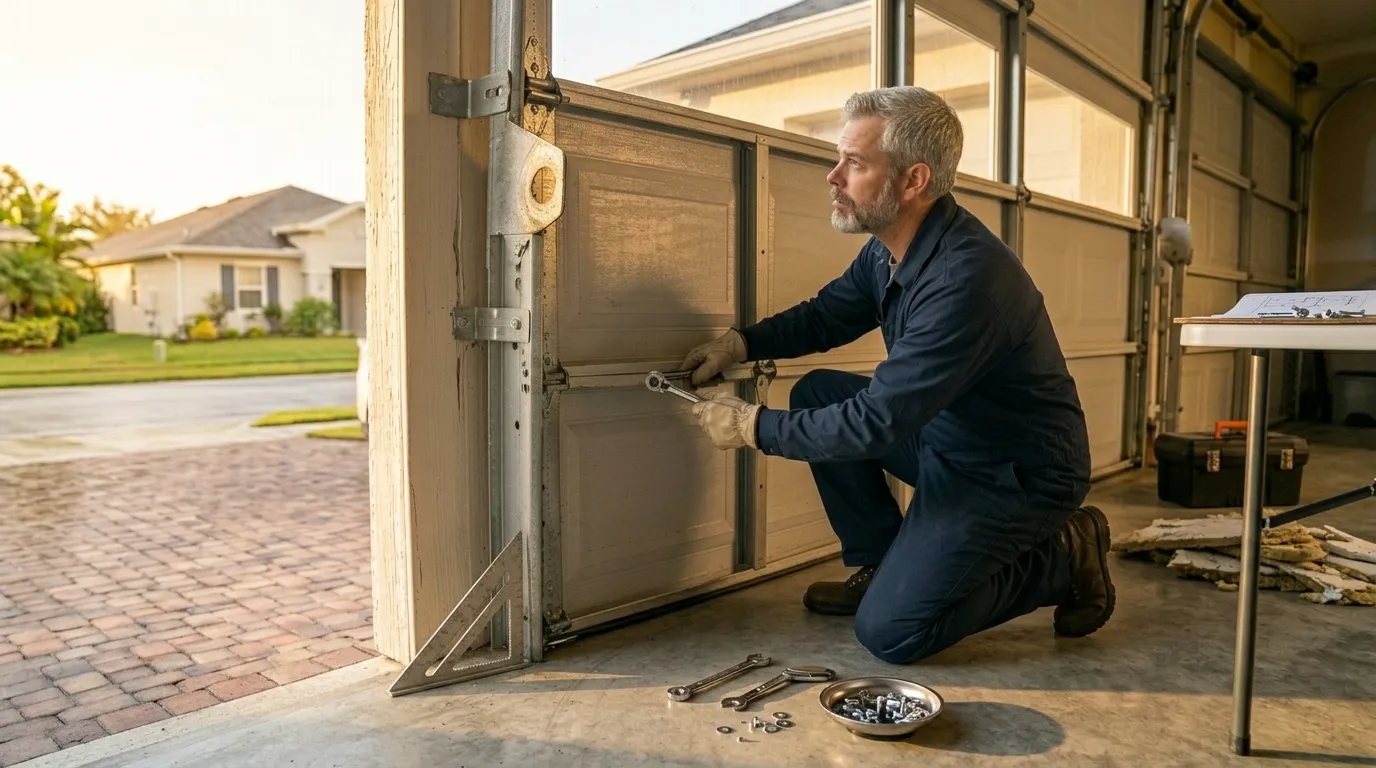
Next, check the track and rollers for anything you can see with the door open: bent rail, rollers with flat spots, hinges with visible play between the leaves. These are cheap to fix on their own and expensive to ignore, because a bad roller eventually chews up the track it rides in.
Last, look at the opener. If it predates the door's last major service, or if it's straining audibly to lift a door that used to run quiet, that's often the tell that more than one system is aging out at the same time. One worn part is a repair call. Three worn parts on the same door, especially on an original build from the 1970s or 80s, is usually the point where replacing the whole unit costs less than fixing it piece by piece.