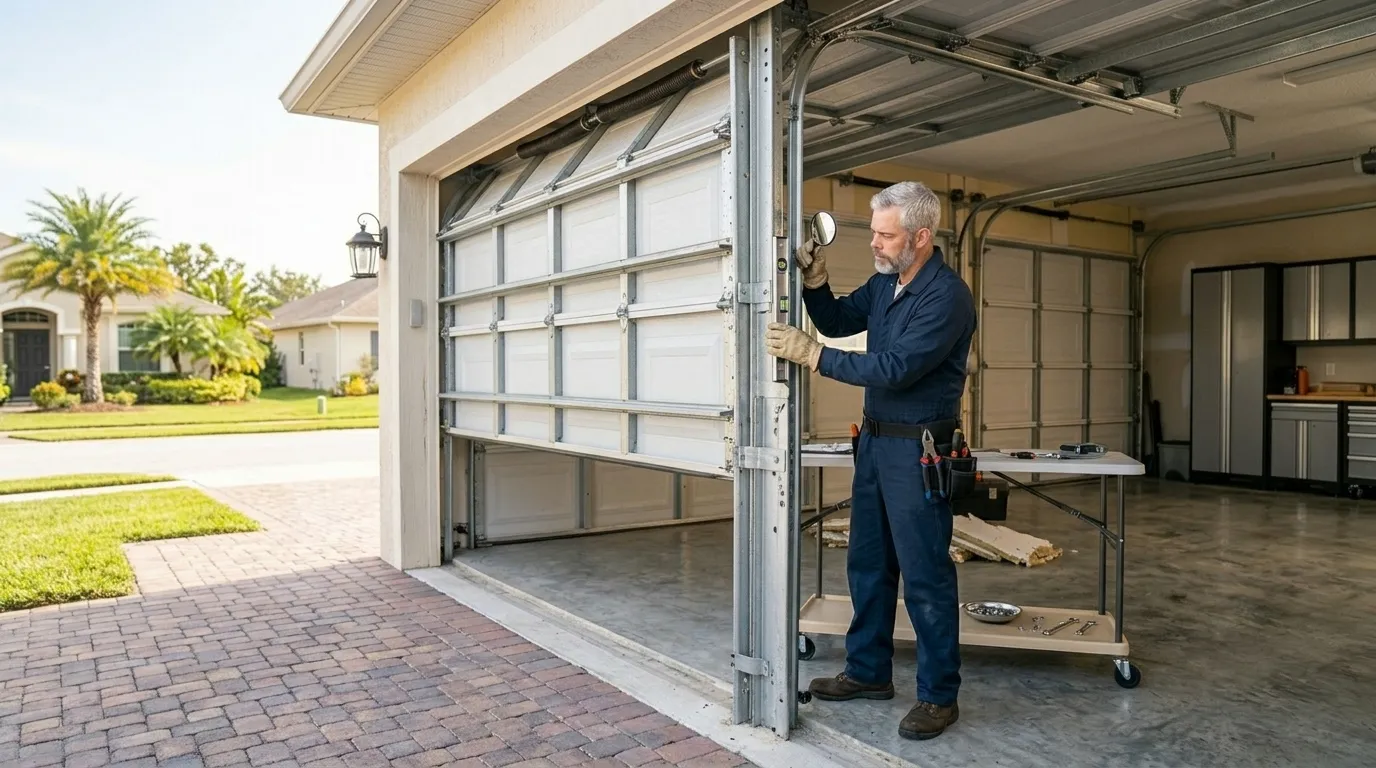
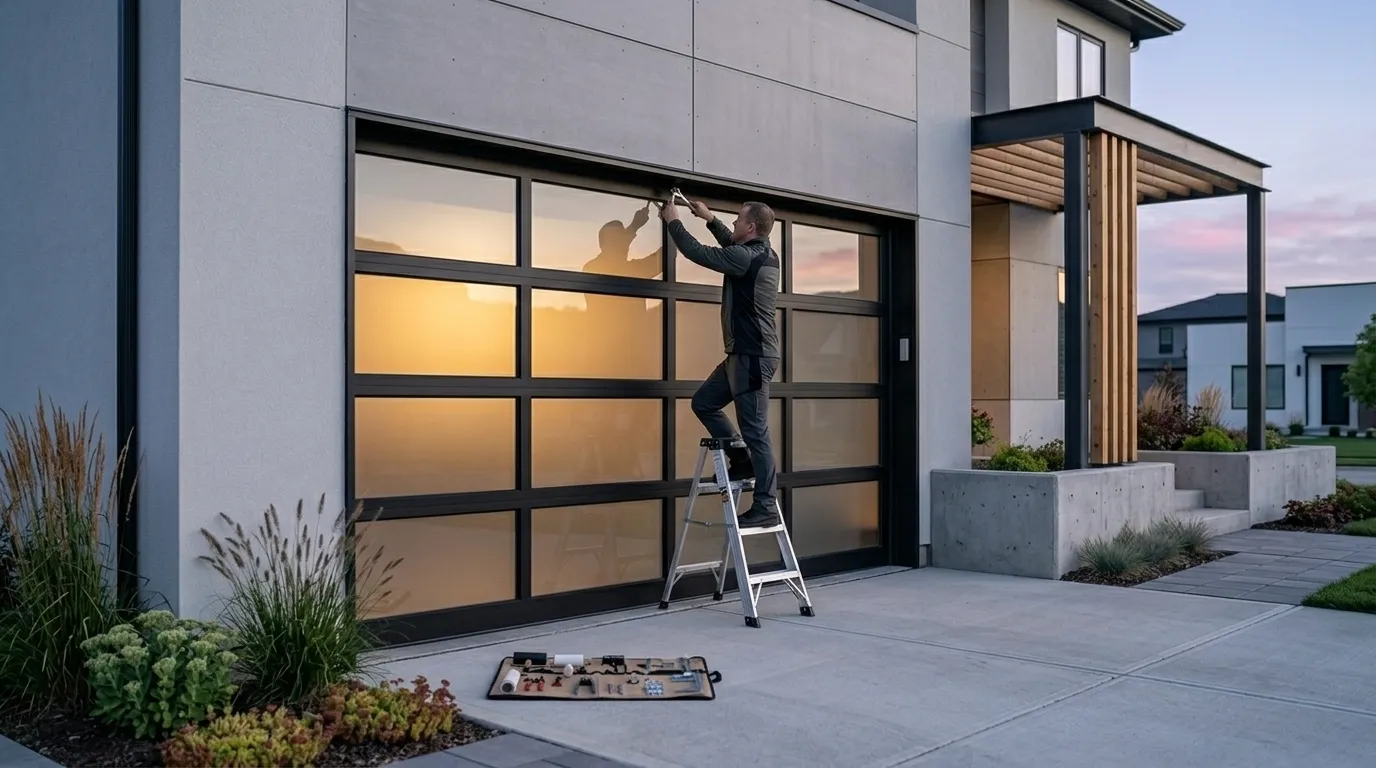
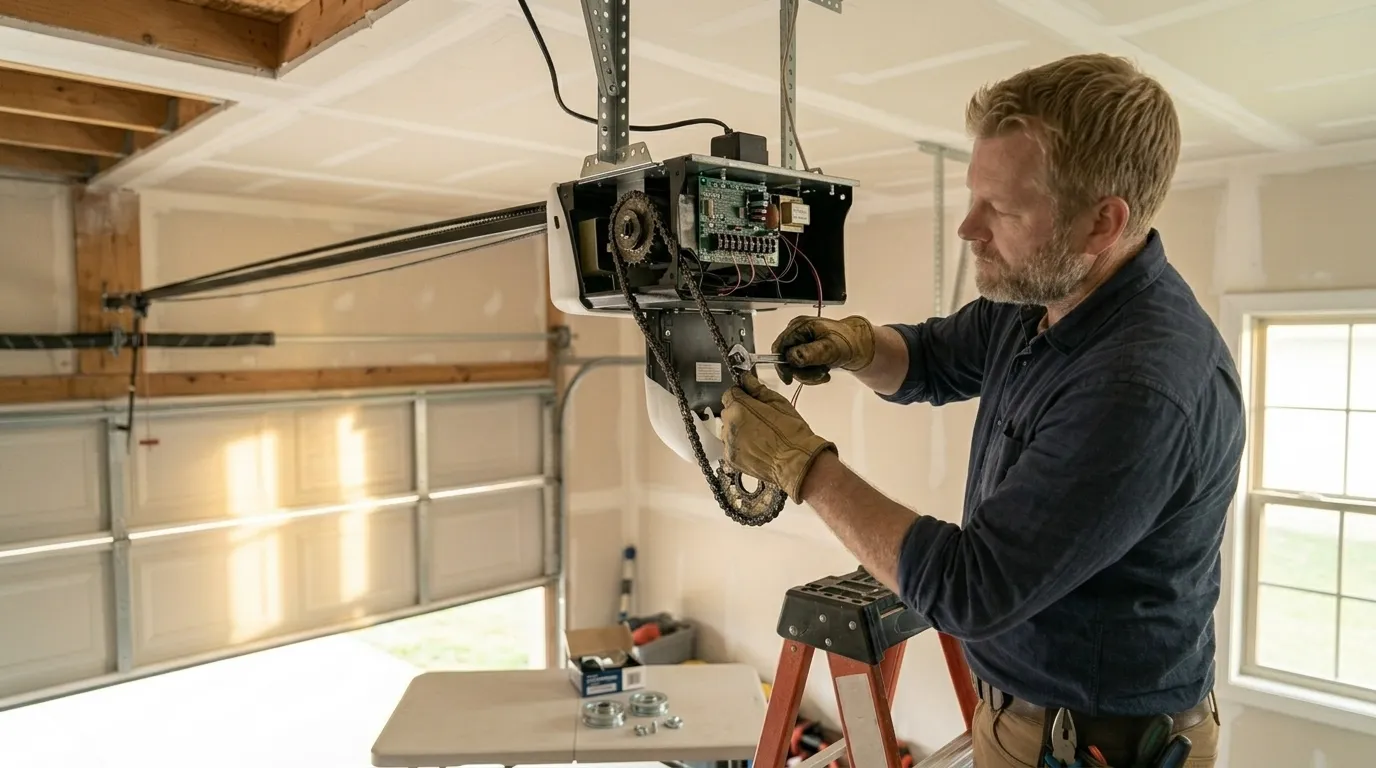
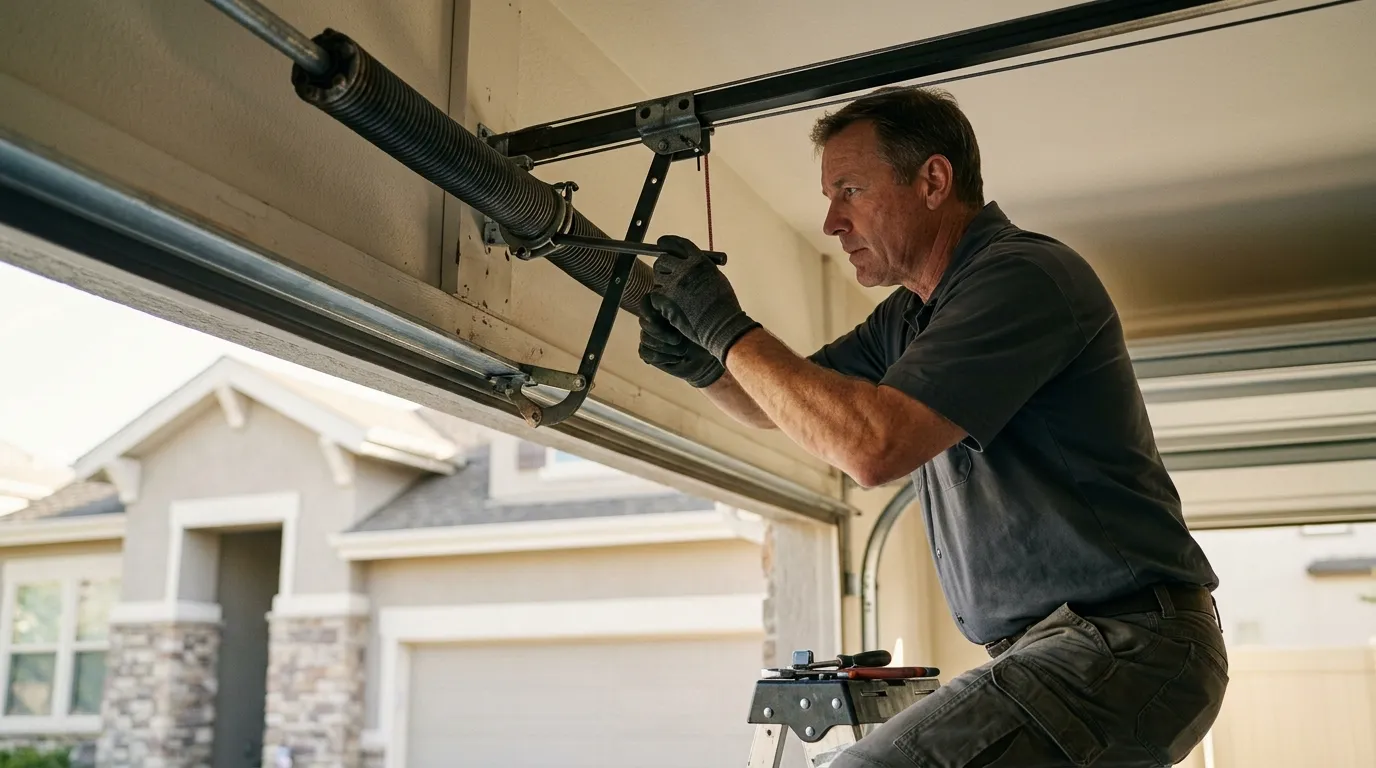
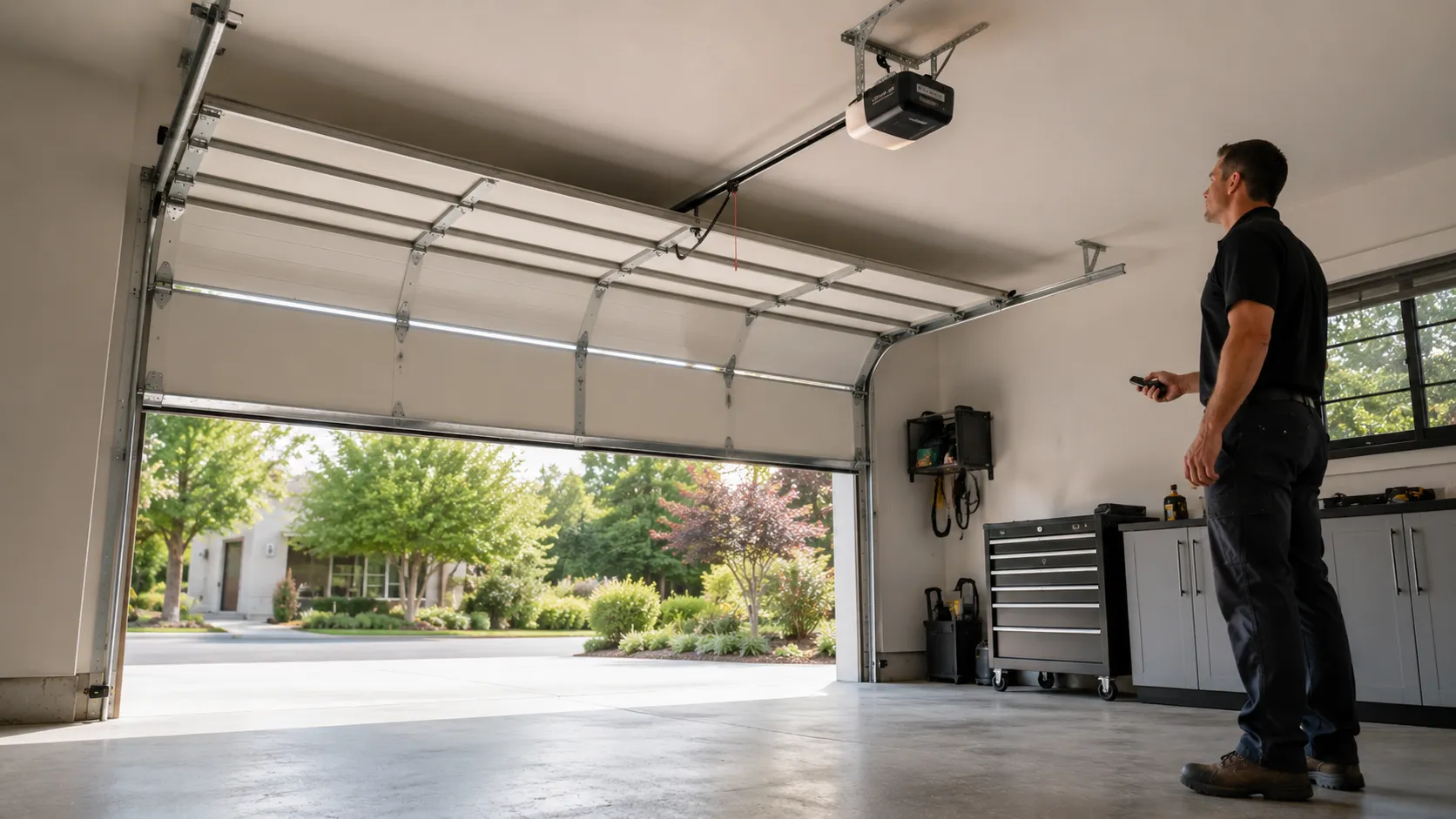
Wendell homes built mostly after 2000 run factory double-torsion springs, not older single-spring setups. We drive out from Raleigh, 16 miles, for spring repair here.
Wendell's housing stock runs younger than a lot of the towns around Raleigh - the median build year here lands around 2005, which puts most garages up after builders switched to factory-installed steel sectional doors on double torsion springs as the standard setup. That's different from the single-spring, older-hardware doors you find in neighborhoods built decades earlier. If your door won't lift, or lifts on one side and drags on the other, you're almost certainly looking at one of two matched torsion springs that's given out, not a single-spring extension system.
Because these are newer doors, the panels are usually still in decent shape - steel, insulated, standard 16x7 double-car or 9x7 single-car sizing. The spring is the part that wears out first regardless of how new the rest of the door is. Torsion springs are rated for a cycle count, and a garage door that opens and closes a few times a day burns through that count in under 10 years no matter how well the door itself was built. So the door looks new, and the spring is still the failure point.
A door that slams down fast, or one where the opener strains and reverses, is telling you the spring lost its tension. That's a spring problem, not a track or opener problem, even on a door this age.
Why It Happens Here
Wendell sits in a climate band the Southeast calls cold-moderate - winters cold enough that steel torsion springs contract and lose a little flex, summers humid enough that the same springs see swings in tension through the year. That cycling is normal wear for this part; it's not a sign anything was installed wrong. Newer torsion springs handle it fine for years, but every wind-and-unwind cycle brings the metal closer to fatigue, and once a spring is near the end of its rated life, a cold morning is often what finally breaks it.
Household income in this area runs above $93,000, and most of the housing here is owner-occupied - across the wider service area, roughly 12,944 of the houses are owner-occupied out of about 30,838 households. That matters for one practical reason: newer, higher-value garage doors tend to get replaced whole less often, because the door itself still looks and works fine. Owners fix the spring and keep the door. That's usually the right call on a door built this century - the springs are a wear part, the door around them isn't.
How Long You Are Without the Door
We work out of Raleigh, about 16 miles from Wendell, so there's no branch or truck sitting in town - every call here means a drive out. That doesn't change the repair itself, which on a standard double-torsion setup usually runs under two hours once the tech is on site with the right spring size in hand. What it does affect is scheduling: same-day is possible but not guaranteed the way it might be for a job five minutes from the shop.
One honest limitation: if your door uses a spring size or wind that isn't a common stock size, or if the job turns up a bent shaft or worn bearing plates while we're in there, that can mean a second trip while the part gets ordered. We'd rather tell you that up front than promise a one-visit fix and miss it. If you can, call as soon as the door starts acting off rather than waiting until it's fully stuck - a door stuck shut with the car inside is a different, more urgent trip than one that's just noisy or slow.
Doing It Yourself
Don't. Torsion springs on a double-car door built to modern code are wound tight enough to do real damage if the winding bars slip - this isn't a job that scales down to a YouTube afternoon just because the door is newer and looks straightforward. The spring itself is a couple hundred dollars in parts; the ER visit from a slipped winding bar is not.
What you can safely check yourself: look at the two springs above the door (if you have a double-car setup) and see if one has a visible gap in its coils where the other doesn't - that gap is the tell-tale sign of a broken spring. You can also try the opener's manual release and lift the door by hand; if it feels like dead weight instead of nearly balancing itself, the springs aren't doing their job anymore. Note what you see and mention it on the call - it saves diagnostic time on-site and helps make sure the tech brings the right spring size the first trip out.
How it works
From “it’s stuck” to “it’s fixed”
01
Tell us what’s wrong
Describe the symptom - won’t open, loud bang, opener runs but the door won’t move.
02
On-site diagnosis
A technician tests the door under power and by hand and finds what actually failed.
03
Clear, up-front plan
You get the fix that’s needed and what drives the cost - before any work starts.
04
Repaired & tested
The repair is done, the door is set true and tested, and the work area left clean.
Serving Raleigh, NC - tell us what your door’s doing and we’ll take it from there.
01Is my Wendell garage door old enough to have the older single-spring setup?
Probably not. Most homes in this area were built after 2000, with a median build year around 2005, which is well past the point builders switched to factory double-torsion spring systems on steel sectional doors. If your house is one of the newer builds nearby, expect two matched torsion springs, not one extension spring.
02Do you have a branch in Wendell?
No. We work out of Raleigh and drive out to Wendell, about 16 miles each way. The repair itself doesn't take any longer because of the distance, but it does mean scheduling a same-day visit is less certain than for jobs closer to the shop.
03Why did my spring break in cold weather if the door is only a few years old?
This area sits in a cold-moderate climate band, and torsion springs lose a bit of flex in winter cold. Combined with normal wear from daily cycling, a cold morning is often just the point where a spring that was already near the end of its life finally gives out - it's wear, not a defect.
04Should I replace the whole door instead of just the spring?
Not usually on a door this age. Springs are a wear part rated for a cycle count; the panels, track, and opener on a door built in the 2000s or later are typically still in good shape. Replacing just the spring is the right call unless the repair uncovers separate damage to the shaft or bearing plates.
Ready to get your garage door sorted?
Tell us what it’s doing and where you are in Raleigh - we’ll take it from there.