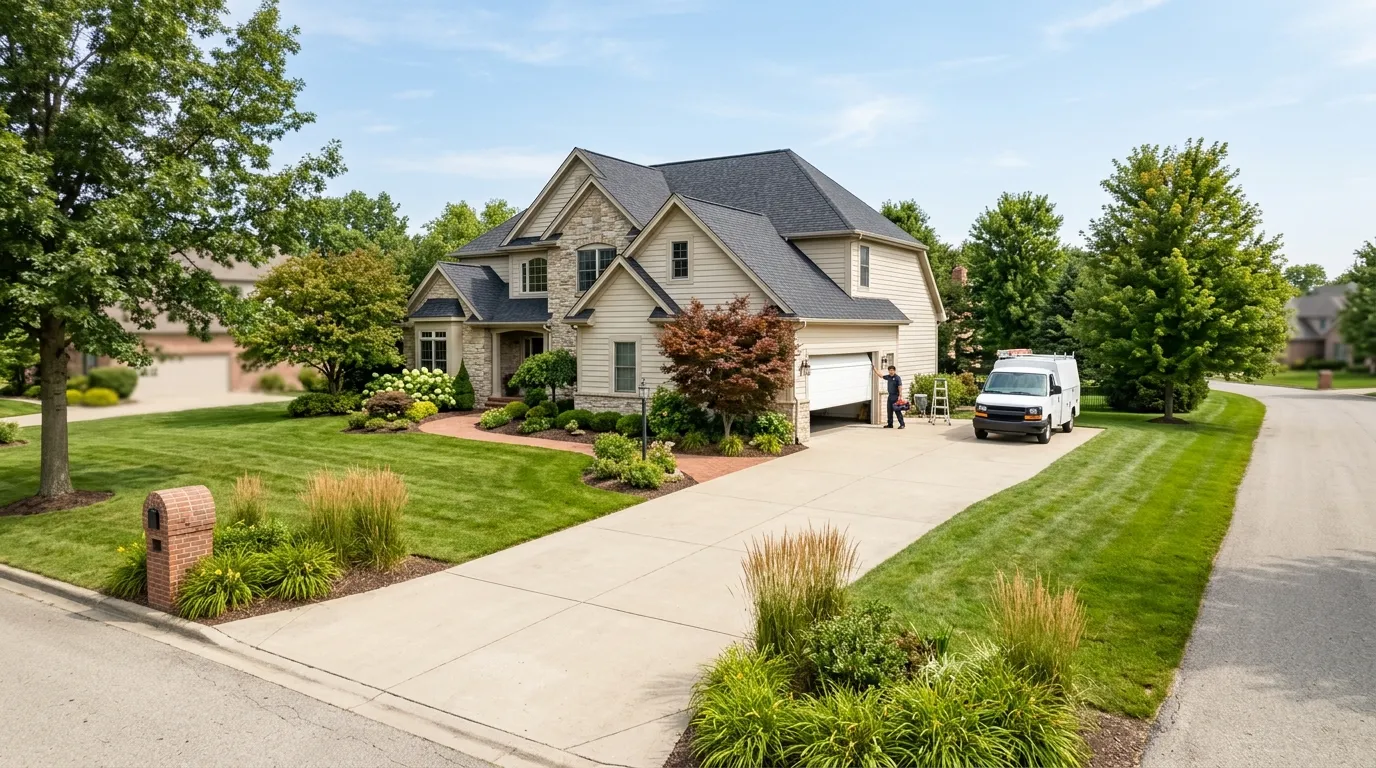
What Changes With the Season
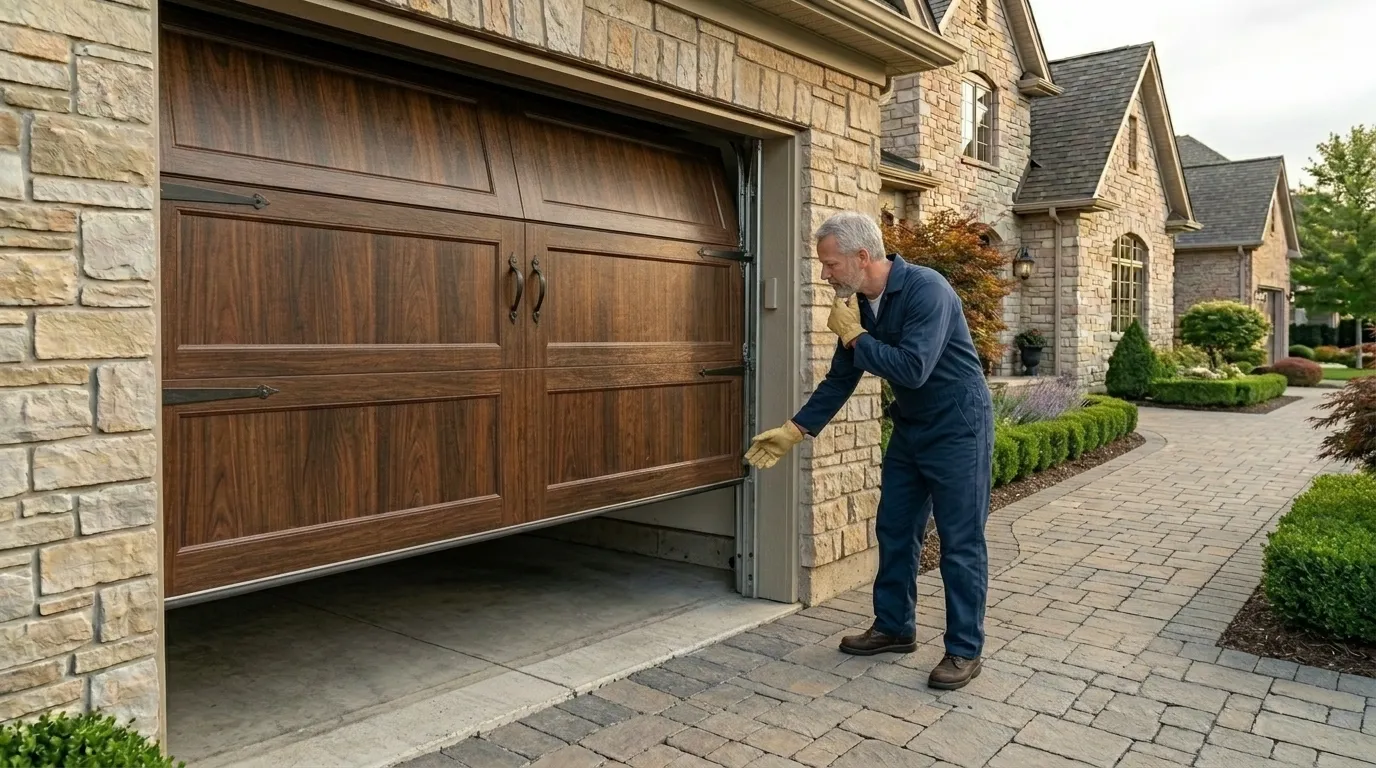
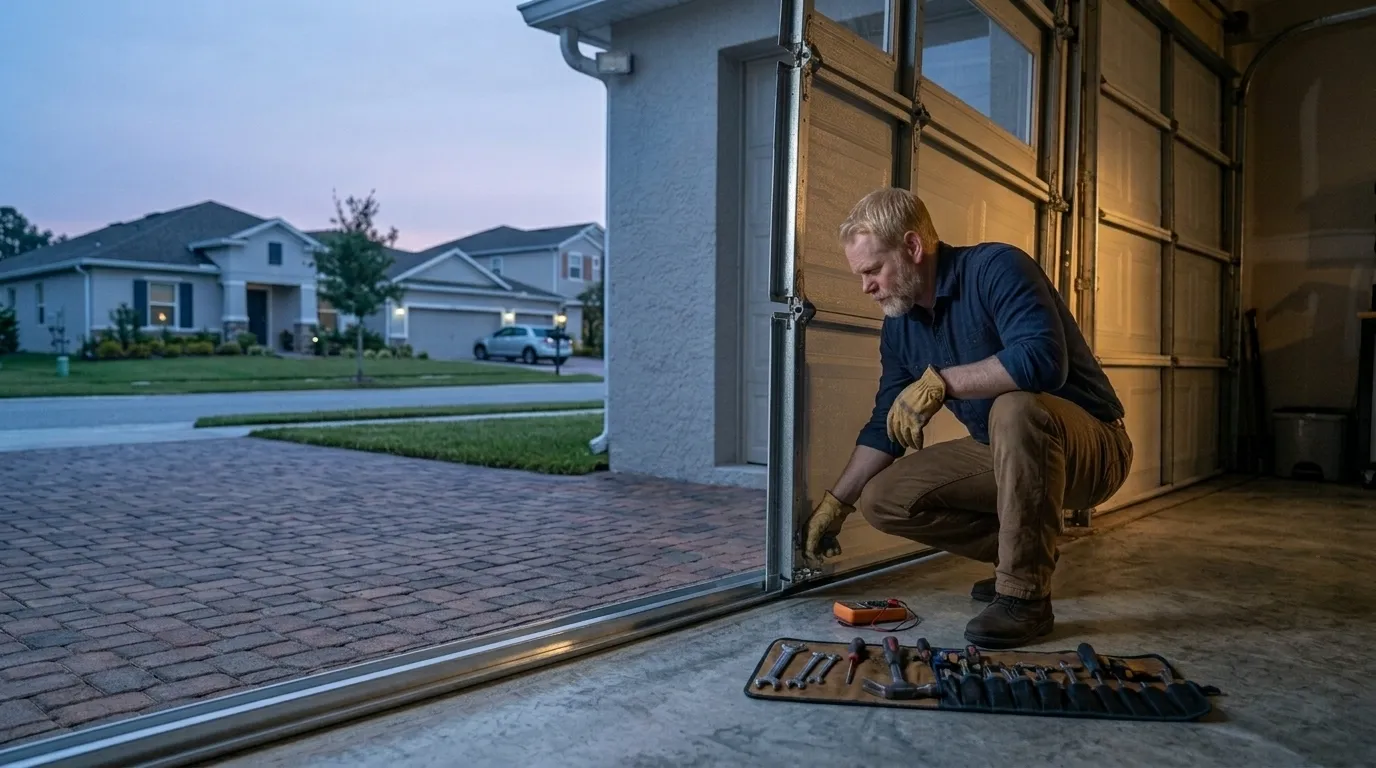
This area sits in a cold-moderate climate band, which means we don't get the extreme swings that wreck springs and openers in harsher zones, but we do get enough temperature change across the year to matter. Steel contracts in cold snaps and that's when a spring that was already fatigued finally lets go - torsion springs don't fail gradually, they fail on one particular cold morning after months of wear you couldn't see. Humidity swings through the warmer months also affect wood-composite panels and can make tracks bind if they weren't lubricated going into summer. A service call in January is going to focus on spring tension and cold-stiffened lubricant. A call in July is more likely about track alignment and panel expansion. We check both regardless of the season, because a moderate climate still cycles a door through real temperature range twice a year, it just doesn't scream about it the way a harsher climate would.
What to Look At First
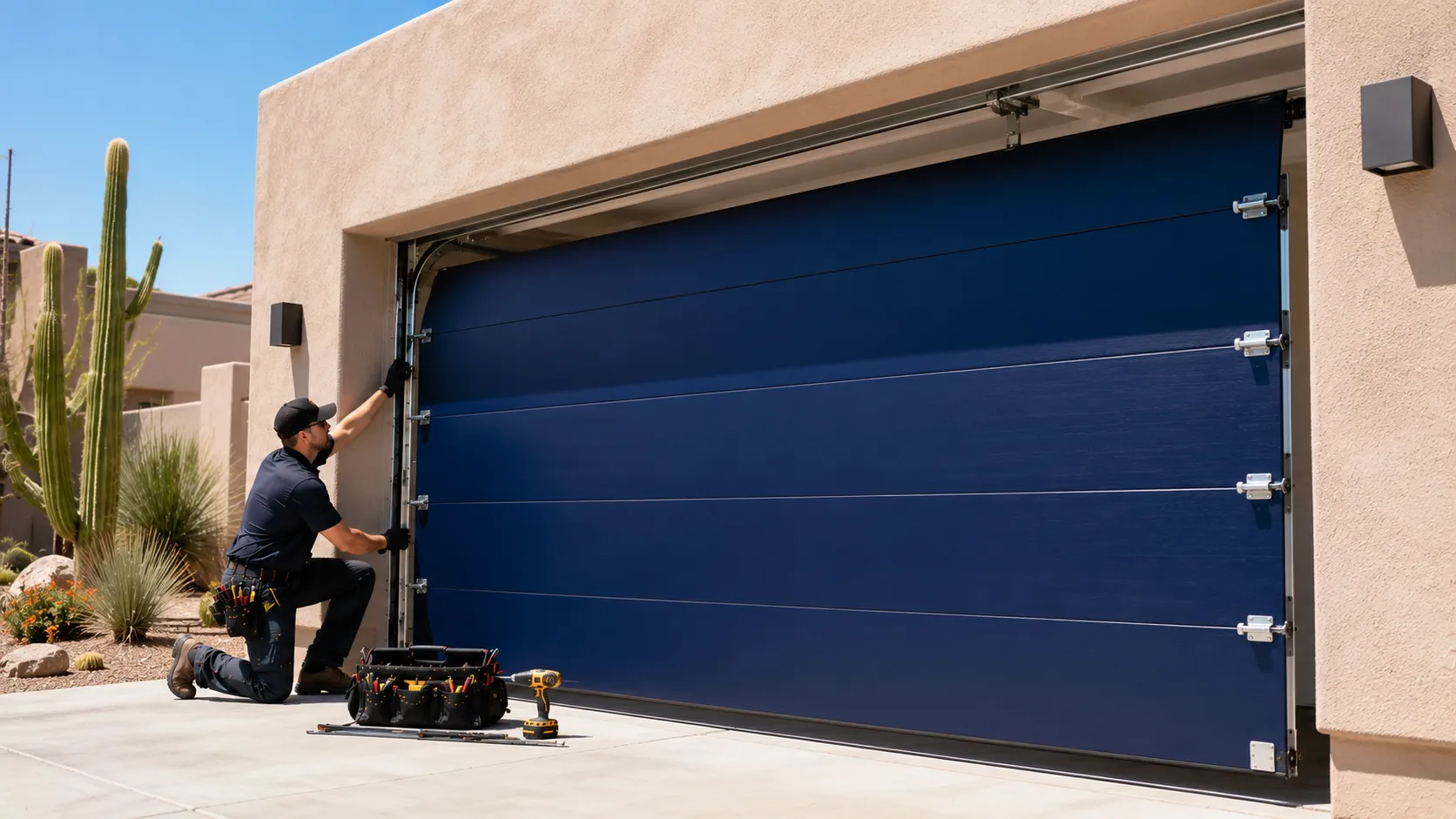
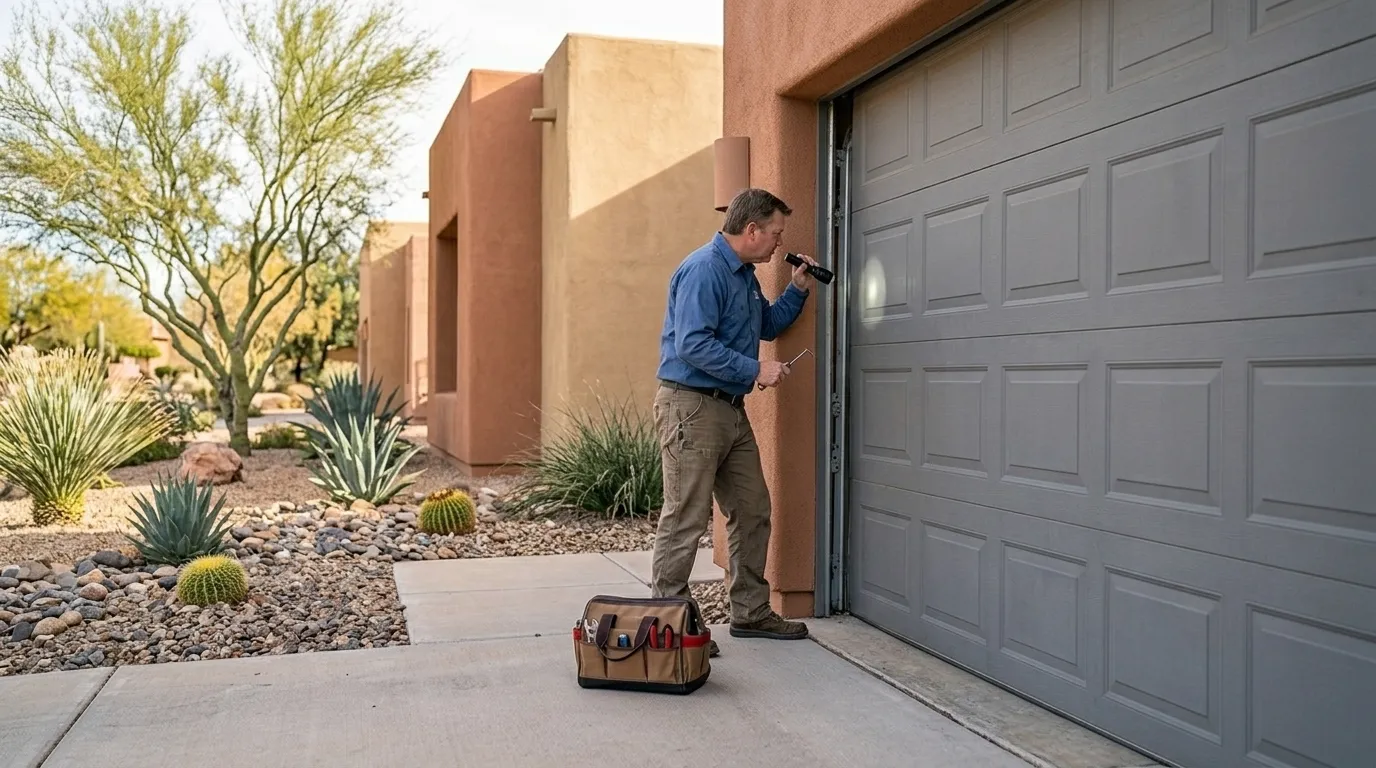
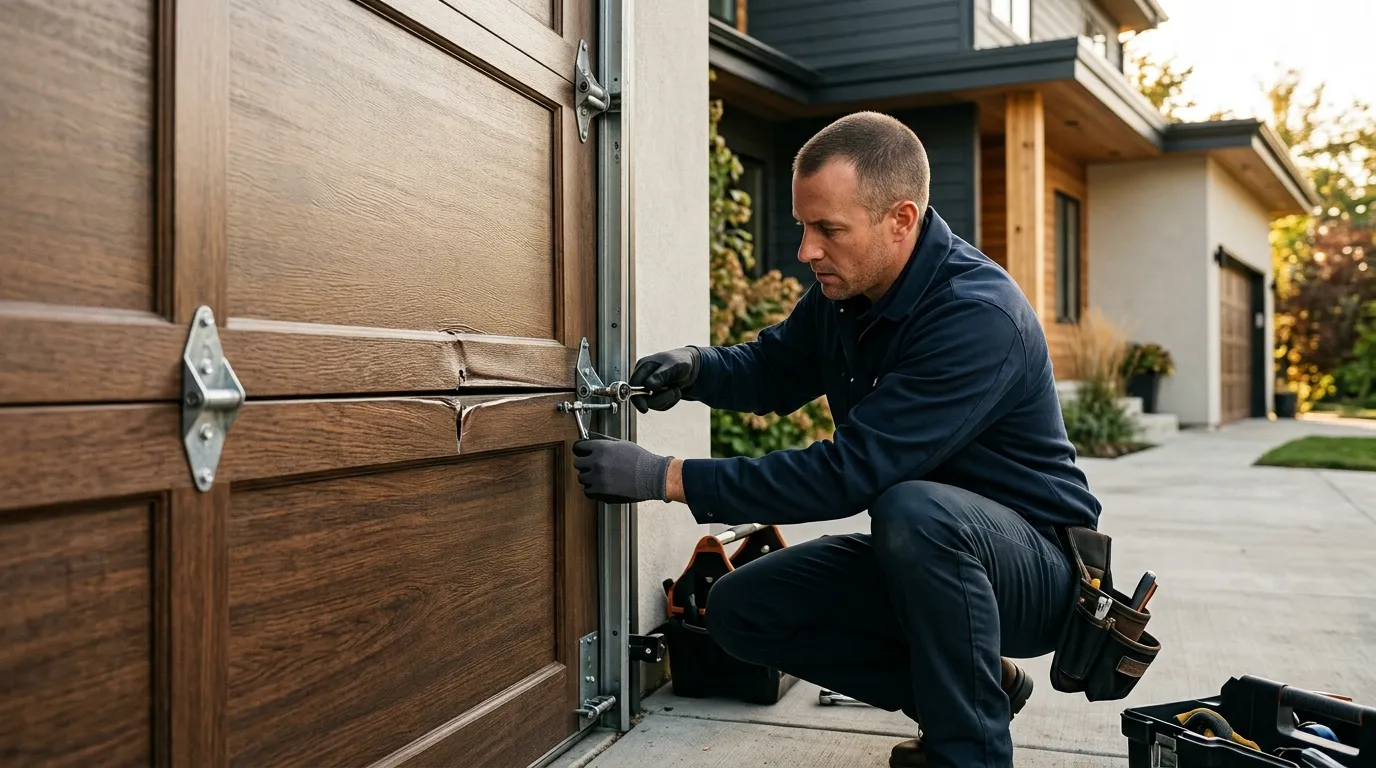
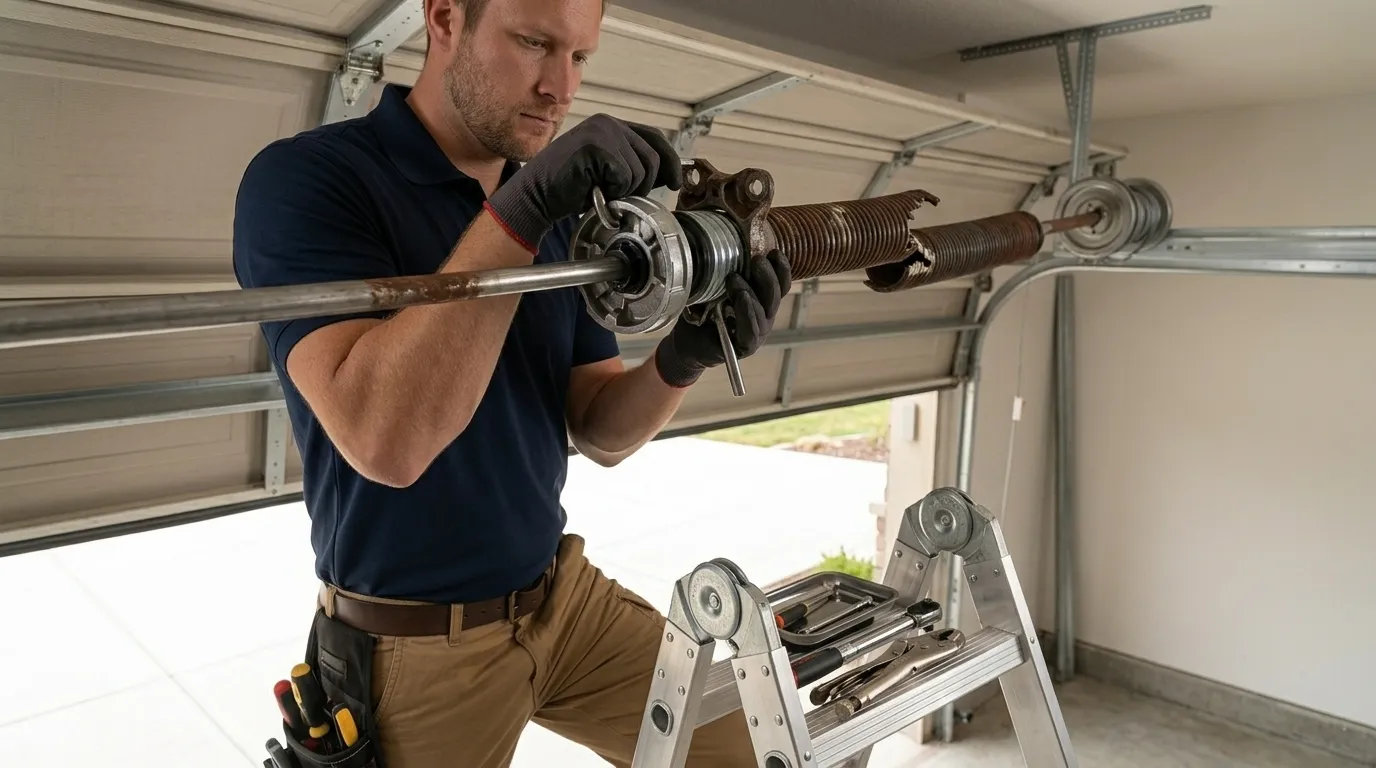
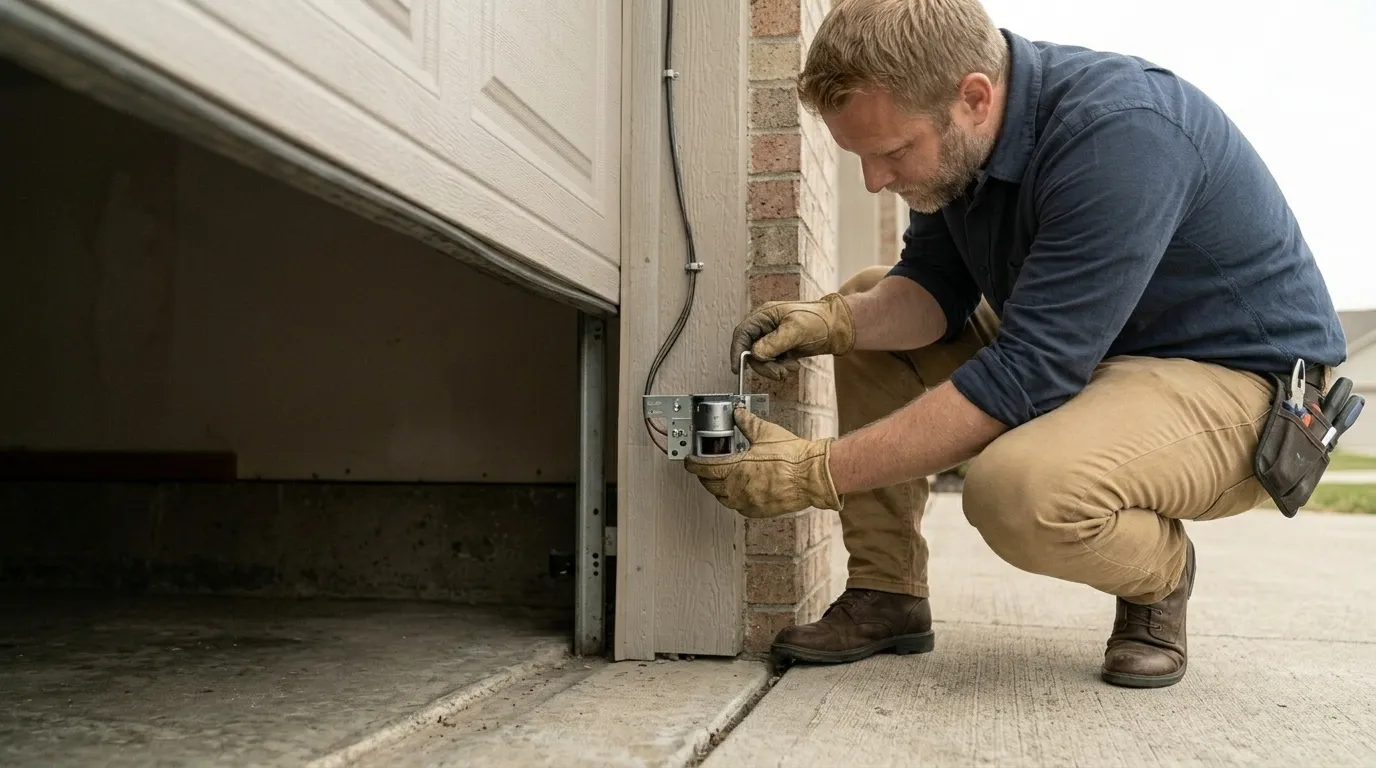
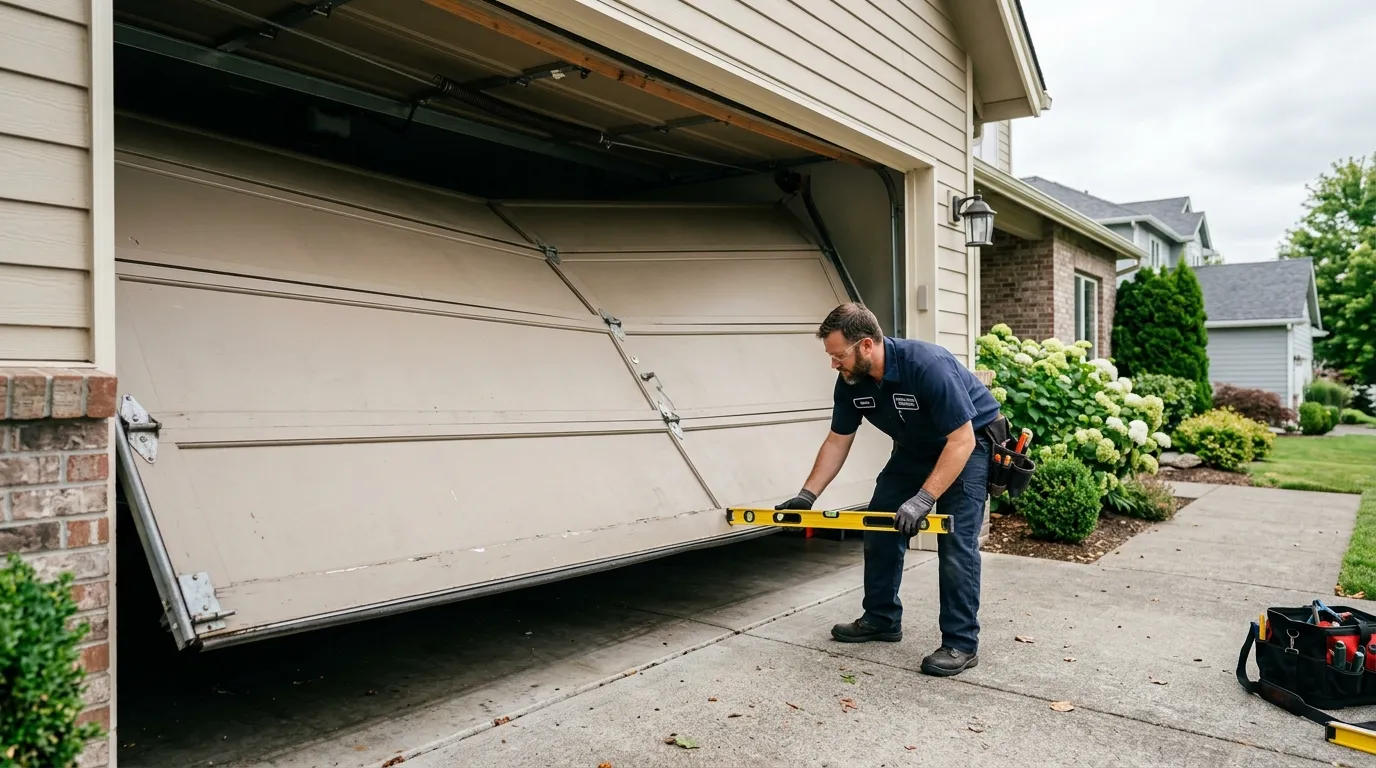
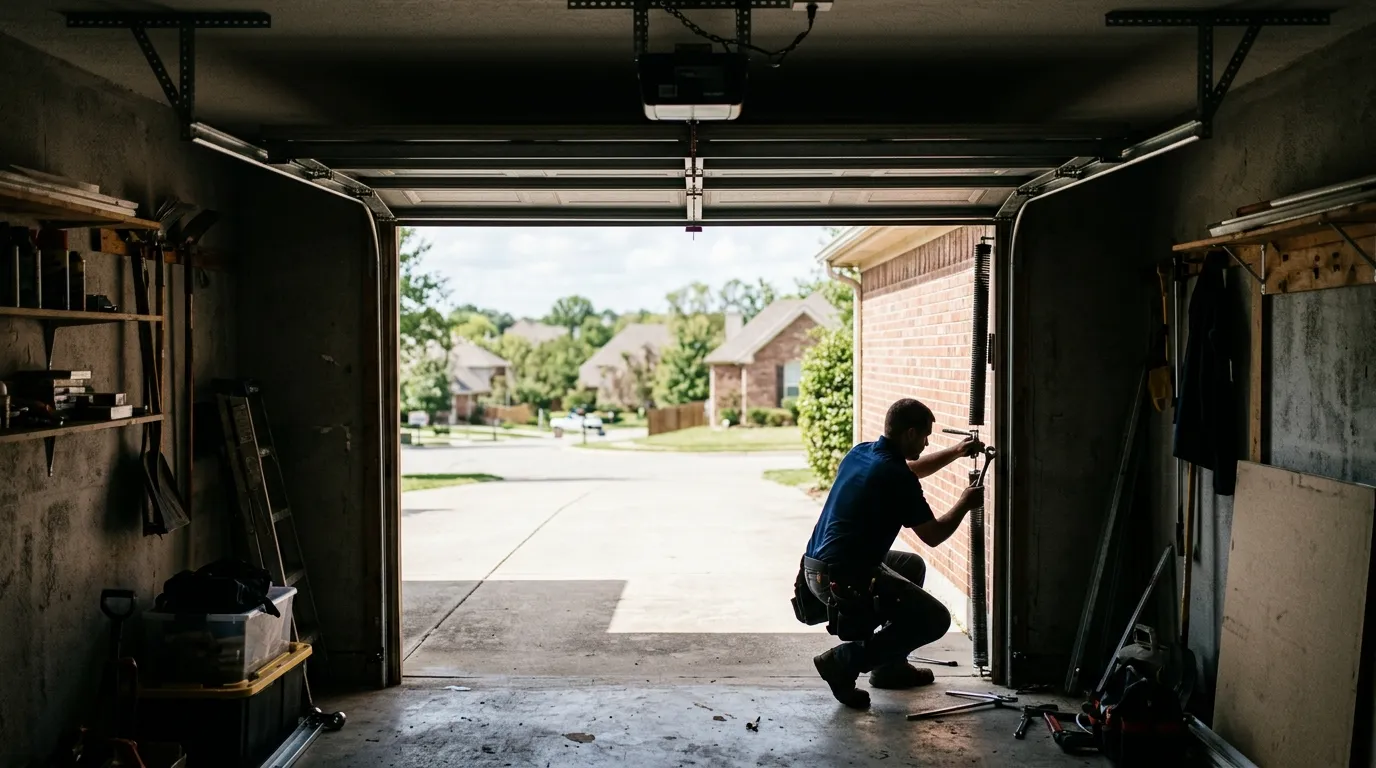
On a first visit we start with the spring system, because on a house from this build era - especially anything from the 2000s wave that makes up most of the stock here - the torsion spring is usually original or one replacement in. We check cycle wear, not just whether it's broken yet. From there: cables and drums, since fraying cable is the thing most owners never look at until it's already failed. Then the opener - chain-drive units from the 2000s are common in this area and their safety sensors drift out of alignment more than owners realize. Last, we check the track and rollers for the kind of wear that shows up specifically in doors that have been cycling for fifteen to twenty years, which describes a large share of the houses in these seven areas. We don't start with a cosmetic look at the panels. Cosmetics are last, because a door that looks fine can still have a spring one cycle from letting go.