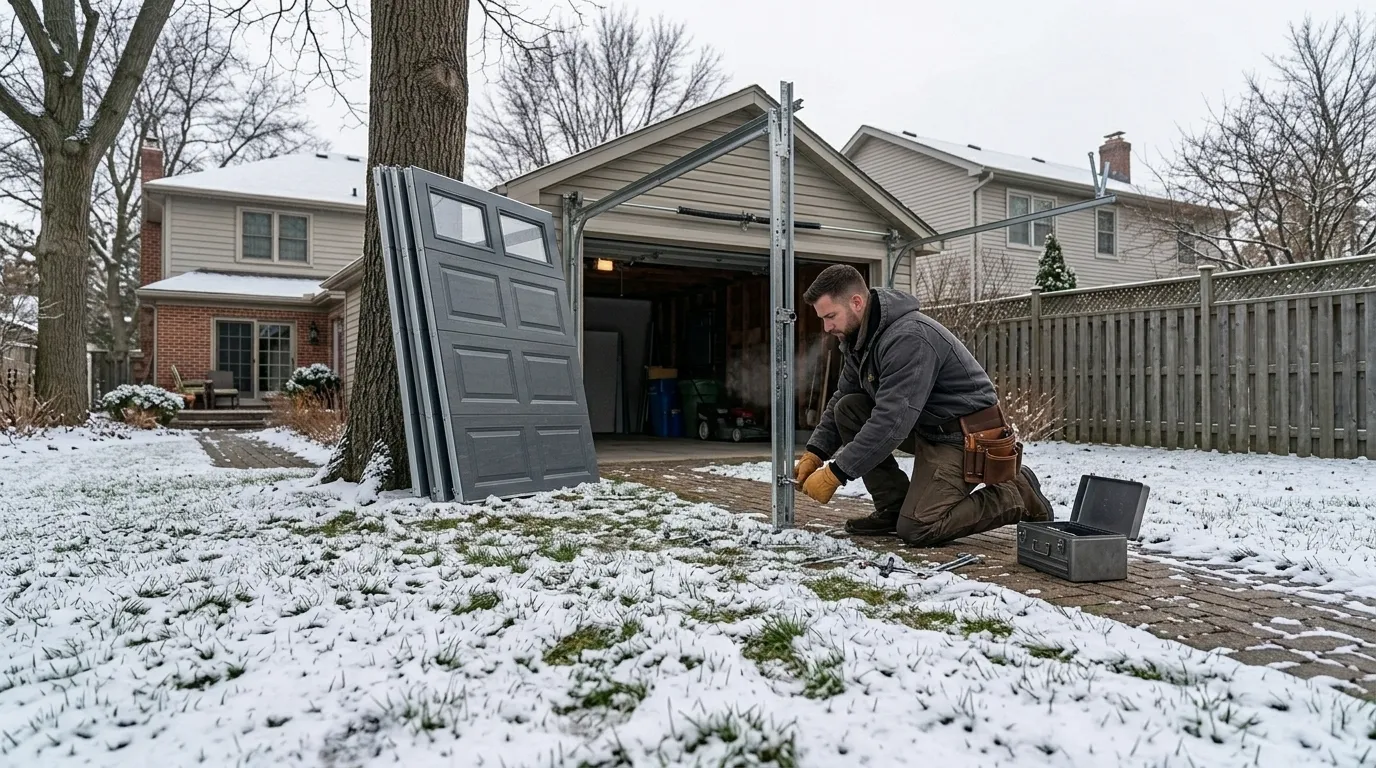
Raleigh Garage Door Co replaces cracked, dented, and rusted panels on doors built during Raleigh's 1967-2013 housing boom, matching stock where we can.
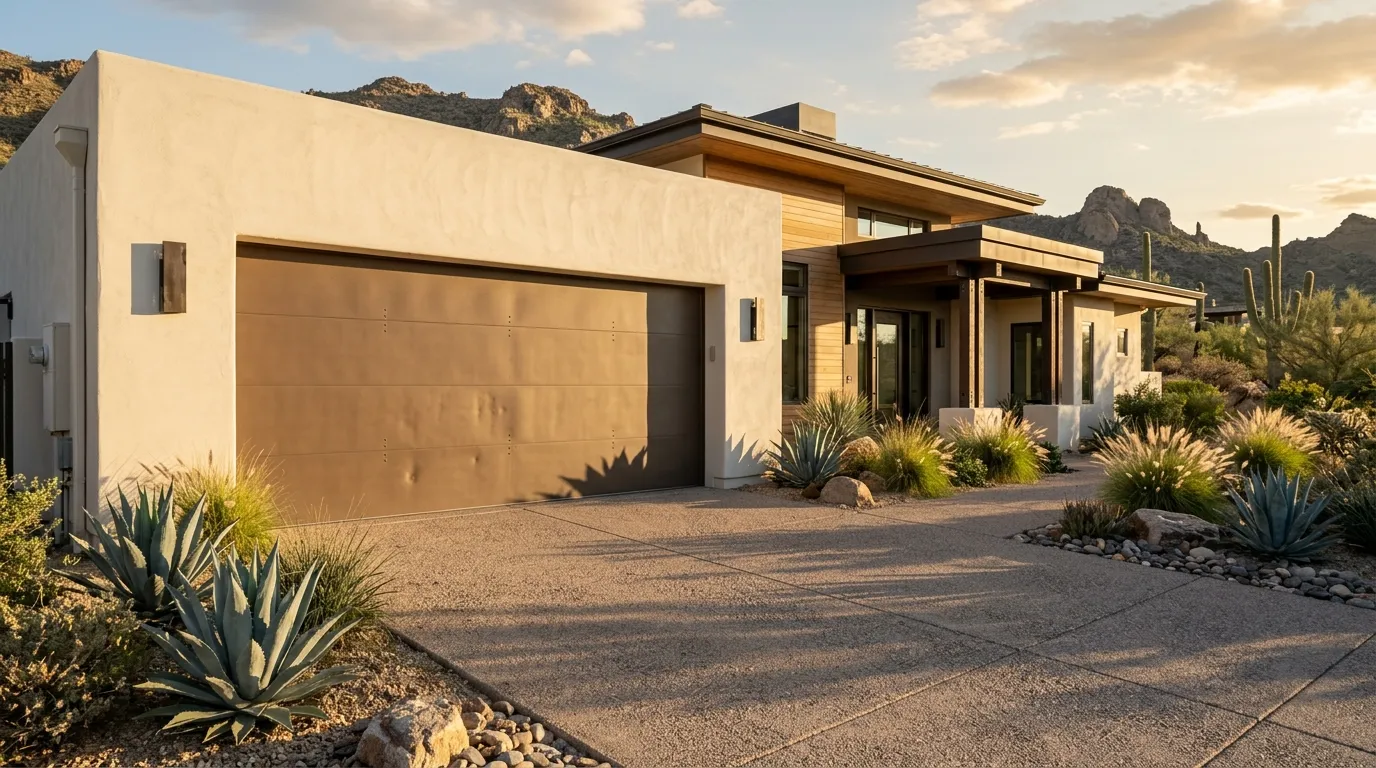
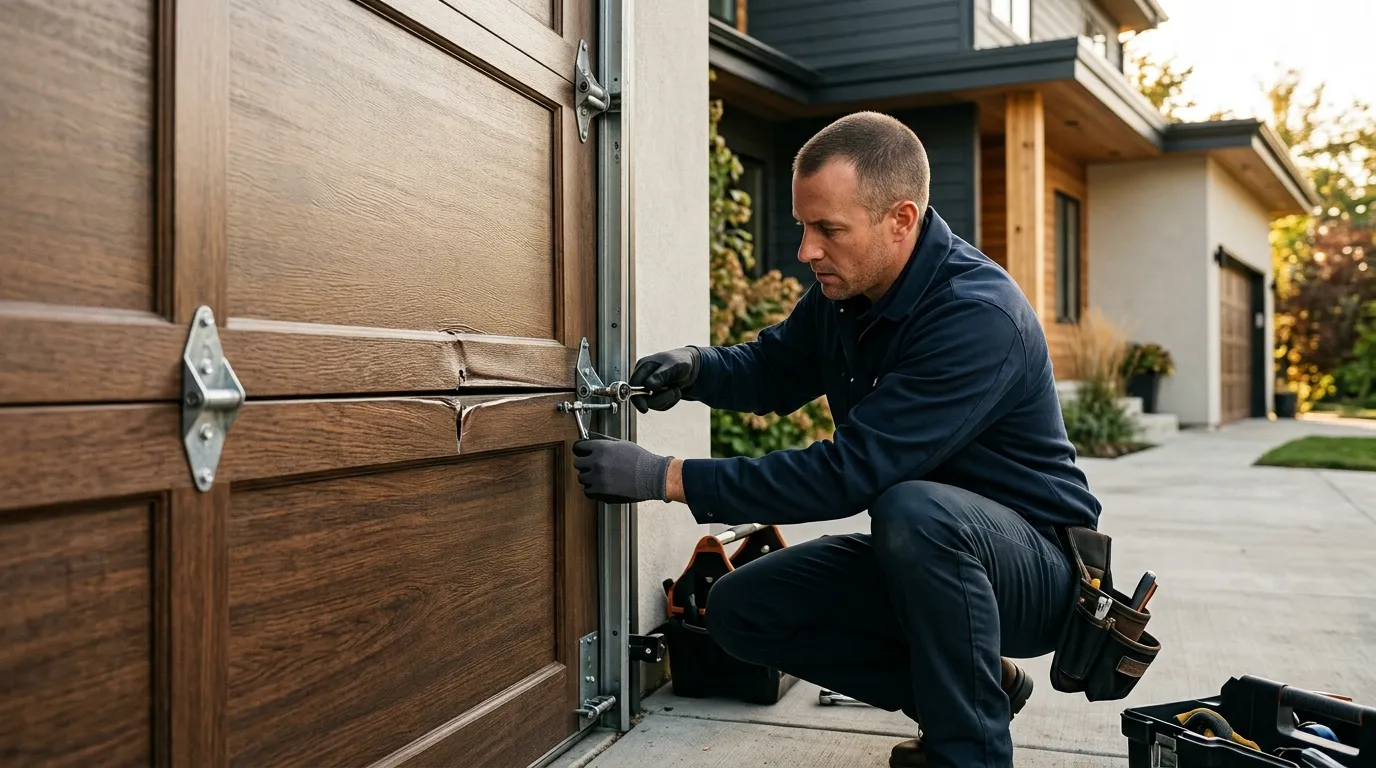
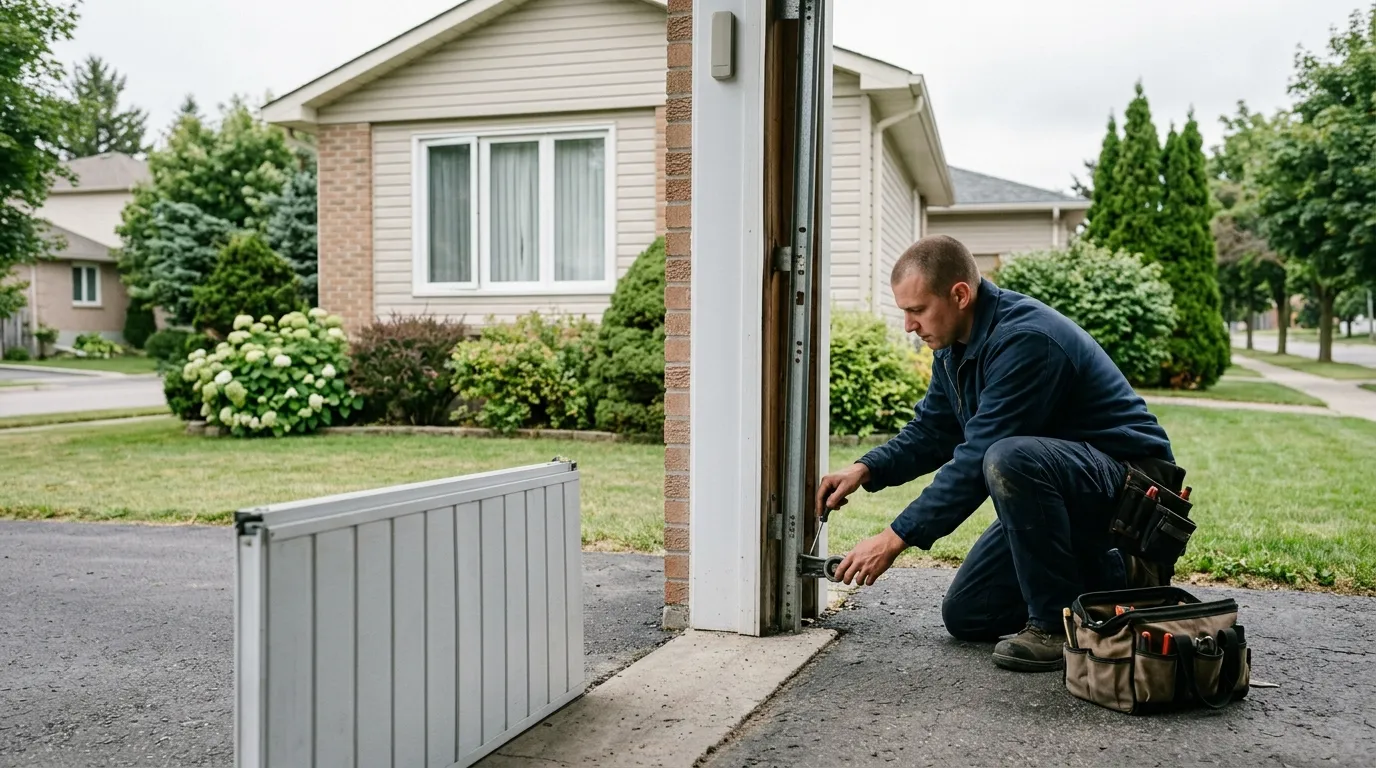
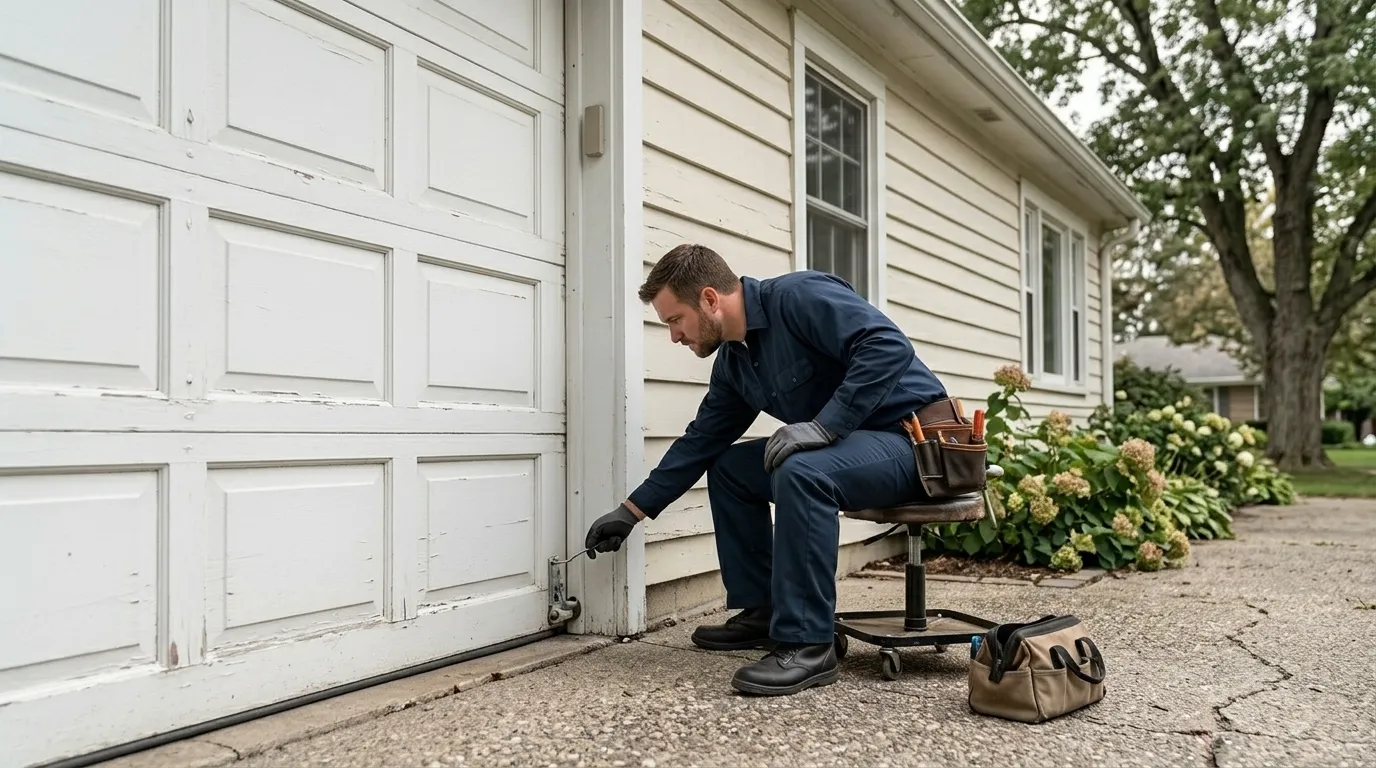
A bad panel usually shows up one of three ways. A dent from a backed-into bumper or a stray basketball that's pushed the steel skin in far enough that the section won't sit flat in the track anymore. A crack along a seam on an older door, where the foam core has separated from the skin and the panel flexes when it shouldn't. Or rust starting at the bottom panel, right where snowmelt and yard water sit against the steel longest.
On a lot of Raleigh doors, especially ones original to the house, you'll see all three at once because the whole door is the same age and the same gauge of steel. If your door was installed anywhere from the late 1960s through the early 2010s - which covers most of the housing stock we work on across the service area - the panel profile might not even be sold anymore, and that changes the job from "swap the bad section" to "talk about a full replacement."
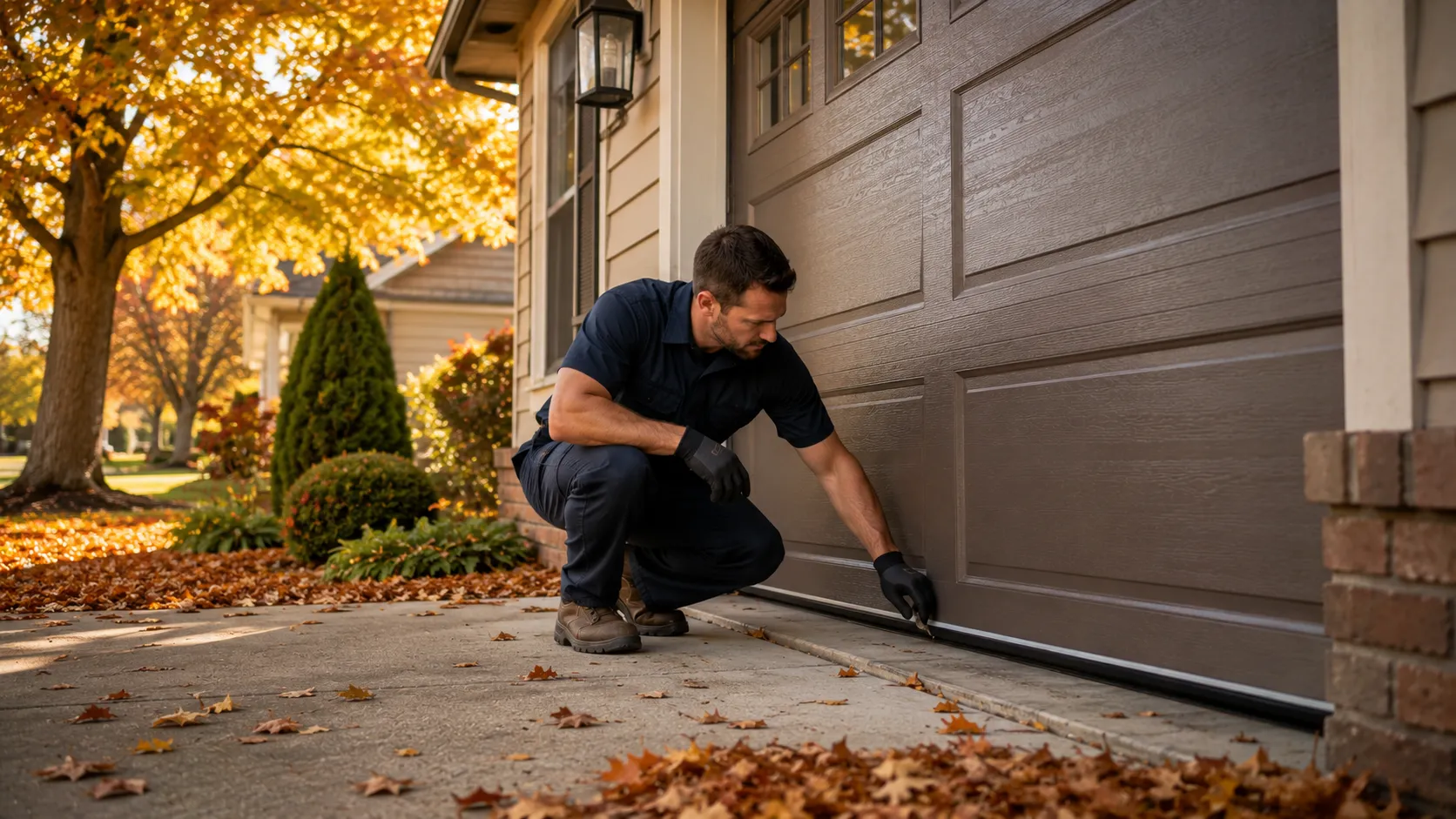
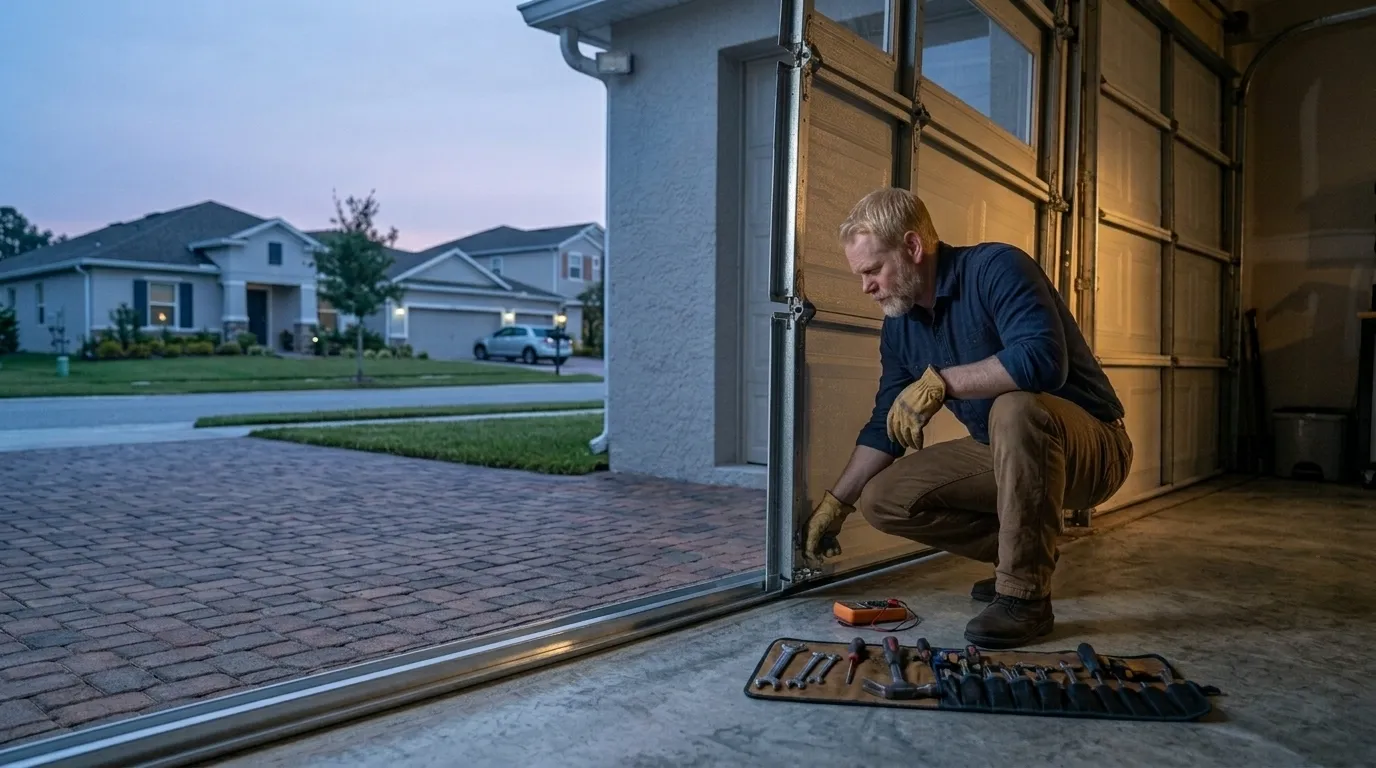
We check panel alignment on the whole door before we quote anything. A single bowed panel throws off the roller path on the sections above and below it, so what looks like one bad panel sometimes means two.
How Long You Are Without the Door
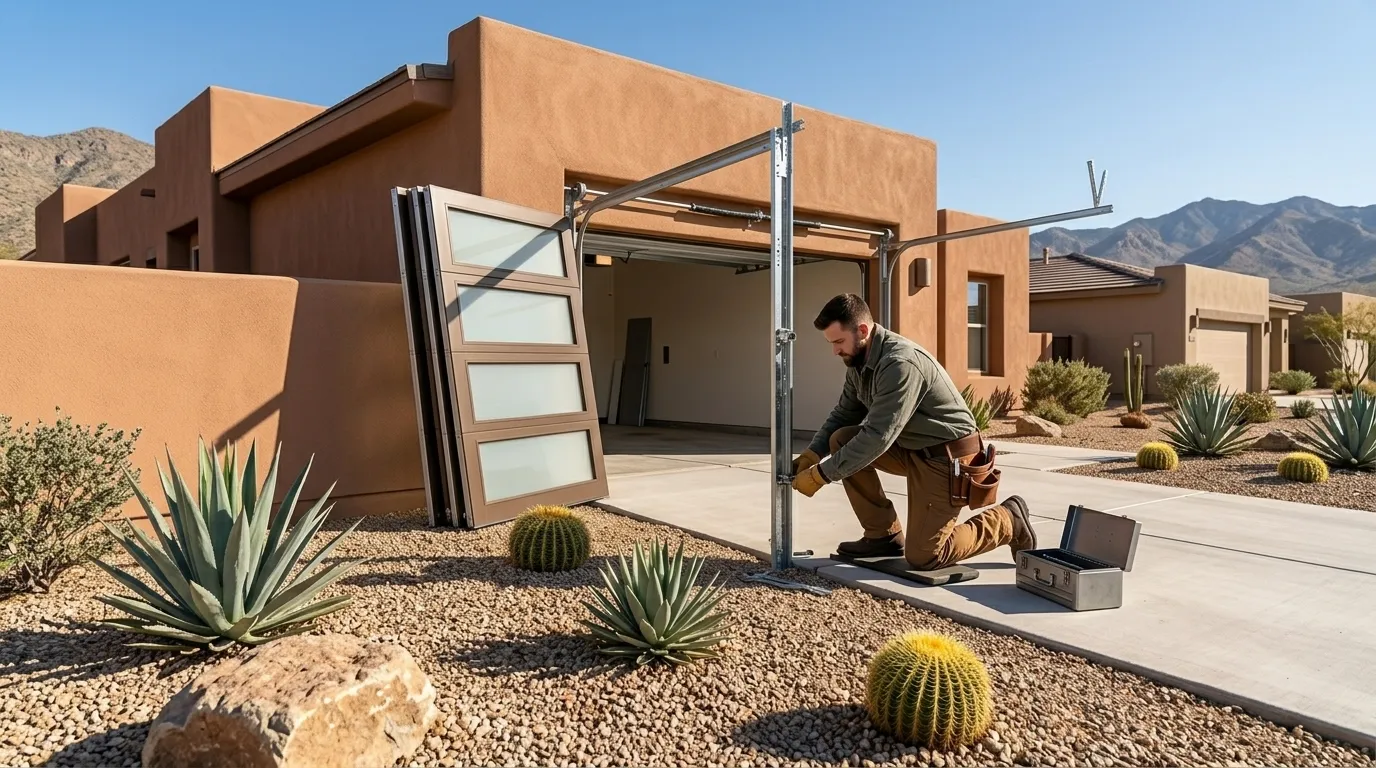
This is the part homeowners ask about first and the part we can't promise a number on. Matching an existing panel means finding the same width, same ribbing pattern, and close enough on color that it doesn't look patched. Doors built in the 2000s - which is the median build year for houses across this area - are more likely to still have parts available than doors from the late 1960s or 70s, but availability depends on the manufacturer and whether the line is still in production.
If a match exists, we order it and install once it lands. If it doesn't, the honest conversation is full door replacement instead of chasing a discontinued panel, because a mismatched section on an otherwise intact door bothers people more than they expect once it's up there.
We don't sit on a job waiting for a part without telling you where things stand. If the lead time runs long, we say so up front so you can decide whether to wait or replace the whole door now instead of twice.
Doing It Yourself
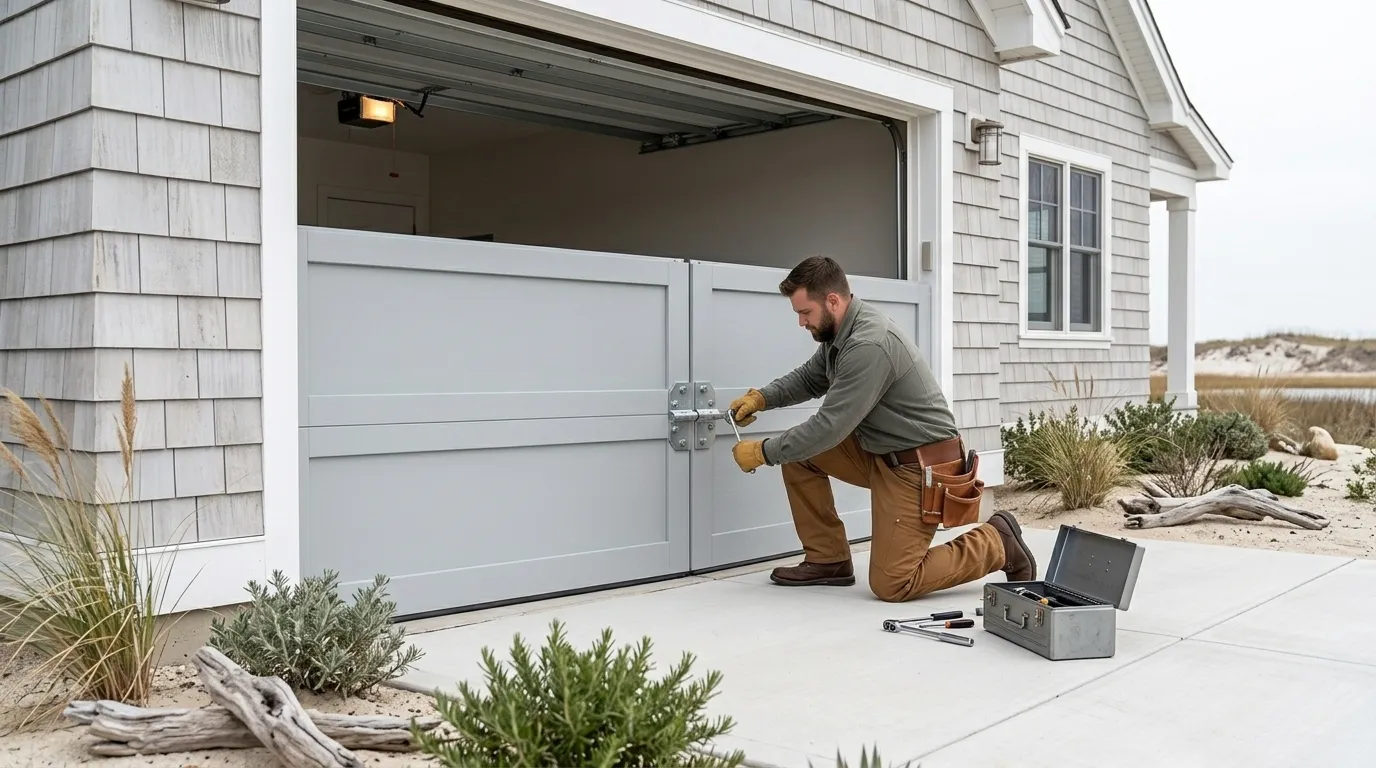
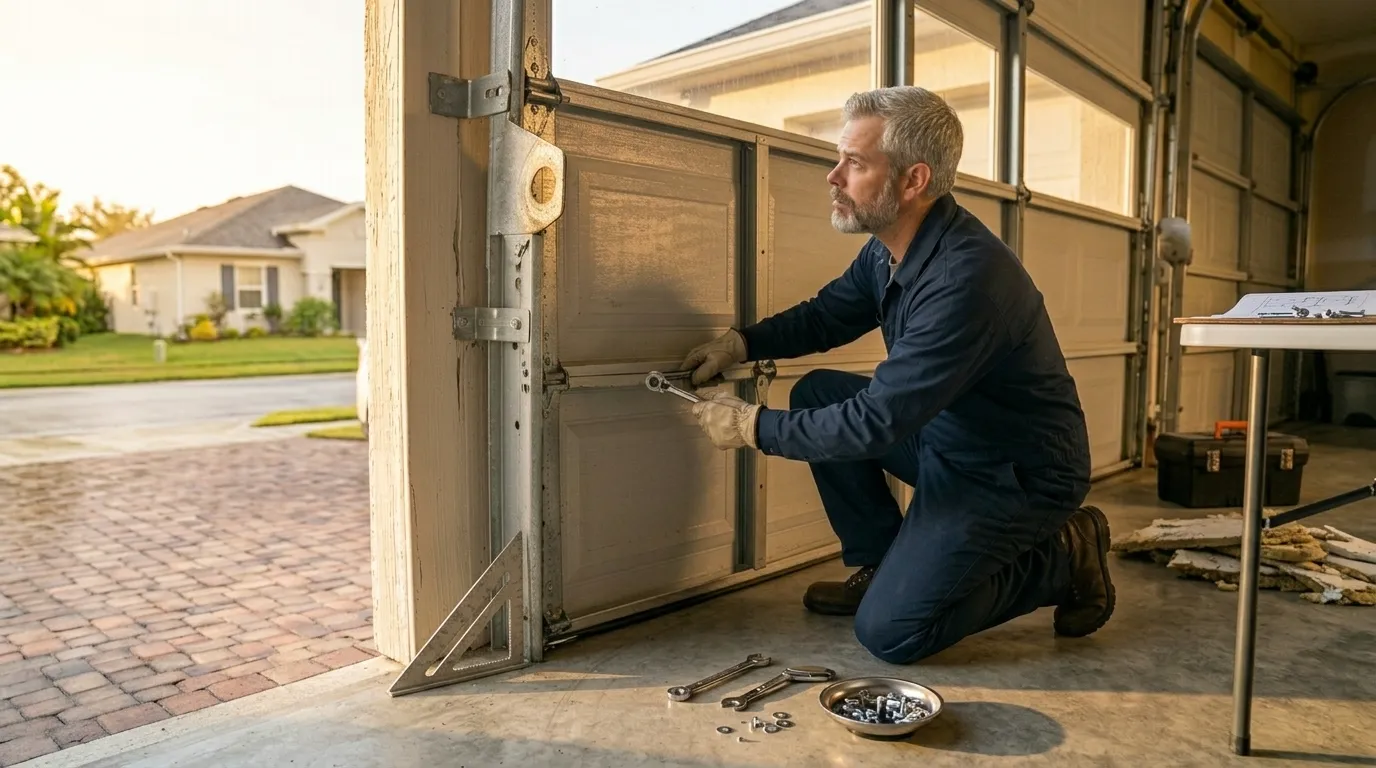
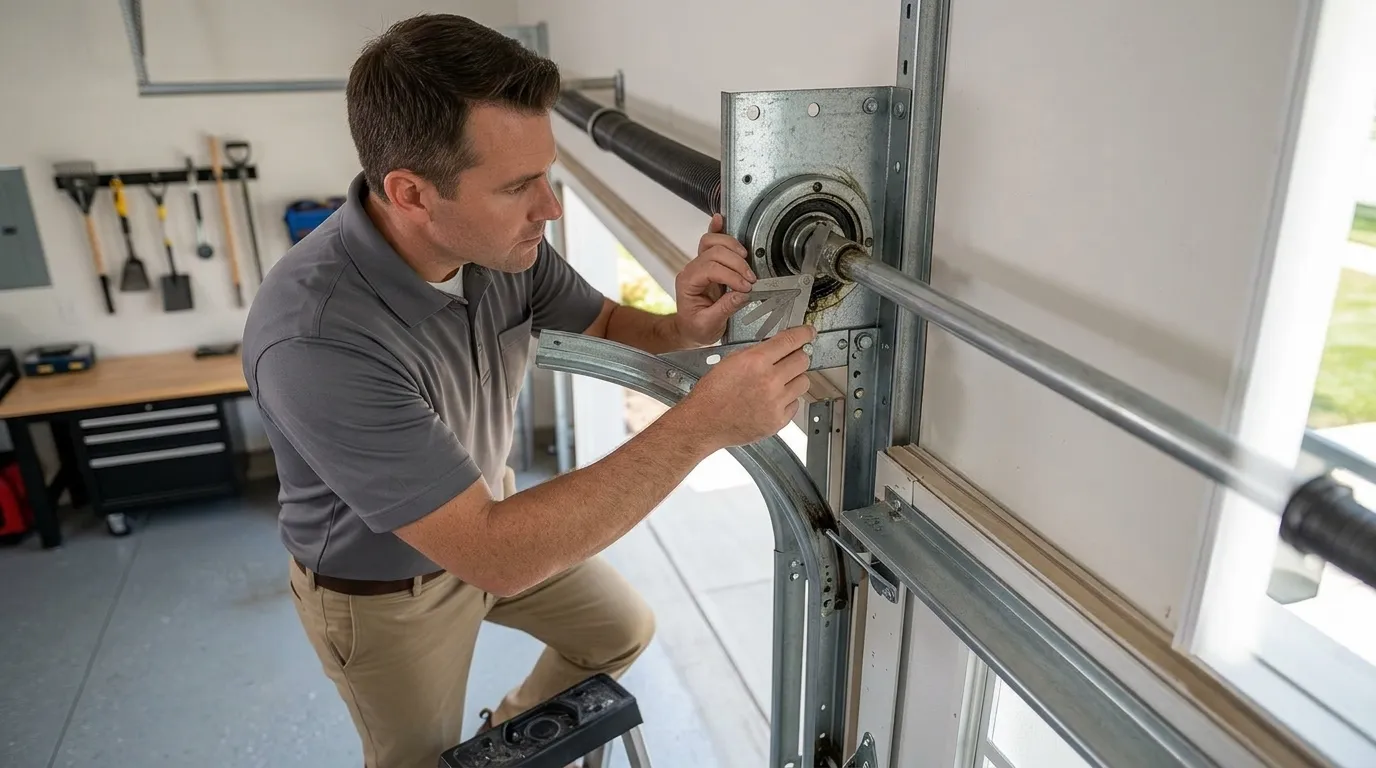
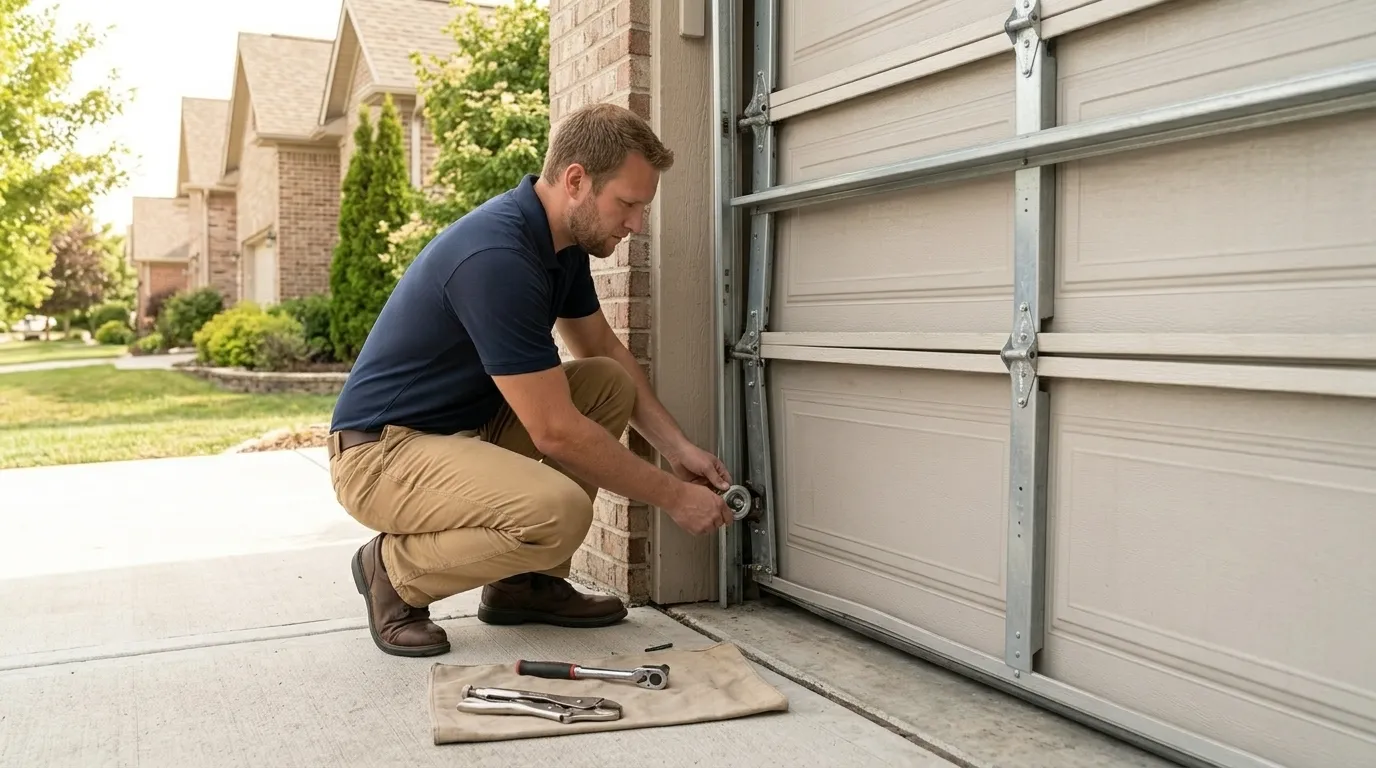
Swapping a single panel is doable for someone comfortable with tools, but it's not a weekend project we'd talk you into. The door has to come off track, the spring tension has to be released safely, and the replacement panel has to be drilled and hinged to match the existing hardware exactly or the door will bind. Get the hinge spacing off by a little and you'll fight the opener every time it cycles.
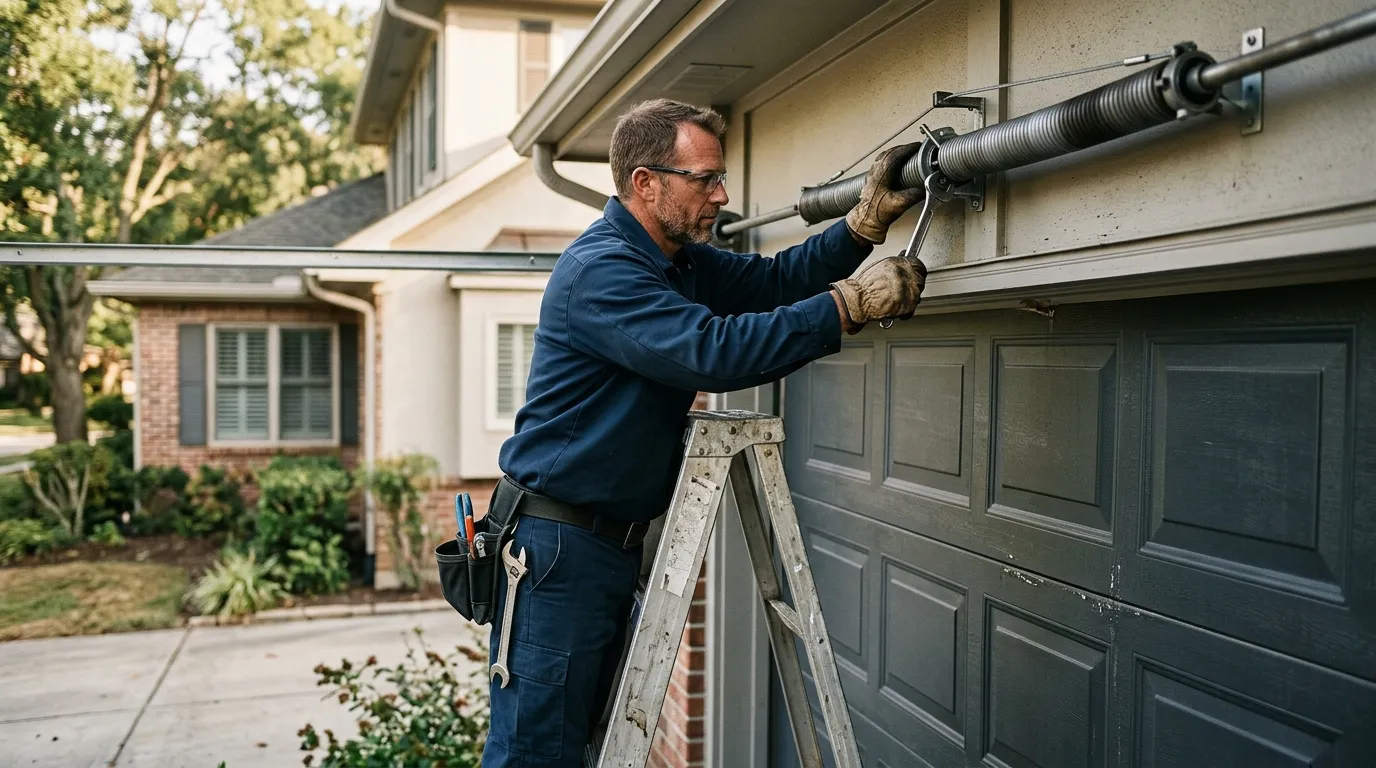
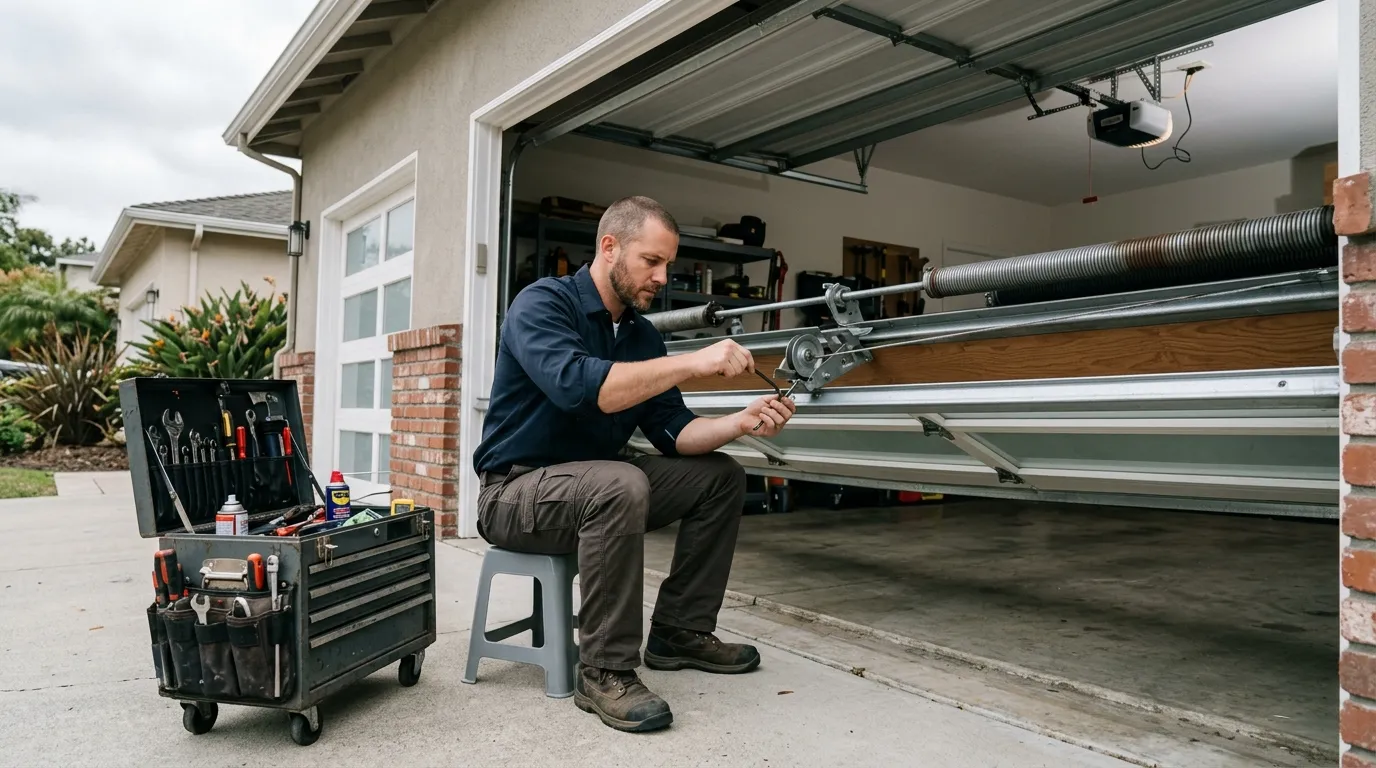
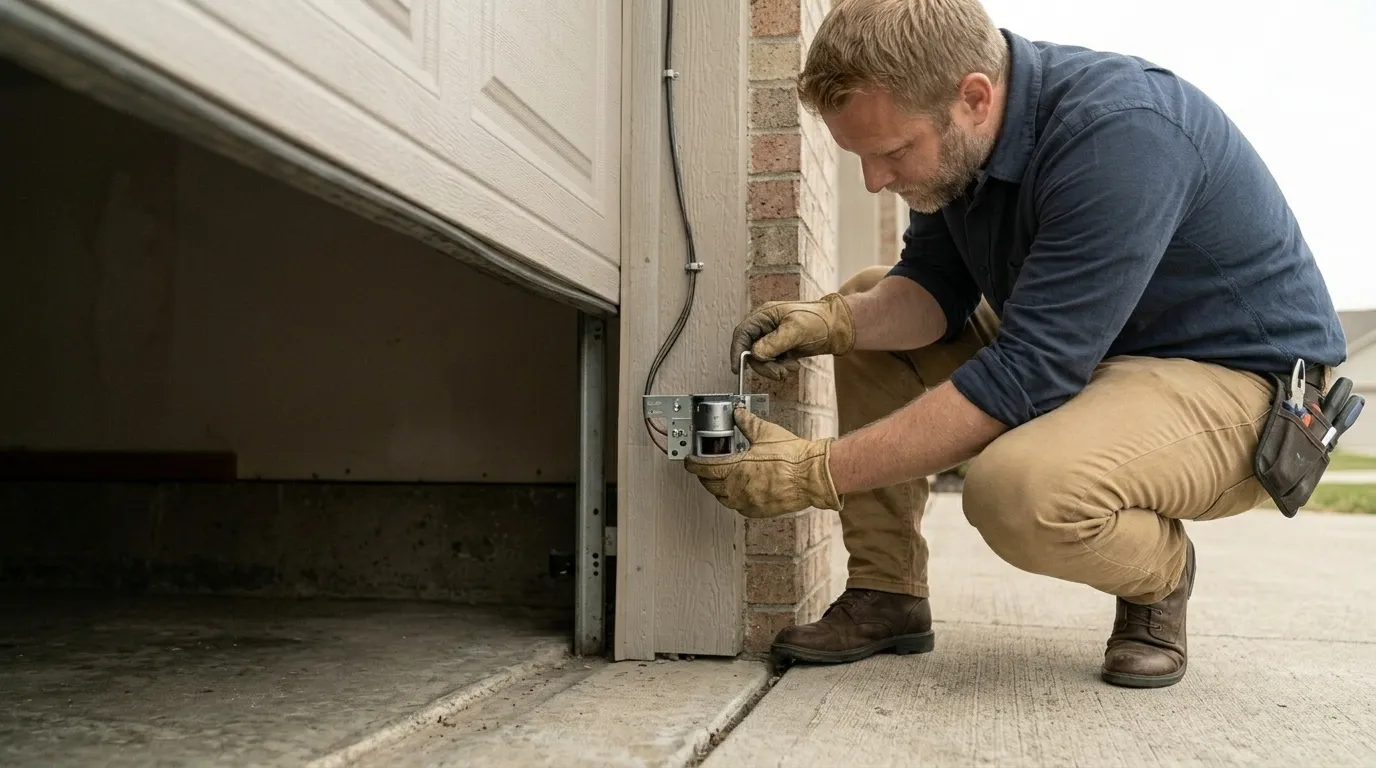
Where we tell people to stop and call: anything involving the torsion spring, anything where the bottom panel also holds the bottom bracket and cable anchor, and any door where more than one section shows damage. That's not us protecting a job - a spring under tension has put people in the ER, and a botched cable anchor drops a 150-pound door section fast.
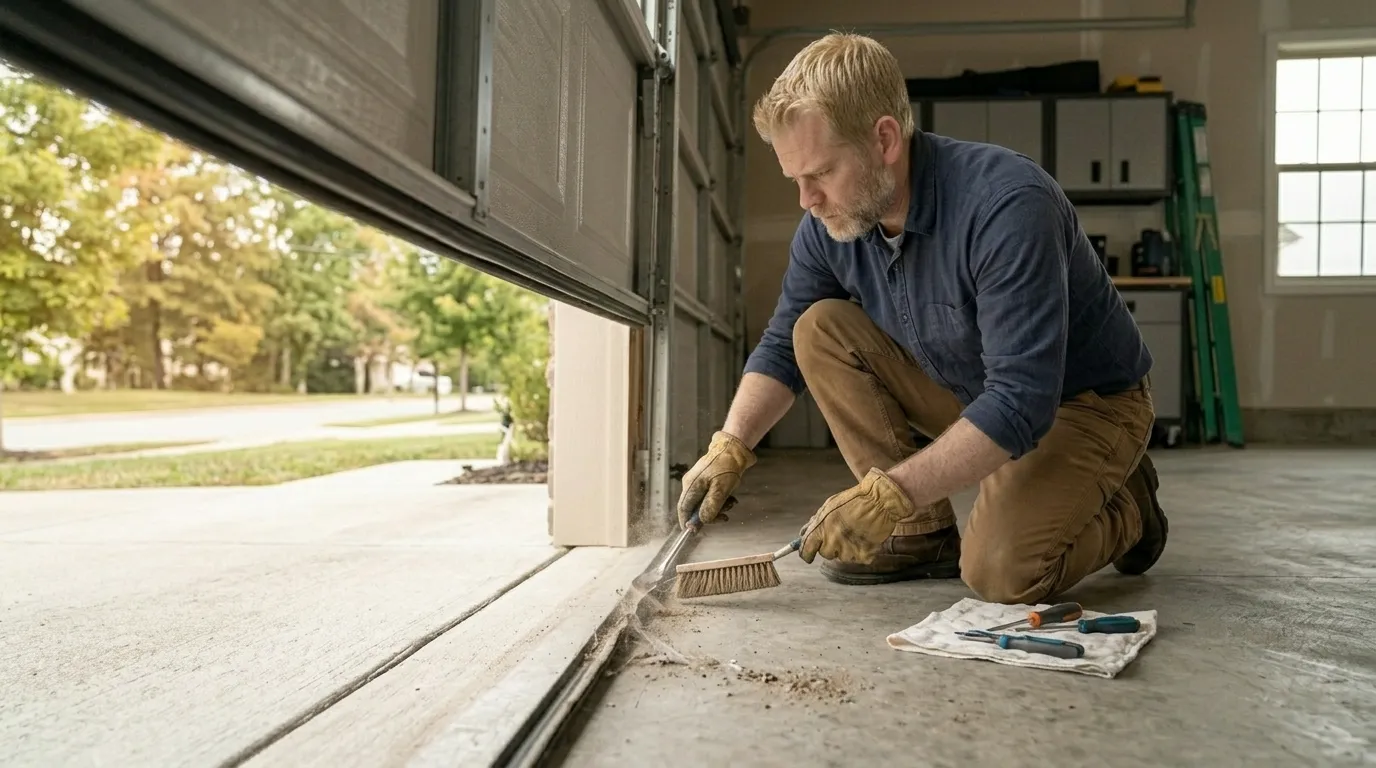
What's fine to DIY: cosmetic touch-up on a dent that hasn't cracked the skin, or cleaning rust off a bottom panel early enough that it hasn't eaten through. Past that, the cost of a wrong guess is usually higher than the service call would've been.
Why It Happens Here
Two things line up in Raleigh that push panels toward failure faster than they would somewhere warmer or with newer housing. First, the climate band here runs cold-moderate, which means the door goes through real freeze-thaw cycles most winters. Steel panels contract in the cold and expand again once temperatures climb, and that repeated movement is exactly what opens up seam cracks on older doors and works rust into any spot where the paint's already thin.
Second, the housing stock itself. Across the service area, homes went up mostly between 1967 and 2013, with the median build year landing around 2005. That's a wide enough spread that we're servicing three eras of garage door hardware on any given week - doors from the late 60s and 70s with steel gauges and panel profiles that are hard to source now, and doors from the 2000s building boom that are easier to match but starting to hit 20 years old, which is about when foam-core panels start delaminating at the seams.
Put those two together and panel failure isn't random. It's the predictable output of cold-cycling steel on doors that, across most of the seven areas we cover, are old enough to be showing it.
How it works
From “it’s stuck” to “it’s fixed”
01
Tell us what’s wrong
Describe the symptom - won’t open, loud bang, opener runs but the door won’t move.
02
On-site diagnosis
A technician tests the door under power and by hand and finds what actually failed.
03
Clear, up-front plan
You get the fix that’s needed and what drives the cost - before any work starts.
04
Repaired & tested
The repair is done, the door is set true and tested, and the work area left clean.
Serving Raleigh, NC - tell us what your door’s doing and we’ll take it from there.
01Can you match the panel color and texture on an older door?
Sometimes. If the manufacturer still makes that panel profile we can usually get close on color and ribbing. Doors from the 1967-2013 range vary a lot in what's still stocked, so we check availability before quoting - if it's not a clean match, we'll tell you and let you decide between a visible patch or full replacement.
02Is it cheaper to replace one panel or the whole door?
Depends on the door's age and how many panels are damaged. One panel on a door that's otherwise sound is usually the cheaper fix if the part is available. Once you're replacing two or more panels, or the part is discontinued, a full door often ends up close in price and gives you a door that matches top to bottom.
03Why does my bottom panel rust before the rest of the door?
The bottom panel sits closest to grade, so it takes the most direct water contact from rain and snowmelt, plus road salt and yard chemicals splashed up by mowers or tires. Combined with the freeze-thaw cycling common in this climate band, that panel takes damage years before the panels above it.
04Do you cover areas outside Raleigh itself?
We work across the wider service area, including places like Knightdale, Rolesville, Wendell, Zebulon, and the sides of the city. Panel availability and common failure patterns can vary a bit by area depending on when that part of town was built.
Ready to get your garage door sorted?
Tell us what it’s doing and where you are in Raleigh - we’ll take it from there.