Panel Damage on Wendell's Newer Steel Sectional Doors
Wendell's garage doors are mostly steel sectional units built after 2000, not old wood panels. Here's what actually cracks, dents, or fails first, and what a panel swap costs you in time.
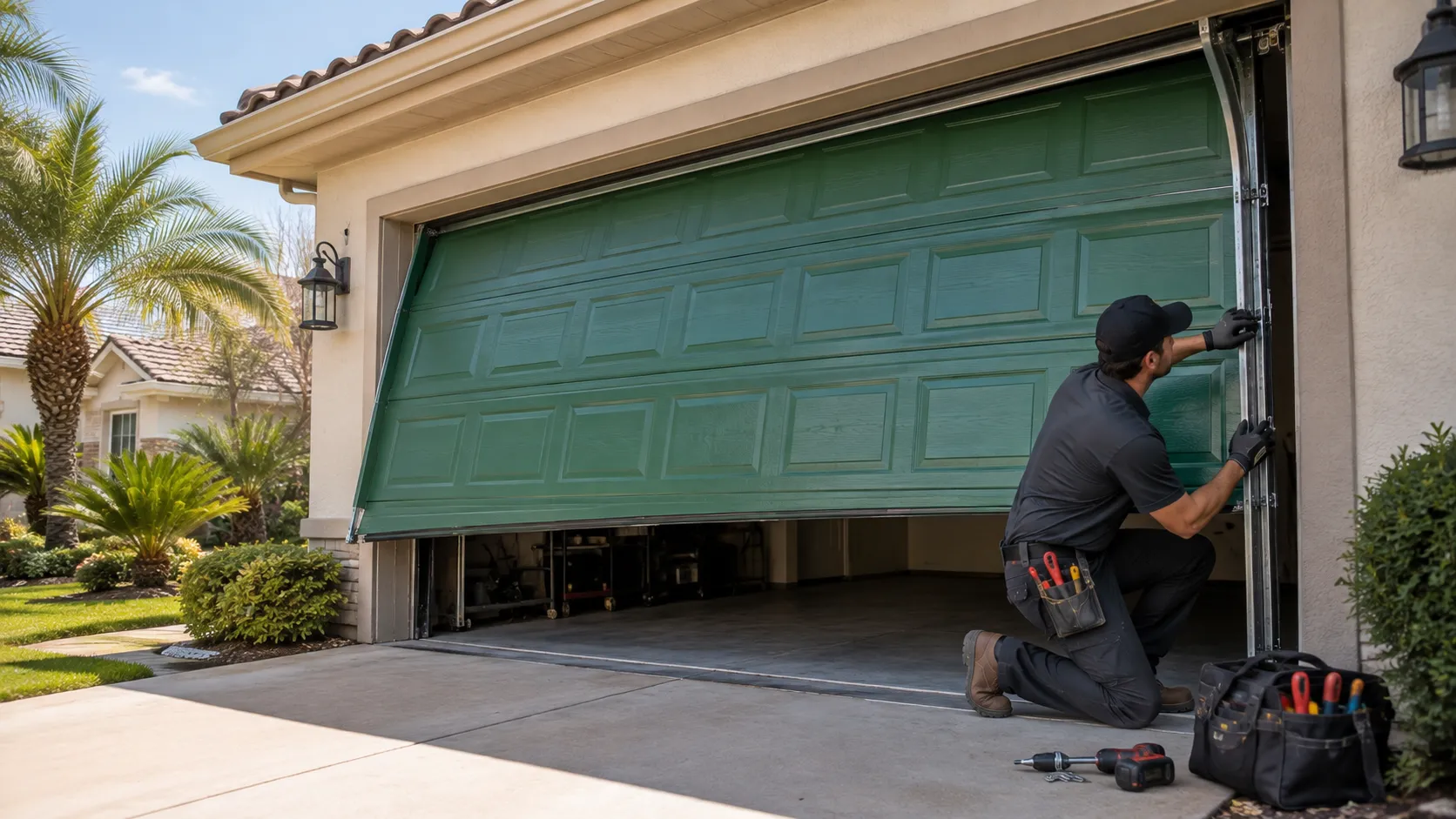
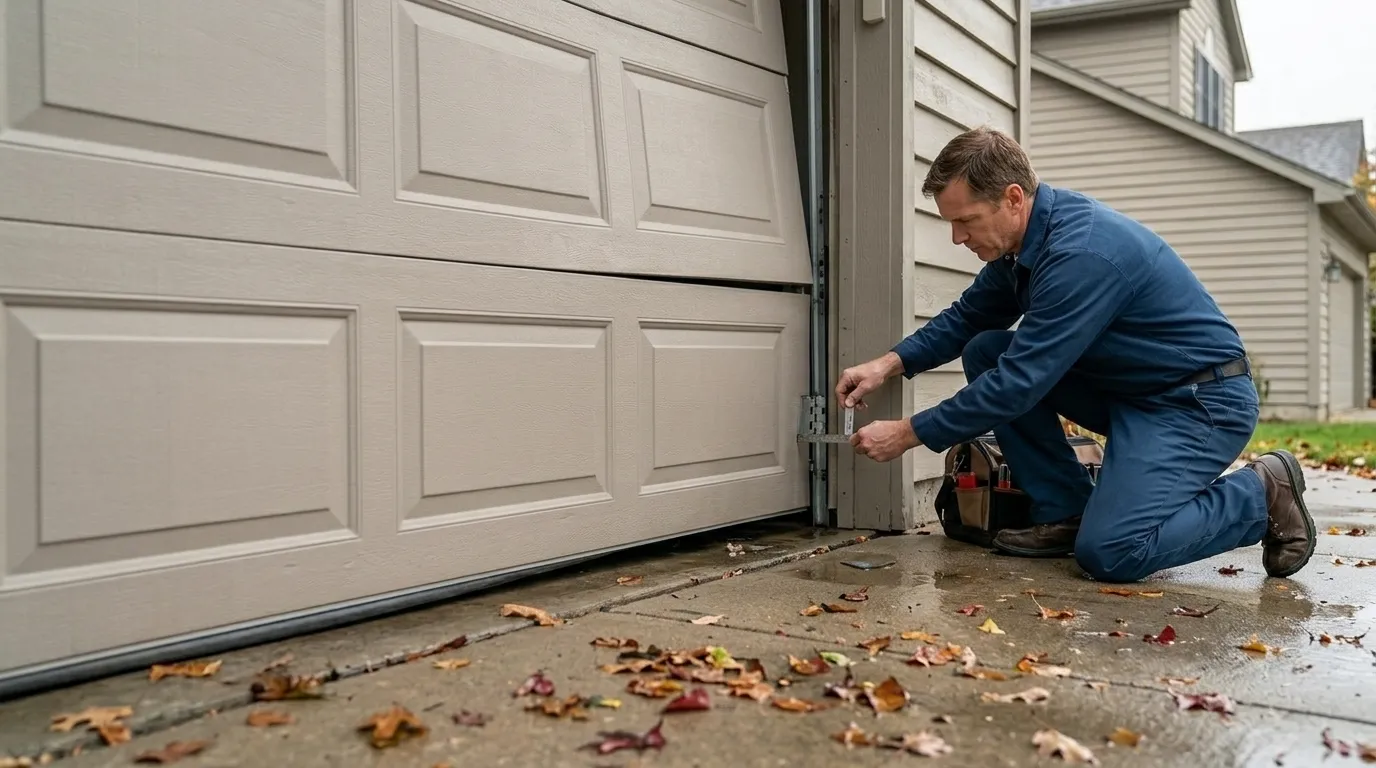
Most of what we get called out for in Wendell isn't rot or age - it's a dent. A bumper tap, a basketball, a trailer hitch backing in wrong, and one section of a steel door caves in or splits along the seam. That's the fault you're actually looking at here, not the warped, delaminating wood panels you'd find on a much older door.
That comes down to when these houses went up. Housing stock across the wider service area runs 1967 to 2013 with a median build year of 2005, and Wendell tracks right at that median - 2005 is the typical build year here too. A door built in 2005 is a factory steel sectional on roller-track hardware, usually 25 gauge with a foam core. The failure mode on that construction is impact damage to one panel, sometimes two, while the rest of the door and the opener are fine. You don't need a new door. You need the matching section pulled and swapped, and matching it to a 20-year-old color run or a discontinued model number is the part that takes the longest.
Why It Happens Here
Wendell sits about 16 miles out from Raleigh, and the building stock out this way skews newer than a lot of the closer-in service area - most of what's here went up in the 2000s building boom, not decades earlier. That means fewer wood-panel doors that fail from moisture and swelling, and more steel doors that fail from a single hard hit.
The climate here is the cold-moderate band typical of the whole region, which matters less for panel damage than for the foam core behind the steel skin. Once a panel cracks, that cold-weather insulation is exposed, and a garage that's supposed to stay a few degrees warmer than outside stops doing its job on just that one section. Household income in the wider service area runs a median of $91,638, and Wendell itself runs a bit higher at $93,848 - worth mentioning only because it tracks with the newer builds: more owners here are on original hardware and original doors, not a patchwork of prior repairs, which usually makes the fix cleaner.
How Long You Are Without the Door
For a single dented or cracked panel on a door that's still mechanically sound, you're not without a working door at all - the section gets swapped and the opener and track never come off. The wait is on the part, not the install: finding an exact-match panel for a 2005-era door means checking the manufacturer's current catalog against what's actually on your garage, and if that model or color has been discontinued, you're looking at a close match rather than identical.
We travel from Raleigh to reach Wendell, so we don't hold local stock out here - the panel gets sourced and brought to the job, not pulled off a shelf on-site. That's the honest limitation: if your door is a common model still in production, this is a same-visit fix once the part's in hand. If it's an older or oddball model, expect the panel order to be the long pole, not the labor.
Doing It Yourself
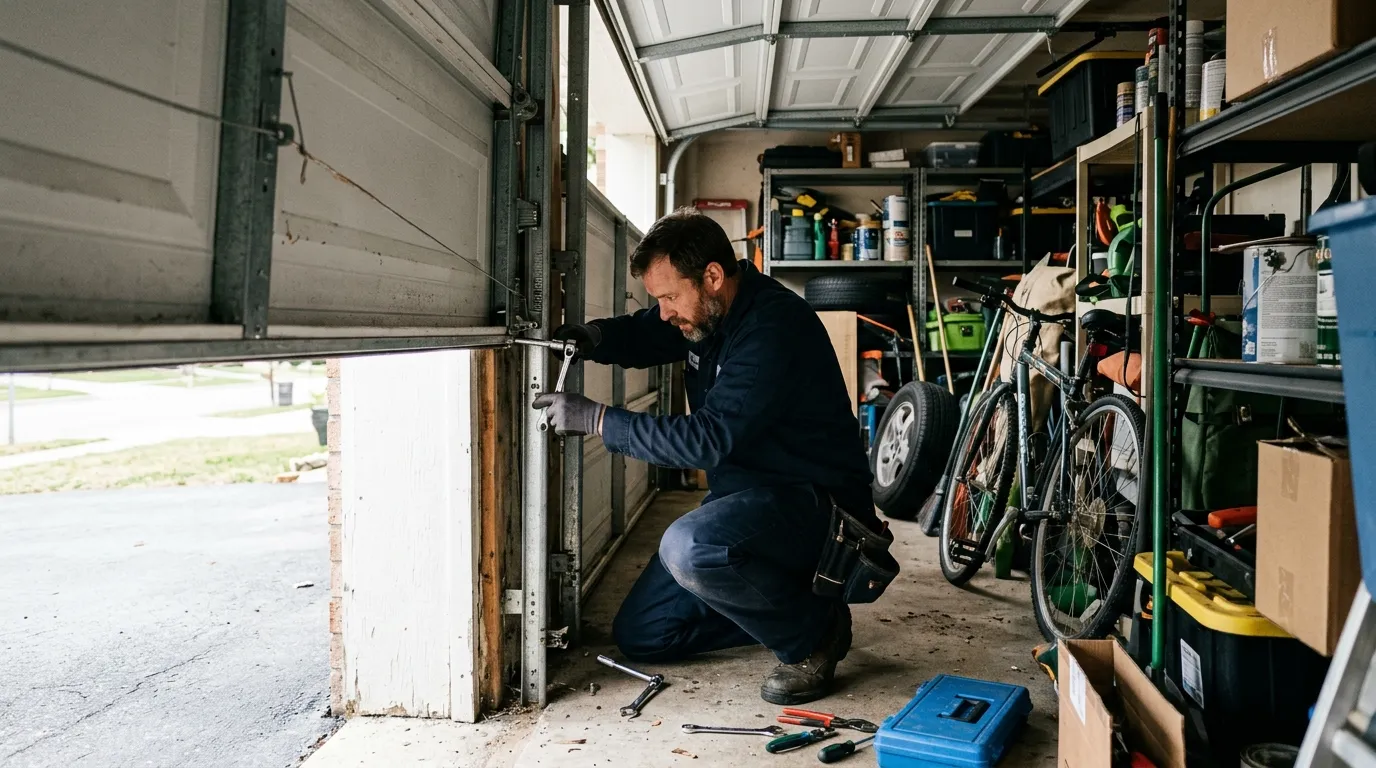
A single panel swap is within reach for a homeowner who's comfortable with basic tools, on a door where the panel isn't load-bearing on its own - most steel sectional doors from the 2000s are built this way, with each section independent of the others structurally. Loosen the hinges above and below the damaged section, disconnect it from the rollers, and slide the replacement into the same track.
Where it goes wrong: torsion spring tension. If your damaged panel is anywhere near the bottom section where the spring cables attach, or if the door won't hold position on its own when disconnected from the opener, the spring is under load and that's not a DIY repair - a torsion spring lets go with enough force to break bones. If the door is a double-wide, the extra width means more flex across the panel and a higher chance a bowed or misaligned replacement won't seat right on the first try. Match the color and gauge before you order, not after.
How it works
From “it’s stuck” to “it’s fixed”
01
Tell us what’s wrong
Describe the symptom - won’t open, loud bang, opener runs but the door won’t move.
02
On-site diagnosis
A technician tests the door under power and by hand and finds what actually failed.
03
Clear, up-front plan
You get the fix that’s needed and what drives the cost - before any work starts.
04
Repaired & tested
The repair is done, the door is set true and tested, and the work area left clean.
Serving Raleigh, NC - tell us what your door’s doing and we’ll take it from there.
01Can you match the panel color on my Wendell garage door if it's older?
If your door was built around 2005, which is typical for this area, an exact color and gauge match depends on whether the manufacturer still runs that line. We check the model against current stock before ordering - sometimes it's exact, sometimes it's the closest current equivalent.
02Do you keep panels in stock for a same-day fix in Wendell?
No. We're based in Raleigh and travel out to Wendell for the job, so panels get sourced and brought with us rather than pulled from local stock. Common, currently-produced models move fast; older or discontinued models take longer to source.
03Is a single dented panel worth fixing or should I replace the whole door?
On a steel sectional door from the 2000s building era, a single dented panel is almost always a swap, not a full replacement - the rest of the door and hardware are usually fine. Full replacement only makes sense if multiple sections are damaged or the track and spring are compromised too.
Ready to get your garage door sorted?
Tell us what it’s doing and where you are in Raleigh - we’ll take it from there.