How Long You Are Without the Door
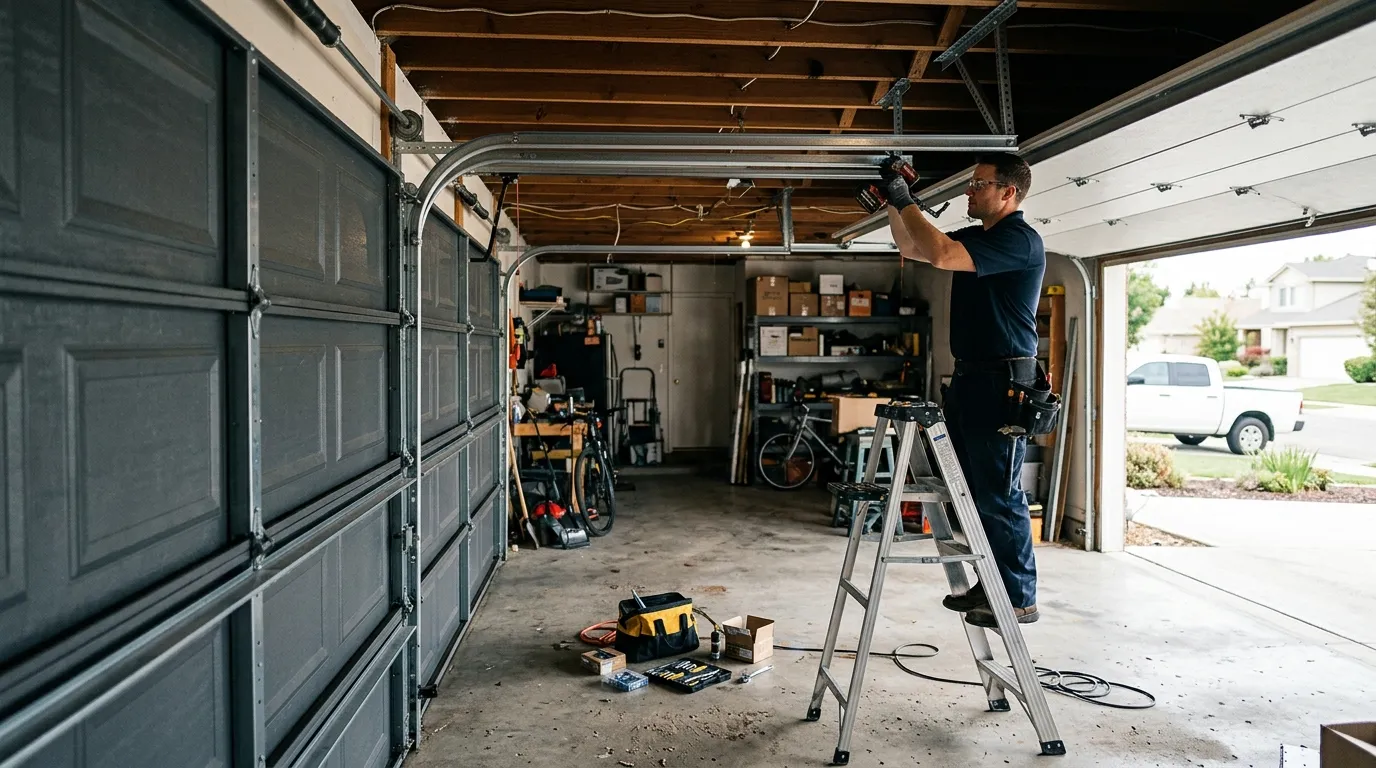
We work out of Raleigh, about 16 miles south, so there's no branch sitting in Youngsville and no walk-in counter to swap into. The job itself, once a truck is on your driveway, is usually finished in one visit start to finish - rollers on a residential door aren't a parts-order situation unless the track is bent badly enough to need a full section replaced. The longer wait is almost never the repair; it's coordinating the drive time against the rest of the day's calls in the service area. If your door is stuck shut or stuck open because of a jumped roller, say so when you call - a door that won't move safely gets bumped ahead of routine wear-and-tear jobs.
What You Are Seeing
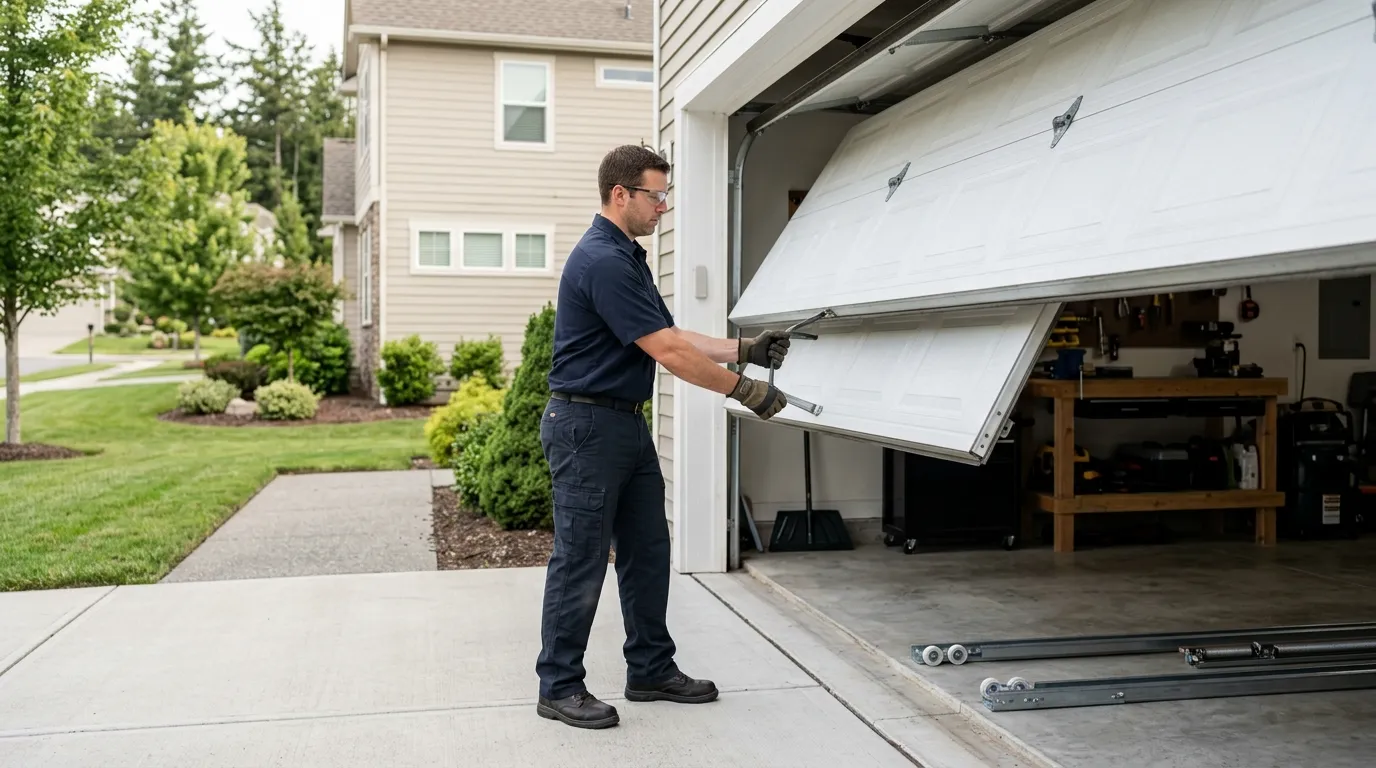
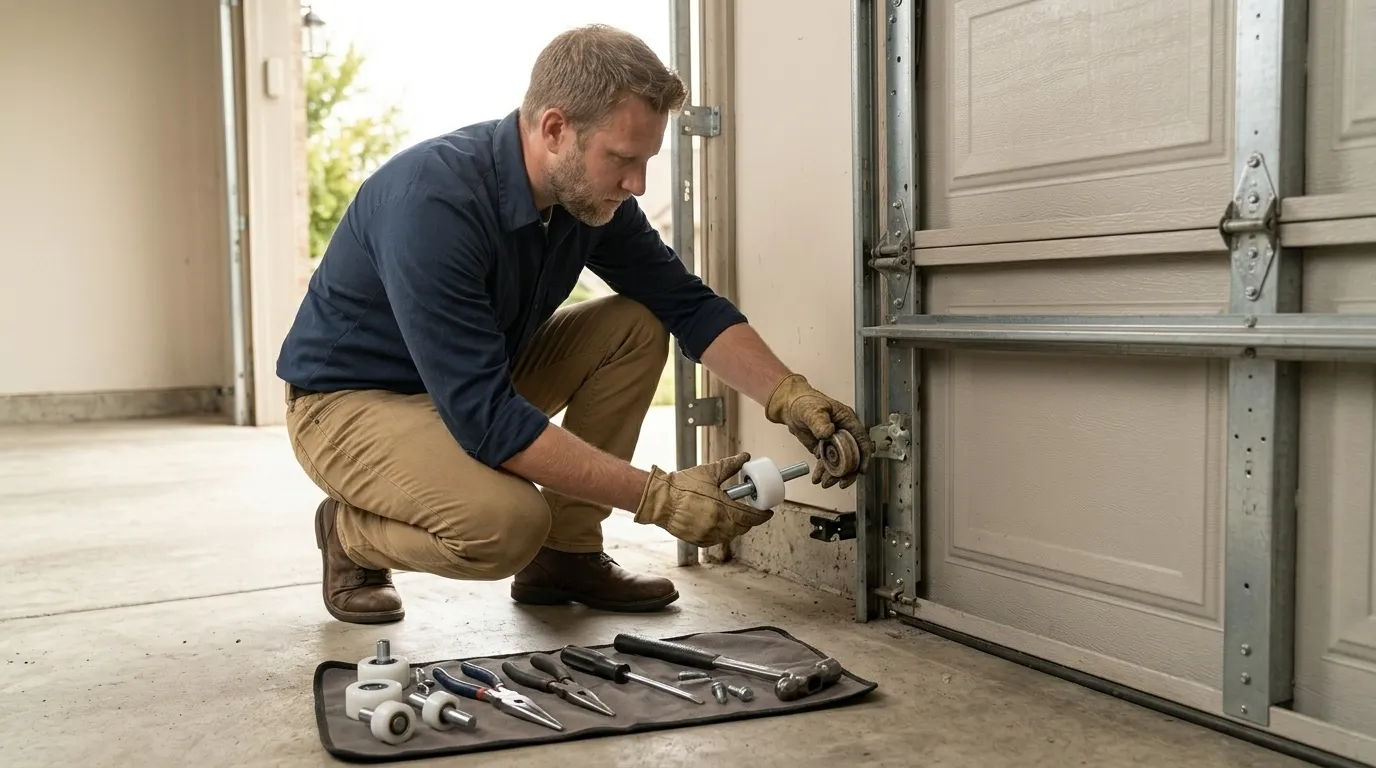
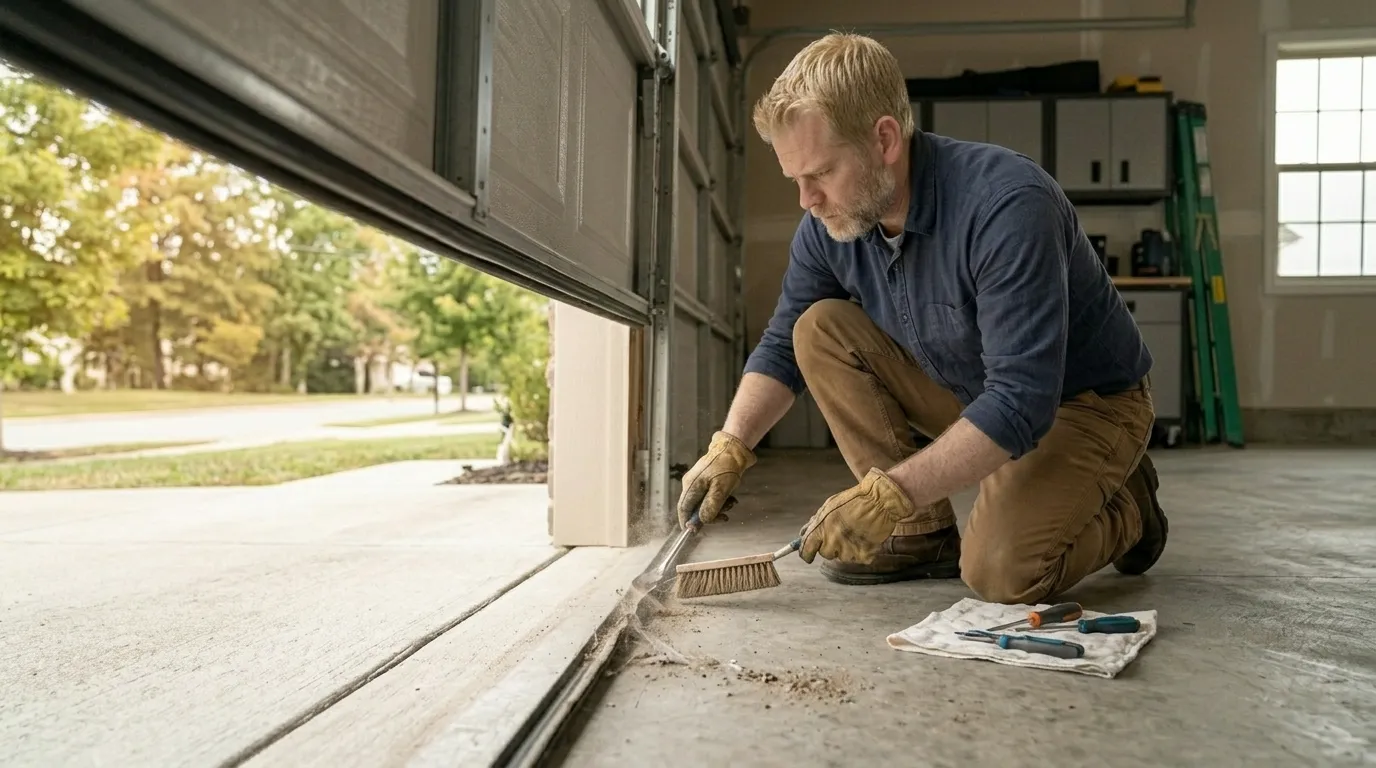
On a 2004-era door, roller failure has a pattern. First it's noise - a grinding or clicking every time the door passes a certain point in the track, which is the flat spot on a worn steel roller hitting the rail. Then it's a visible lean, where one side of the door sits lower than the other at the top of the travel because that roller has worn down thinner than its opposite number. Last is the jump: the door hesitates, jerks, or the opener strains and reverses because a roller has come partly out of the track and is riding the edge instead of the channel. If you're hearing the grind but haven't seen the jump yet, that's the point to call - it's a straightforward roller swap. Wait past the jump and you're often looking at a bent track section too.
What It Costs
We don't publish a flat number here because roller count and roller type change the bill - a full set of ten steel rollers costs less than a full set of sealed nylon, and a door that only needs the bottom four replaced costs less than a full set either way. What we can tell you is the driver: Youngsville's median household income sits at $61,813, noticeably below the wider Raleigh service area's $91,638, and we see more owners here ask for the steel-roller option instead of nylon for that reason - it's the cheaper part and it does the job on a residential door that isn't opened twenty times a day. Ask for both prices on the call and we'll quote them straight.
Why It Happens Here
It comes down to when the neighborhood was built and what the winters do to steel. Youngsville's housing stock centers on 2004, squarely in the builder-grade era across the wider Raleigh area, and this region sits in a cold-moderate climate band - enough freeze-thaw cycling each winter to stiffen the lubricant in a roller stem and speed up the wear on the metal-to-metal contact of a steel roller in a steel track. Nylon rollers age slower here for that reason, which is part of why we point owners toward them on the replacement even if the original was steel. With roughly 979 households in Youngsville, most sharing that same build window, this isn't a one-house problem - it's the whole run of doors from that era reaching the point at once.