Most Knightdale garages still run on the rollers installed when the house was built around 2006. Here's how we replace them and what it costs, 9 miles out from Raleigh.
A lot of Knightdale was built out around 2006, and if your house falls in that window, there's a good chance nobody has ever touched the rollers on your garage door. They're the original stamped-steel or hollow-nylon wheels that came with the door from the factory, and after fifteen-plus years of daily travel up and down the same track, the stems wear oval and the wheels themselves start to flat-spot. That's the grinding or the door that hangs up two-thirds of the way closed - it's not the opener, it's the rollers dragging in a track they no longer fit cleanly.
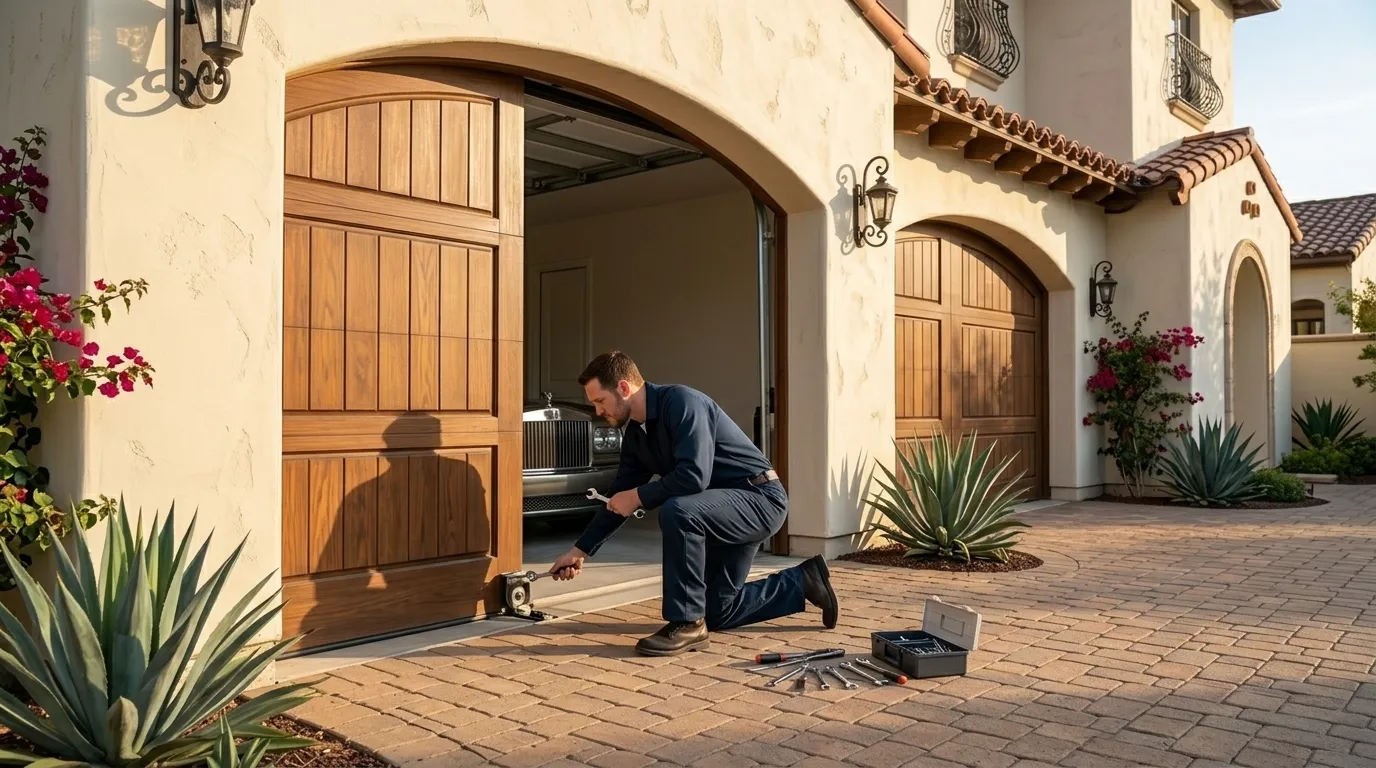
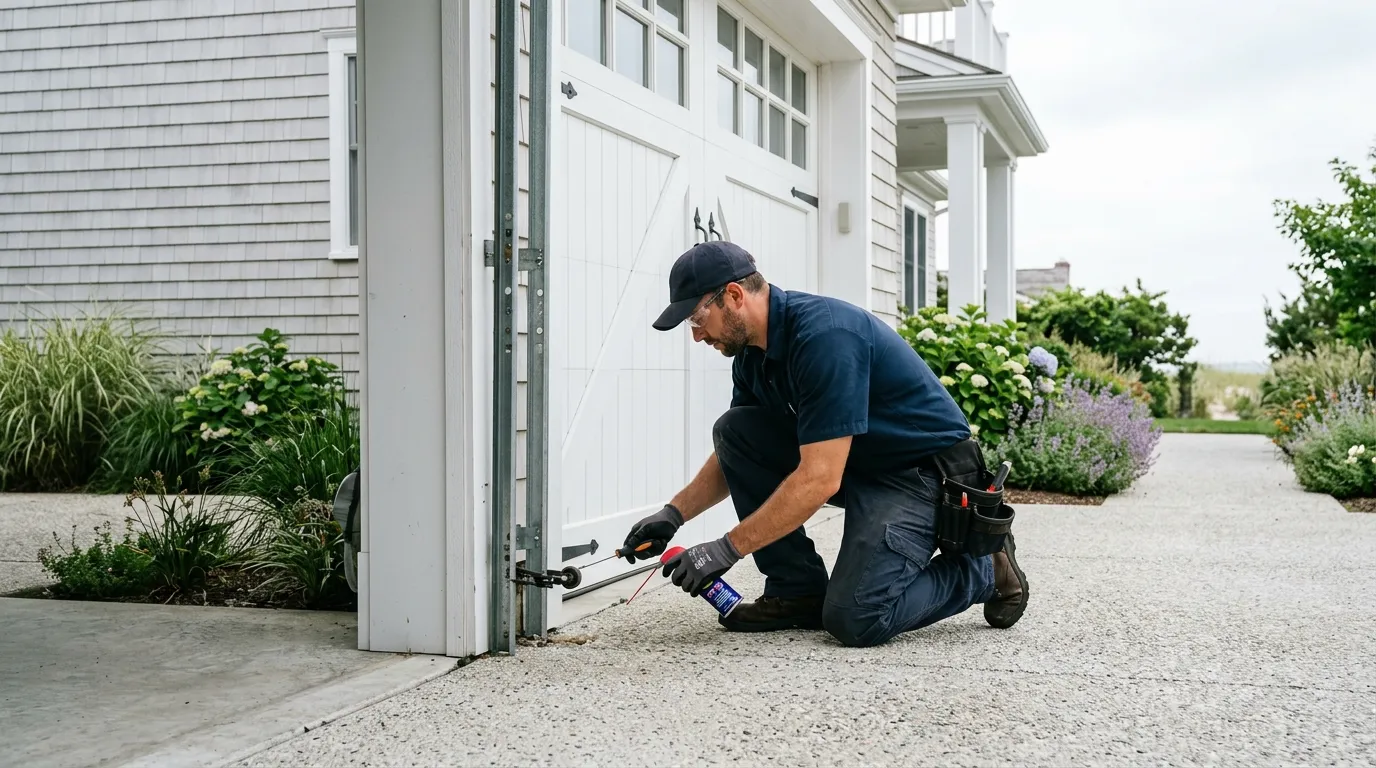
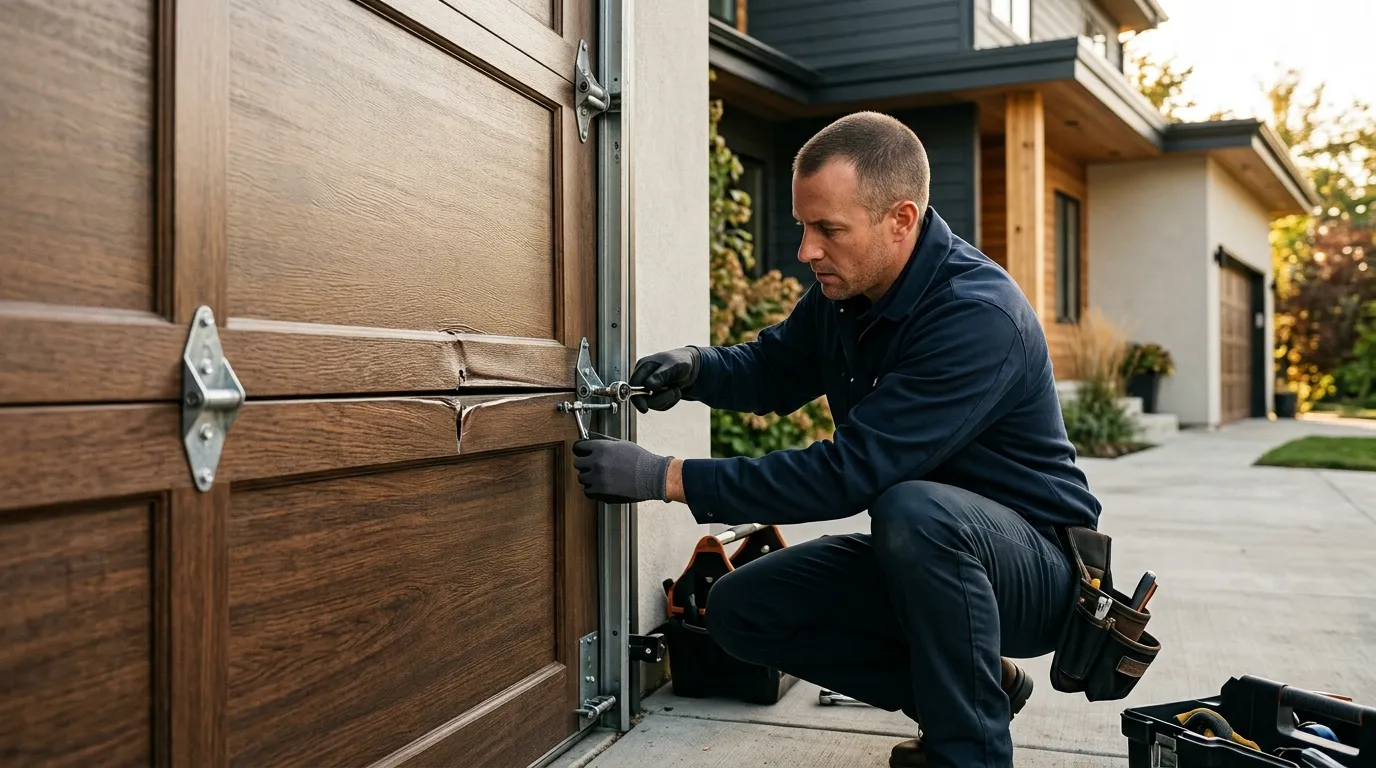
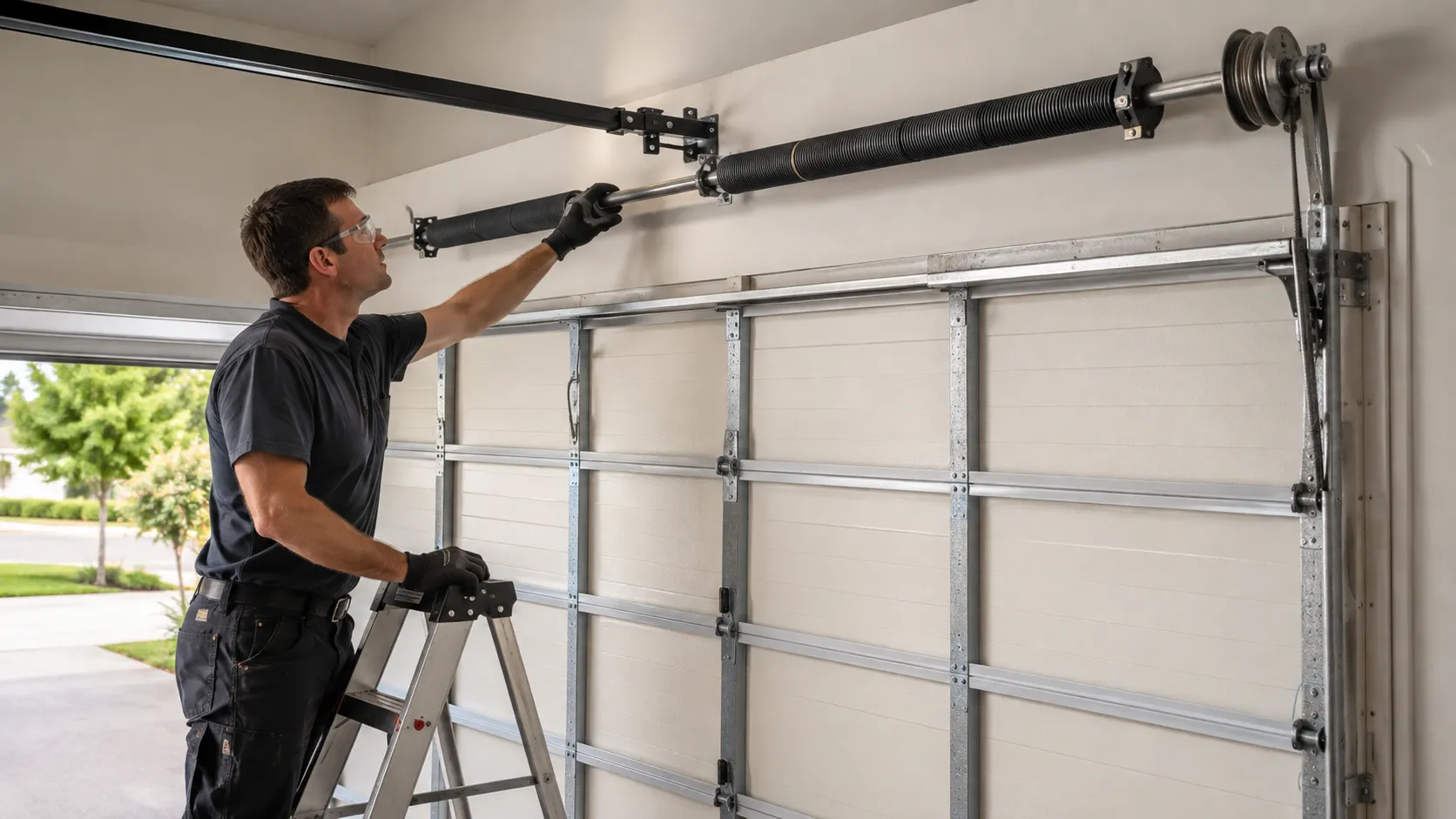
We pull the door, disengage the opener, and replace rollers one section at a time so the door never comes fully off the track and unbalances on you mid-job. If the stems have worn enough to score the hinges, we swap those too rather than bolt new rollers into damaged hardware - that's a five-minute add, not a second visit. Nylon rollers with sealed bearings are the standard swap now; they run quieter than the steel wheels most 2006-era doors shipped with, which matters if the garage sits under a bedroom.
We also check the track alignment while we're in there. On original hardware this old, a slightly bent track is common even if nobody remembers hitting anything - it's just years of a slightly-off roller riding the rail unevenly.
Booking a Visit
We work out of Raleigh and cover Knightdale as part of the regular route, about 9 miles out. There's no branch or drop-in counter here - we schedule the visit, load the truck with the roller sets and hardware for your door type, and come to you. Tell us the door's age and whether it's sticking, grinding, or jumping the track when you call, and we'll bring the right roller stock instead of guessing on site.
Because this is a scheduled trip rather than a local dispatch, we ask for a rough sense of the problem up front - loud grinding on one side versus the door binding evenly across the whole track are different repairs, and knowing which one you've got lets us bring the right parts the first time.
What It Costs
We don't publish a flat number here because roller jobs split into two different repairs depending on what's actually worn. A straight roller swap - ten or twelve rollers, same-day, no track damage - is the cheaper end. If the original stems have scored the hinges or bent the track, which shows up more on original 2006-era hardware than on anything installed in the last five years, the job grows to include those parts and the price moves with it.
Households in this part of the service area sit at a median income around $91,638, and most of the roller jobs we see here are repair-and-replace-hardware, not full door replacement - the door itself is usually fine, it's the moving parts that gave out first. We'll tell you on site which category your door falls into before we start, not after.
How Long You Are Without the Door
A standard roller replacement, all ten or twelve rollers on one door, is a same-visit job - the door goes back into full use before we leave. Where it stretches is when the original hardware has done more damage than the rollers alone: a bent track section or scored hinges means we're sourcing that specific part rather than swapping stock rollers, and that can push the job into a return trip if we don't have the exact hinge gauge on the truck.
Worth saying plainly: if a door has both worn rollers and a track that's bent enough to bind, replacing rollers alone won't fix it, and we won't tell you it will just to close the job faster. We'll flag that on the first visit so you're not surprised by a second one.
How it works
From “it’s stuck” to “it’s fixed”
01
Tell us what’s wrong
Describe the symptom - won’t open, loud bang, opener runs but the door won’t move.
02
On-site diagnosis
A technician tests the door under power and by hand and finds what actually failed.
03
Clear, up-front plan
You get the fix that’s needed and what drives the cost - before any work starts.
04
Repaired & tested
The repair is done, the door is set true and tested, and the work area left clean.
Serving Raleigh, NC - tell us what your door’s doing and we’ll take it from there.
01Why do the rollers on my Knightdale garage door feel worn already if the house isn't that old?
Most houses in this part of Knightdale went up around 2006, so a door that's never had its rollers touched is running on close to two decades of daily cycles on the original stamped-steel or nylon wheels. That's well past the normal service life for that hardware - wear at this stage is expected, not a sign of a bad door.
02Do you carry roller parts on the truck or do I need a second visit?
We bring standard roller sets for common door types on every visit. A second trip only comes up if the original hardware - the stems, hinges, or track - is worn or bent badly enough that we need a specific part we didn't already have loaded, which shows up more often on original 2000s-era hardware than newer doors.
03Is a noisy door always a roller problem?
Not always, but on a door built around 2006 with original hardware, worn rollers are the most common cause of grinding or a door that hangs partway. We check the track and opener too before we quote the job, so you're not paying for rollers if the actual problem is somewhere else.
Ready to get your garage door sorted?
Tell us what it’s doing and where you are in Raleigh - we’ll take it from there.