Stocked Parts
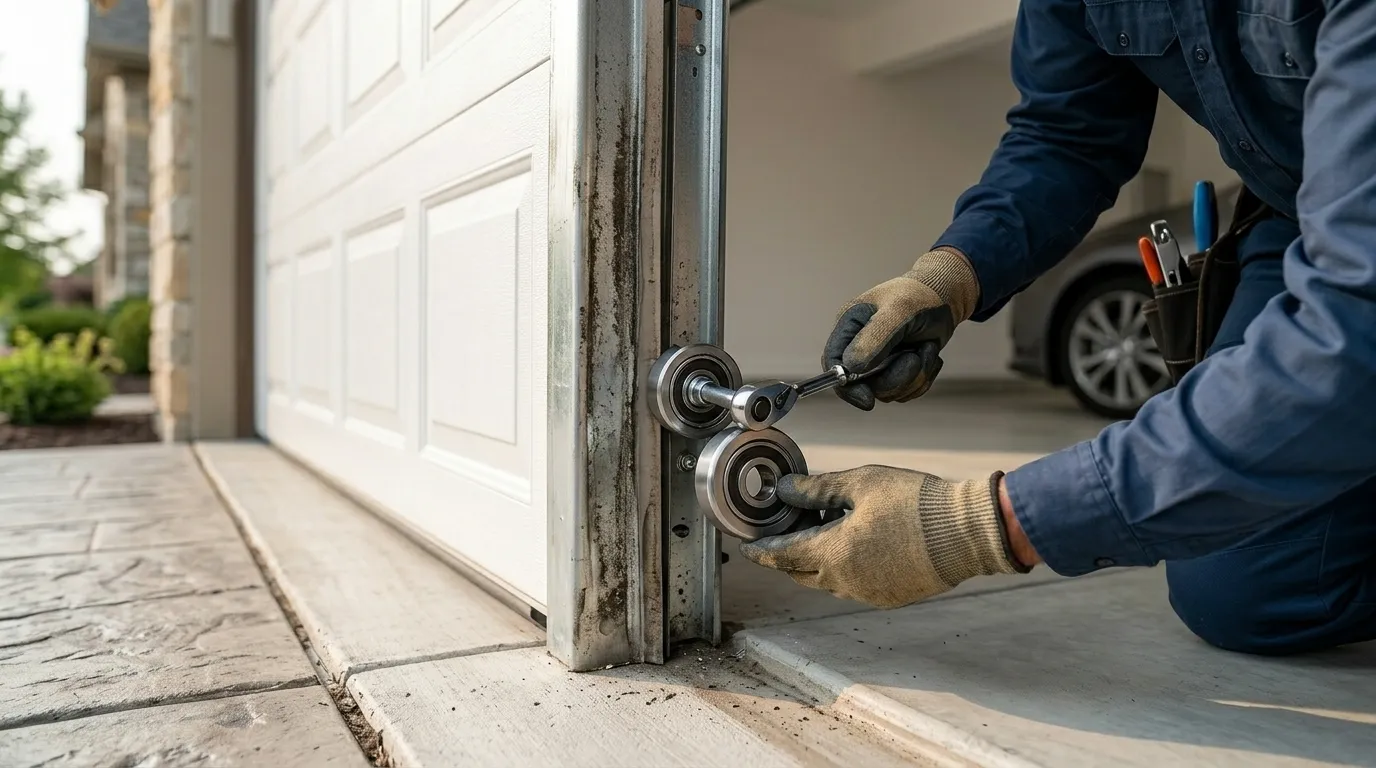
We carry the roller types that actually show up in a service area built mostly between 1967 and 2013, which means both the plain steel rollers common on older single doors like the ones in Gorman and the sealed-bearing nylon rollers on newer double doors closer to Raleigh. For a 1967-era door we're usually swapping in a nylon roller with a sealed bearing on the same stem length, since that upgrade quiets the door down without needing a new track.
What we don't stock is anything custom-milled - if a door has a nonstandard stem length or a track profile that's been discontinued, that part gets ordered rather than pulled off the truck same visit. On a house this age that's not common, but it happens on doors that have been patched with mismatched parts over the years.
What You Are Seeing
On a 1967-built door, the usual complaint is a grinding or scraping noise right as the door starts moving, not a smooth roll. That's steel-on-steel wear - the roller wheel has flattened on one side after decades of contact with the track, so instead of turning it's skidding. You'll often see the door hesitate at the same spot on the track every time, which is the flat spot on the roller hitting the same point in its rotation.
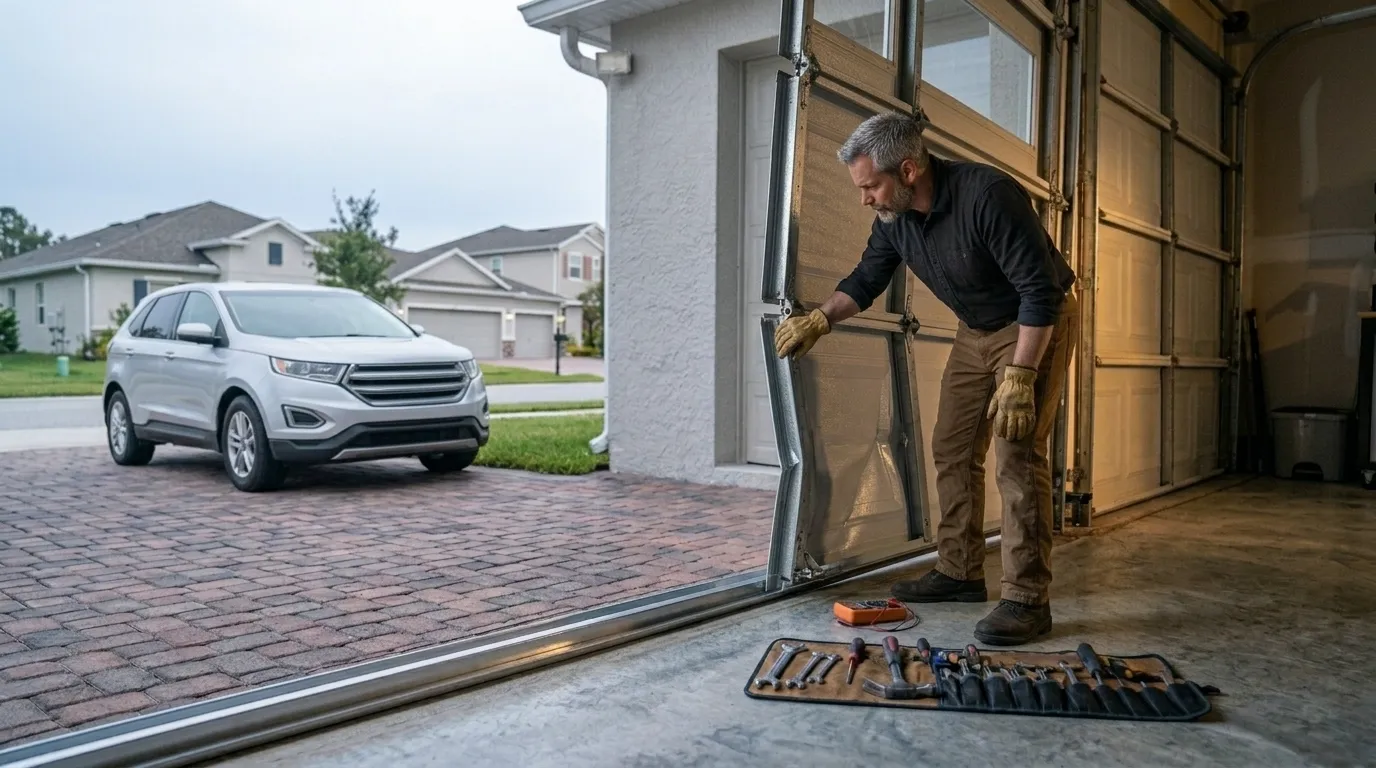
A second pattern on doors this old is a roller that's popped partway out of the track on a curve - the bracket holding it has loosened over the years, and the roller starts riding the edge of the track instead of the channel. Left alone, that wears a groove into the track itself, which turns a $20 roller job into a track replacement.
How Long You Are Without the Door
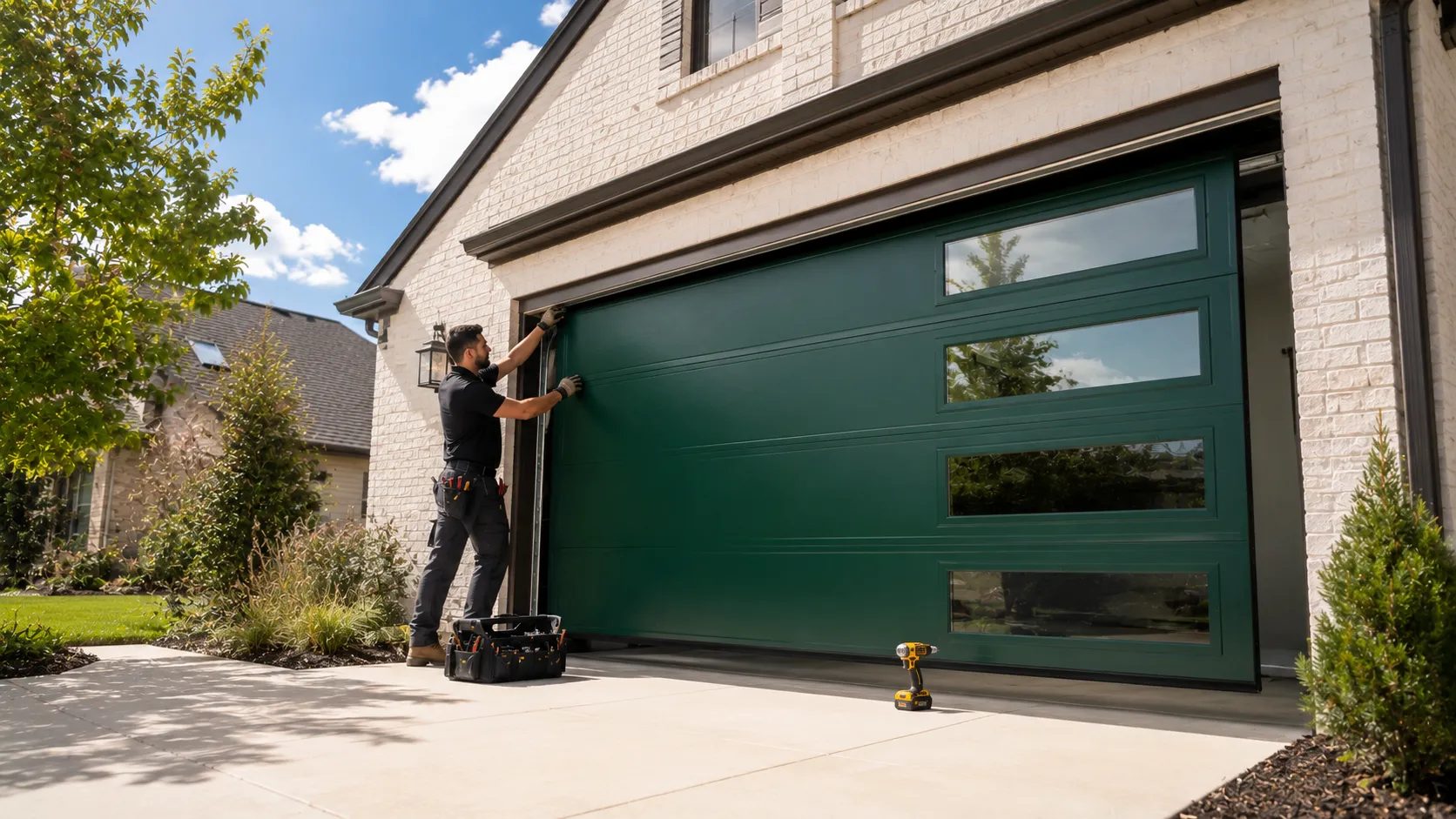
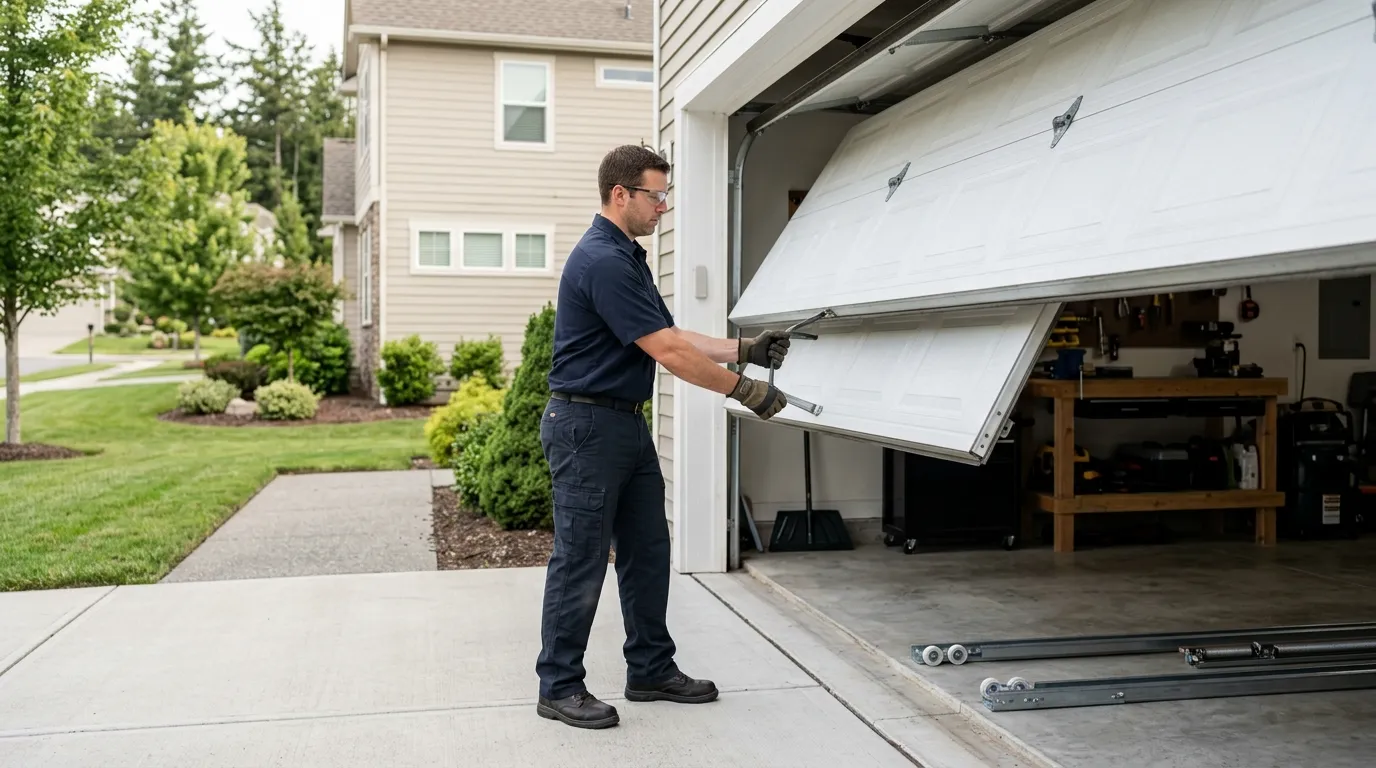
A straight roller swap on a single door, once we're on site, takes less than an hour. If the track brackets need resetting too - common enough on a house from 1967 - add time for that, but the door still comes off and goes back on the same visit. We don't leave a door disassembled overnight; if a part turns out to be nonstandard and needs ordering, we get the door functional and secure before we leave, then come back for the final piece.
Because we're driving in from Raleigh rather than working out of a local branch, we schedule the visit around getting everything needed for the job done in one trip, which matters more in a smaller area like Gorman where a second trip means another 17 miles each way.